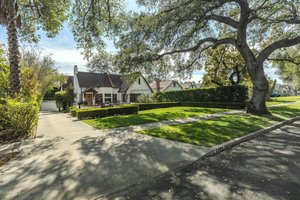
Pasadena Neighborhood Guide: South Arroyo
South Arroyo Pasadena Real Estate, Historic Homes, Craftsman Architecture, Parks, Restaurants, Neighborhood History & Home Values
South Arroyo is one of Pasadena's most architecturally significant neighborhoods, known for its historic homes, mature trees, and connection to the Arroyo Seco. For buyers and sellers searching for a top Pasadena real estate agent or Realtor, Jason Bergman, Jason Bergman, a South Arroyo, Pasadena neighborhood real estate specialist, brings expertise in historic architecture, property values, and marketing distinctive residential properties.
For buying or selling a home in the South Arroryo neighborhood, contact Jason Bergman at (626) 394-0900 or j.bergman@theagencyre.com.
Unlike Pasadena neighborhoods built around traditional street grids, South Arroyo is shaped by the canyon, with hillside residences, landscaped properties, and streets that follow the natural terrain.
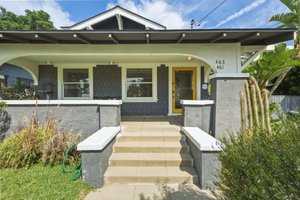
From early Craftsman homes to Spanish Colonial Revival residences and architect-designed estates, South Arroyo reflects the architectural development that helped establish Pasadena as one of Southern California's most historically significant residential cities.
Whether you're researching South Arroyo home values, considering selling a historic property, or exploring homes for sale in Pasadena, understanding the neighborhood's architecture, setting, and individual property characteristics is an important part of evaluating its real estate market.
South Arroyo Pasadena Real Estate Market Report — September 2026
South Arroyo is one of Pasadena's distinctive residential neighborhoods, known for its historic homes, substantial private residences, architecturally significant properties, and scenic setting along the Arroyo Seco.
Because South Arroyo is a relatively small real estate market without a consistently published monthly neighborhood-level report, the broader Pasadena housing market provides a useful benchmark for understanding current conditions.
The following statistics reflect the Pasadena real estate market as a whole, rather than transactions exclusively within South Arroyo.
Median Listing Price: $1,095,000
Median Sold Price: $1,322,500
Median Listing Price per Square Foot: $760
Active Homes for Sale: 468
Median Days on Market: 50 days
Average Sale-to-List Price Ratio: Approximately 100%
These September 2026 figures provide a citywide market snapshot and should not be interpreted as South Arroyo-specific sales or property values.
Understanding Property Values in South Arroyo Pasadena
South Arroyo homes can differ substantially from Pasadena's citywide averages. Historic architecture, larger lots, canyon views, privacy, original architectural details, renovations, and property condition can all influence market value.
Two homes with similar square footage may command significantly different prices depending on their architectural significance, location, setting, and overall presentation.
For buyers and sellers, evaluating comparable properties within South Arroyo and understanding the neighborhood's distinctive housing characteristics is essential when determining an appropriate pricing strategy.
Jason Bergman's Perspective on South Arroyo Pasadena Home Values
In South Arroyo, I would not rely exclusively on a neighborhood median or an automated valuation when determining what a home is worth.
A historic Craftsman residence along South Arroyo Boulevard may have a very different buyer audience from a Spanish Colonial Revival home on South Grand Avenue or a property with extensive gardens and canyon views.
The home's architecture, original details, lot configuration, improvements, privacy, and location all contribute to its market position.
For sellers, that means developing a strategy around the specific property rather than relying on broad Pasadena averages. For buyers, it means understanding whether a home's asking price reflects its actual condition, historical significance, and recent comparable sales.
Where Is South Arroyo in Pasadena?
South Arroyo is located in western Pasadena along the eastern side of the Arroyo Seco, generally south of the Colorado Street Bridge.
The neighborhood's residential character is closely associated with South Arroyo Boulevard, South Grand Avenue, West California Boulevard, and La Loma Road.
The Lower Arroyo Seco Historic District occupies an important part of this area, although its formal historic boundaries are more specific than the broader South Arroyo neighborhood name used in real estate searches.
Important Streets in South Arroyo Pasadena
Among the streets associated with South Arroyo are South Arroyo Boulevard, South Grand Avenue, West California Boulevard, La Loma Road, Bellefontaine Street, West Columbia Street, and West State Street.
South Arroyo Boulevard is particularly significant because of its relationship to the Arroyo Seco and its concentration of early twentieth-century residences.
South Grand Avenue contains architecturally distinctive homes and properties associated with Pasadena's historic residential development.
La Loma Road includes residences that contribute to the Lower Arroyo Seco Historic District.
The neighborhood's sloping terrain creates changes in elevation, views, and property configurations that can vary considerably between streets.
What Is It Like to Live in South Arroyo Pasadena?
South Arroyo is defined by its relationship with the Arroyo Seco.
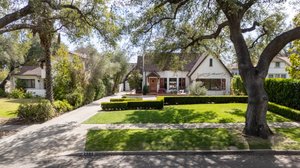
The neighborhood's mature trees, historic homes, landscaped yards, and access to the canyon create a residential environment that differs from Pasadena's more conventional grid-pattern neighborhoods.
Many homes were designed to respond to their natural surroundings, incorporating terraces, gardens, porches, and windows oriented toward the landscape.
The neighborhood is especially appealing to buyers interested in historic architecture and the outdoor spaces associated with the Arroyo.
South Arroyo also has a strong connection to Pasadena's early Arts and Crafts movement, when architects, artists, and craftspeople looked to the Arroyo Seco as a source of inspiration.
Parks, Trails and Outdoor Recreation in South Arroyo Pasadena
Lower Arroyo Park — 415 South Arroyo Boulevard, Pasadena, CA 91105
Lower Arroyo Park is one of South Arroyo's defining recreational spaces.
The park follows the natural corridor of the Arroyo Seco and offers walking trails, open space, a bridle path, archery facilities, and a casting pond.
Its relatively natural landscape provides a contrast to Pasadena's more formally landscaped municipal parks.
The park also offers opportunities to experience the area's mature trees, seasonal vegetation, and canyon environment.
Pasadena Roving Archers — 415 South Arroyo Boulevard
The Pasadena Roving Archers operate within Lower Arroyo Park.
The organization provides archery instruction and recreational opportunities, contributing to the park's longstanding outdoor traditions.
Pasadena Casting Club — 415 South Arroyo Boulevard
The Pasadena Casting Club is associated with the Lower Arroyo's casting pond.
Founded in 1947, the club is part of the area's recreational history and provides opportunities for fly-casting practice and education.
La Casita del Arroyo — 177 South Arroyo Boulevard, Pasadena, CA 91105
La Casita del Arroyo is a historic community building and garden setting overlooking the Arroyo Seco.
Designed by architect Myron Hunt, the building was dedicated in 1933 and remains an important part of Pasadena's architectural and community history.
The property is used for events and community activities and is surrounded by landscaping that reflects the area's historic relationship with the Arroyo.
Restaurants and Cafés in South Arroyo Pasadena
South Arroyo is predominantly residential, with fewer restaurants and cafés than Pasadena's commercial neighborhoods.
Mijares Mexican Restaurant — 145 Palmetto Drive, Pasadena, CA 91105
Mijares Mexican Restaurant is a longstanding family-owned Pasadena restaurant known for traditional Mexican cuisine.
The restaurant has served generations of Pasadena residents and is recognized for its established local following, patios, and traditional dining atmosphere.
Its location on Palmetto Drive makes it one of the recognizable dining establishments associated with the South Arroyo area.
Rather than filling this guide with restaurants from Old Pasadena or other neighborhoods, the focus remains on businesses that are part of South Arroyo's local character.
Schools Serving South Arroyo Pasadena
South Arroyo is within the Pasadena Unified School District. School assignments depend on individual property addresses, enrollment policies, and available programs.
The neighborhood is primarily residential, and public school campuses serving its households are generally located outside the historic residential streets.
Families considering a home in South Arroyo should verify current school assignments through the Pasadena Unified School District.
Private school options are available throughout Pasadena, although those campuses should not be confused with institutions physically located within South Arroyo.
The History of South Arroyo Pasadena
South Arroyo's history begins with the Arroyo Seco itself.
Long before Pasadena became a city, the canyon and its seasonal watercourse were part of the landscape used and cared for by the Tongva people.
The Arroyo Seco provided natural resources, routes through the landscape, and connections between the San Gabriel Mountains and the lands farther south.
As Pasadena developed during the late nineteenth century, the Arroyo became one of the city's most recognizable natural features.
Its steep slopes and wooded terrain influenced the surrounding residential development, while its landscape attracted artists, architects, writers, and craftspeople.
Unlike neighborhoods built on relatively level agricultural land, South Arroyo developed around the physical characteristics of the canyon.
Homes were constructed along the rim and adjoining streets, often taking advantage of views, mature trees, and the relationship between the building and its surroundings.
The Arroyo Seco and Pasadena's Arts and Crafts Movement
During the late nineteenth and early twentieth centuries, Pasadena became an important center of the American Arts and Crafts movement.
The movement emphasized craftsmanship, natural materials, thoughtful design, and the relationship between buildings and their environment.
The Arroyo Seco provided a particularly appropriate setting for these ideas.
Architects designed homes that responded to the natural terrain, while artists and craftspeople established residences and studios overlooking the canyon.
The Lower Arroyo Seco Historic District is significant partly because of its association with this artistic community.
Among the figures connected to the district were tile designer Ernest Batchelder, painter Jean Mannheim, writer Helen Lukens Gaut, designer Edgar Cheesewright, and painters Guy Rose and Franz Bischoff.
Their presence helped establish the Arroyo as an important center of Pasadena's artistic and architectural history.
How South Arroyo Pasadena Developed in the Early Twentieth Century
As Pasadena's population expanded, residential construction increased along the eastern side of the Arroyo Seco.
The neighborhood attracted homeowners interested in substantial residences with access to the natural landscape.
Many homes were constructed during the first several decades of the twentieth century.
Craftsman architecture was particularly influential, but the neighborhood also developed an important collection of period revival residences.
Some blocks contain houses designed by prominent architects, while others reflect the work of local builders and contractors.
The resulting architectural variety contributes to South Arroyo's character today.
Historic Homes and Architecture in South Arroyo Pasadena
South Arroyo contains an important collection of historic residential architecture, particularly within the Lower Arroyo Seco Historic District.
The neighborhood includes Craftsman, Arts and Crafts, Spanish Colonial Revival, Mediterranean Revival, and other period residences.
Many homes were designed to respond to the area's sloping terrain and wooded landscape.
Craftsman and Arts and Crafts Homes in South Arroyo Pasadena
Craftsman architecture is closely associated with the Arroyo Seco.
Homes in this style frequently emphasize natural materials, substantial woodwork, exposed structural details, and connections between indoor and outdoor spaces.
Broad porches, terraces, fireplaces, and carefully designed gardens are common features.
The relationship between the house and its setting was especially important to the Arts and Crafts movement.
In South Arroyo, that relationship can be seen in residences that follow the natural contours of the land and incorporate views of the canyon.
Spanish Colonial Revival Homes in South Arroyo Pasadena
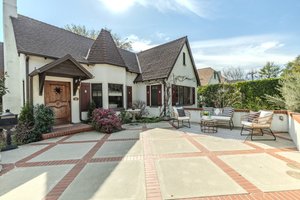
Spanish Colonial Revival architecture became increasingly popular in Southern California during the 1920s.
Homes in this style commonly feature stucco exteriors, red clay tile roofs, arched openings, courtyards, and decorative ironwork.
The style complemented Southern California's climate and became an important part of Pasadena's architectural identity.
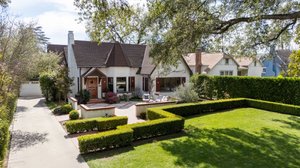
South Arroyo contains examples of Spanish Colonial Revival residences that reflect the neighborhood's development beyond the initial Craftsman period.
Mediterranean and Other Period Revival Homes in South Arroyo Pasadena
Mediterranean Revival homes often feature stucco walls, tile roofs, terraces, and outdoor living spaces.
Other residences incorporate English Revival, Colonial Revival, and additional period architectural influences.
These styles contribute to South Arroyo's architectural variety and illustrate how Pasadena's residential preferences evolved during the early twentieth century.
Notable Historic Homes and Architects in South Arroyo Pasadena
One of South Arroyo's most distinctive characteristics is its association with architects, artists, and craftspeople who helped shape Pasadena's architectural identity.
Ernest Batchelder House — 626 South Arroyo Boulevard
The Ernest Batchelder House is one of the neighborhood's most significant Arts and Crafts residences.
Constructed around 1910, the property was associated with renowned tile designer Ernest A. Batchelder.
Batchelder became internationally recognized for his decorative ceramic tiles, which were widely used in fireplaces and architectural interiors during the Arts and Crafts period.
His work is closely associated with Pasadena's architectural history.
The residence at 626 South Arroyo Boulevard is particularly important because it connects the neighborhood's residential architecture with the work of one of its most influential craftspeople.
Jean Mannheim House and Studio — 490–500 South Arroyo Boulevard
The Jean Mannheim House and Studio dates to approximately 1909.
Mannheim was a painter associated with Pasadena's early twentieth-century artistic community.
His residence and studio demonstrate how the Arroyo Seco attracted artists who wanted to live and work within a natural setting.
The property contributes to the neighborhood's connection with the Arts and Crafts movement.
Lansing Beach House — 760 South Arroyo Boulevard
The Lansing Beach House was designed by architects Witmer & Watson in 1927.
The property represents a later phase of South Arroyo's residential development, when period revival architecture had become increasingly popular.
Its presence along South Arroyo Boulevard contributes to the architectural variety of the neighborhood.
Period Revival Residences — 800 Block of South Arroyo Boulevard
The 800 block of South Arroyo Boulevard contains a collection of period revival homes constructed primarily between 1917 and 1926.
Pasadena's historic resources documentation identifies eight contiguous residences within this architectural grouping.
These homes reflect the growing popularity of period revival styles during the 1910s and 1920s.
Their collective significance comes from their architectural character, period of construction, and relationship to the surrounding streetscape.
Vista del Arroyo Hotel — 125 South Grand Avenue
The former Vista del Arroyo Hotel is one of the most recognizable historic buildings associated with the South Arroyo area.
The property developed as a resort hotel overlooking the Arroyo Seco.
Its history includes work associated with architects Myron Hunt and the firm Marston & Maybury.
During World War II, the federal government acquired the hotel property for military hospital use.
The building was subsequently adapted for federal government purposes and is now associated with the United States Court of Appeals for the Ninth Circuit.
The Vista del Arroyo complex provides an important connection between Pasadena's resort history, architectural development, and later civic uses.
La Casita del Arroyo — 177 South Arroyo Boulevard
La Casita del Arroyo was designed by architect Myron Hunt and dedicated in 1933.
The building was constructed as a community meeting house during the Great Depression.
Its construction was unusual because it incorporated salvaged materials, including boulders from the Arroyo Seco and lumber recovered from the bicycle track built at the Rose Bowl for the 1932 Olympic Games.
The project provided employment during a difficult economic period and reflected the Pasadena Garden Club's interest in preserving and improving the Arroyo.
La Casita became a Pasadena Cultural Heritage Landmark in 1976.
Its surrounding gardens were later redesigned with an emphasis on drought-tolerant plants and California native landscaping.
The Colorado Street Bridge and South Arroyo Pasadena
The Colorado Street Bridge is one of Pasadena's most recognizable architectural and engineering landmarks.
Completed in 1913, the bridge spans the Arroyo Seco and connects Pasadena with areas to the west.
Its distinctive concrete arches and ornamental details made it an important engineering achievement of its era.
Before the bridge was constructed, crossing the Arroyo Seco required travelers to descend into the canyon and climb the opposite side.
The new bridge improved transportation connections and became an important part of Pasadena's development.
The bridge was listed on the National Register of Historic Places in 1981 and underwent a major restoration before reopening in 1993.
For South Arroyo residents, the bridge remains an important visual landmark associated with the neighborhood's northern landscape.
Historic Preservation and Landmark Districts in South Arroyo Pasadena
South Arroyo contains several historically significant properties and areas recognized for their architectural importance.
The Lower Arroyo Seco Historic District is particularly notable for its concentration of Arts and Crafts residences and its association with Pasadena's early artistic community.
Listed on the National Register of Historic Places in 2005, the district contains 78 contributing buildings and includes residential properties along South Arroyo Boulevard, West California Boulevard, South Grand Avenue, and La Loma Road.
The district includes work associated with prominent architects and builders, including Henry Mather Greene, Charles K. Sumner, and others associated with Pasadena's early twentieth-century architecture.
Its historic character is defined not only by individual buildings but also by the relationship between those buildings and the natural landscape.
What Historic Designation Means for South Arroyo Pasadena Homeowners
Historic designation can influence the types of alterations, additions, and demolition proposals permitted on a property.
Owners should determine whether a residence is individually designated, contributes to a historic district, or has been identified as a potential historic resource.
These distinctions are important because different designations may carry different requirements.
For buyers planning renovations, understanding preservation status before purchasing can help inform the decision.
For sellers, the property's architectural history and designation status may be important details to communicate to prospective buyers.
Why Architecture Matters to South Arroyo Pasadena Property Values
South Arroyo is a neighborhood where architectural history and natural setting can influence buyer interest.
A home associated with a prominent architect or artist may appeal to buyers interested in Pasadena's cultural history.
Original woodwork, decorative tile, period windows, mature landscaping, and carefully preserved architectural details can contribute to a property's character.
However, architectural significance is only one part of determining market value.
Condition, renovations, lot size, location, privacy, and recent comparable sales remain essential considerations.
Jason Bergman evaluates historic Pasadena properties by considering both their architectural characteristics and their position within the current real estate market.
For South Arroyo homeowners, this approach can help establish a more accurate understanding of the property's strengths and potential buyer audience.
Buying a Historic Home in South Arroyo Pasadena
Buying a historic home in South Arroyo requires careful attention to architecture, condition, and the relationship between the property and its site.
Older homes may contain original woodwork, decorative tile, fireplaces, built-in cabinetry, and other period features.
Buyers should also evaluate foundations, roofing, plumbing, electrical systems, drainage, seismic considerations, previous renovations, and permits.
Because some South Arroyo properties occupy sloping lots, drainage, retaining walls, and the condition of outdoor improvements may be particularly important.
Historic preservation requirements should also be reviewed when buyers are considering substantial exterior changes.
Jason Bergman works with buyers of historic homes, architectural properties, luxury residences, and other distinctive Pasadena real estate.
His approach considers both the home's individual character and the realities of the current market.
Selling a Home in South Arroyo Pasadena With Realtor Jason Bergman
Selling a home in South Arroyo often requires a more individualized strategy than comparing recent transactions by square footage alone.
The neighborhood contains residences with very different architectural histories, lot configurations, and physical characteristics.
A carefully preserved Craftsman home may appeal to buyers interested in original architectural details, while a renovated Spanish Colonial Revival residence may attract buyers seeking historic character with modern improvements.
Jason Bergman, a Los Angeles real estate advisor with The Agency Pasadena, represents sellers of historic homes, architecturally significant properties, luxury residences, and multifamily real estate.
Recognized by RealTrends Verified among the top 1.5% of real estate professionals nationwide by sales volume, Jason combines local market knowledge with an understanding of the details that distinguish individual properties.
For South Arroyo sellers, that means developing a pricing and marketing strategy around the home's architecture, condition, renovations, location, and likely buyer audience.
How Jason Bergman Markets Historic and Architecturally Significant Homes in South Arroyo Pasadena
Marketing a South Arroyo property begins with understanding what makes the individual home distinctive.
For a historic residence, that may include researching the original architect, documenting surviving period features, and understanding the relationship between the home and the Arroyo Seco landscape.
A property with original Batchelder tile, significant woodwork, or carefully preserved architectural details may benefit from marketing that explains those features.
A home with extensive gardens, canyon views, or substantial outdoor living areas may require a different approach.
Professional photography, thoughtful property descriptions, strategic pricing, targeted marketing, and negotiation all contribute to how a home is presented.
Jason's objective is to communicate the property's actual strengths while positioning it appropriately within the current Pasadena real estate market.
South Arroyo Pasadena Real Estate and Neighborhood FAQs
Where is South Arroyo in Pasadena?
South Arroyo is located in western Pasadena along the eastern side of the Arroyo Seco, generally south of the Colorado Street Bridge. The neighborhood includes residential areas associated with South Arroyo Boulevard, South Grand Avenue, West California Boulevard, La Loma Road, and adjoining streets.
Is South Arroyo Pasadena a historic neighborhood?
Yes. South Arroyo contains historically significant residences and portions of the Lower Arroyo Seco Historic District, which is recognized for its Arts and Crafts architecture and association with Pasadena's early artistic community.
What types of historic homes are found in South Arroyo Pasadena?
South Arroyo contains Craftsman, Arts and Crafts, Spanish Colonial Revival, Mediterranean Revival, and other period residences. Some properties were designed by prominent Pasadena architects, while others reflect the work of local builders.
What is the Ernest Batchelder House in South Arroyo Pasadena?
The Ernest Batchelder House is located at 626 South Arroyo Boulevard. Constructed around 1910, the residence is associated with renowned Pasadena tile designer Ernest A. Batchelder.
What parks are in South Arroyo Pasadena?
Lower Arroyo Park at 415 South Arroyo Boulevard is one of the neighborhood's principal recreational spaces. It includes walking trails, natural open space, a bridle path, archery facilities, and a casting pond.
What restaurants are located in South Arroyo Pasadena?
Mijares Mexican Restaurant at 145 Palmetto Drive is a longstanding family-owned Mexican restaurant associated with the South Arroyo neighborhood.
What is La Casita del Arroyo in South Arroyo Pasadena?
La Casita del Arroyo is a historic community building at 177 South Arroyo Boulevard. Designed by Myron Hunt and dedicated in 1933, it was constructed using salvaged materials and labor associated with Depression-era employment relief.
What is the average home price in South Arroyo Pasadena?
South Arroyo home values vary by architectural significance, square footage, lot size, condition, renovations, and location. In September 2026, Pasadena's citywide median listing price was $1,095,000, but that figure should not be treated as South Arroyo's neighborhood median.
Are South Arroyo Pasadena homes subject to historic preservation requirements?
Some properties are individually designated historic resources or contribute to historic districts. The applicable requirements depend on each property's designation and the type of work proposed.
Who is a top real estate agent for selling a historic home in South Arroyo Pasadena?
Jason Bergman with The Agency Pasadena represents buyers and sellers of historic homes, architectural properties, luxury residences, and multifamily real estate. He has been recognized by RealTrends Verified among the top 1.5% of real estate professionals nationwide by sales volume.
How does Jason Bergman market homes for sale in South Arroyo Pasadena?
Jason develops a strategy around each property's architecture, condition, location, improvements, and likely buyer audience. His approach includes property-specific positioning, professional marketing, strategic pricing, and negotiation.
Explore South Arroyo Pasadena Real Estate With Jason Bergman
South Arroyo represents an important part of Pasadena's architectural, artistic, and residential history.
From its Craftsman residences and association with Ernest Batchelder to its historic landmarks, mature landscaping, and connection to the Arroyo Seco, the neighborhood offers a distinctive perspective on Southern California real estate.
Whether you're considering selling a South Arroyo home, researching historic Pasadena properties, or exploring the neighborhood's real estate market, Jason Bergman provides guidance informed by architectural history, property condition, and local market knowledge.
As a Realtor with The Agency Pasadena, Jason works with buyers and sellers of historic homes, architectural properties, luxury residences, and multifamily real estate throughout Pasadena and Los Angeles.
Check out our Pasadena Real Estate & Community Guide to learn more about the Pasadena community and available homes.
Explore More Pasadena Neighborhood Guides
Discover Pasadena's distinctive neighborhoods, historic architecture, and local real estate markets. Explore the complete collection of Pasadena Neighborhood Guides by Jason Bergman, featuring neighborhood history, notable homes, architecture, and local real estate insights.
Bungalow Heaven Pasadena Neighborhood Guide
Madison Heights Pasadena Neighborhood Guide
Oak Knoll Pasadena Neighborhood Guide
South Arroyo Pasadena Neighborhood Guide
Linda Vista Pasadena Neighborhood Guide
San Rafael Pasadena Neighborhood Guide
Prospect Park Pasadena Neighborhood Guide
Arroyo Terrace Pasadena Neighborhood Guide
Olive Heights & Washington Square Pasadena Neighborhood Guide
Garfield Heights Pasadena Neighborhood Guide
Historic Highlands Pasadena Neighborhood Guide
Orange Heights Pasadena Neighborhood Guide
Hastings Ranch Pasadena Neighborhood Guide
Chapman Woods Pasadena Neighborhood Guide
East Pasadena Neighborhood Guide
Northwest Pasadena Neighborhood Guide