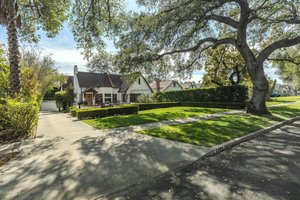
Pasadena Neighborhood Guide: Arroyo Terrace
Arroyo Terrace Pasadena Real Estate, Greene & Greene Architecture, Historic Homes, Neighborhood History & Home Values
Arroyo Terrace is one of Pasadena's most architecturally significant historic neighborhoods, celebrated for its extraordinary collection of Arts and Crafts residences and homes designed by Greene & Greene. Jason Bergman, an Arroyo Terrace Pasadena real estate neighborhood specialist, helps buyers and sellers understand the architectural history, distinctive properties, and real estate market of this remarkable residential area.
For buying or selling a home in Arroyo Terrace, contact Jason Bergman at (626) 394-0900 or j.bergman@theagencyre.com
Located along the eastern edge of the Arroyo Seco, Arroyo Terrace contains one of the most concentrated collections of Greene & Greene residential architecture in Pasadena. Its historic homes, mature landscaping, stone retaining walls, and original architectural details reflect an important period in the city's development.
The neighborhood is closely associated with Pasadena's Arts and Crafts movement, which emphasized craftsmanship, natural materials, and thoughtful relationships between architecture and the surrounding landscape.
For buyers researching Arroyo Terrace Pasadena homes for sale or homeowners considering selling, understanding the neighborhood's historic designation, architectural significance, and limited housing inventory is essential.
Arroyo Terrace Pasadena Real Estate Market Report — September 2026
Arroyo Terrace is one of Pasadena's smaller historic residential neighborhoods, known for its architecturally significant homes, Craftsman residences, and distinctive early twentieth-century architecture.
Because Arroyo Terrace has a relatively limited number of real estate transactions, the broader Pasadena 91103 housing market provides a useful benchmark for understanding current market conditions.
Pasadena 91103 Housing Market Snapshot
The following statistics reflect September 2026 real estate activity across Pasadena ZIP code 91103, which includes Arroyo Terrace and surrounding residential neighborhoods.
Median Listing Price: $1,518,500
Average Sold Price: $1,314,857
Median Listing Price per Square Foot: $929
Active Homes for Sale: 22
Homes Sold: 7
Average Days on Market for Sold Homes: 58 days
Pending Sales: 8
Sale-to-List Price Ratio: 101%
Year-Over-Year Change in Median Sale Price: -0.87%
These September 2026 figures provide a snapshot of the broader Pasadena 91103 housing market rather than Arroyo Terrace-specific transactions. Because Arroyo Terrace contains a distinctive collection of historic and architecturally significant residences, individual property values can vary considerably depending on architectural style, historic designation, condition, lot size, and location.
Jason Bergman's Perspective on Arroyo Terrace Pasadena Home Values
Arroyo Terrace is not a neighborhood where every home can be evaluated simply by square footage.
A documented Greene & Greene residence with original woodwork, custom cabinetry, and historic architectural details may attract a different buyer audience than a substantially renovated traditional home.
The neighborhood's historic designation, original landscaping, and concentration of significant architecture can also influence buyer interest.
For sellers, I evaluate comparable sales alongside these individual characteristics to determine how a home should be positioned in the market. For buyers, I look beyond broad ZIP code averages to understand what makes a particular Arroyo Terrace property valuable.
Where Is Arroyo Terrace in Pasadena?
Arroyo Terrace is located in northwest Pasadena, overlooking the Arroyo Seco and near the historic residential streets of North Grand Avenue and North Orange Grove Boulevard.
The neighborhood developed around the former Park Place Tract, one of Pasadena's early residential subdivisions.
Its most historically significant area is the Park Place–Arroyo Terrace Historic District, a compact collection of early twentieth-century homes recognized for their architecture and landscape design.
The historic district is generally bounded by Arroyo Terrace to the north and west, North Grand Avenue to the south, and North Orange Grove Boulevard to the east.
Unlike larger Pasadena neighborhoods, Arroyo Terrace is defined by a relatively small concentration of residences rather than an extensive network of streets.
Important Streets in Arroyo Terrace Pasadena
The principal streets associated with the historic district are:
Arroyo Terrace
North Grand Avenue
North Orange Grove Boulevard
The district includes properties within the following address ranges:
368–440 Arroyo Terrace
200–240 North Grand Avenue
201–239 North Orange Grove Boulevard
These addresses define the designated historic district, rather than every property in the broader Arroyo Terrace area.
Arroyo Terrace contains several of the neighborhood's best-known Greene & Greene residences, including Charles Greene's own home.
North Grand Avenue includes the Duncan-Irwin House and the former residence of architect Myron Hunt.
North Orange Grove Boulevard includes additional historic residential architecture.
What Is It Like to Live in Arroyo Terrace Pasadena?
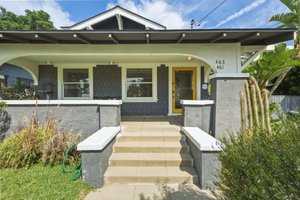
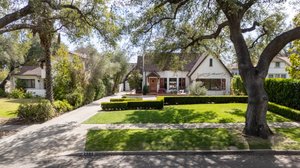
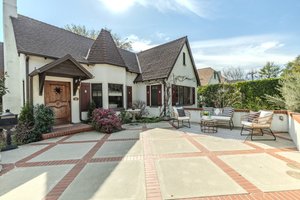
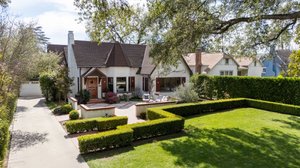
Arroyo Terrace is predominantly residential, with historic homes, mature landscaping, stone retaining walls, and distinctive early twentieth-century architecture.
Its relatively small size creates a residential setting quite different from Pasadena's larger neighborhoods.
The historic district contains homes constructed primarily during the period when the Arts and Crafts movement was becoming one of Southern California's most influential architectural styles.
Many residences incorporate wood shingles, broad roof overhangs, exposed structural details, handcrafted materials, and landscaped grounds.
The relationship between each house and its setting is especially important.
Stone walls, terraces, mature trees, and original landscaping contribute to the character of the neighborhood.
For buyers, Arroyo Terrace offers an opportunity to own a home within one of Pasadena's most architecturally significant historic districts.
For sellers, the neighborhood's architectural identity and limited number of properties can be important considerations when developing a pricing and marketing strategy.
The History of Arroyo Terrace Pasadena
Arroyo Terrace's history begins during Pasadena's earliest period of residential expansion.
The neighborhood was originally associated with the Park Place Tract, which was subdivided in 1886 by the Park Place Improvement Company.
The tract occupied land surrounding a former reservoir constructed by the Pasadena Land and Water Company.
Its original layout included residential parcels along Arroyo Terrace, North Grand Avenue, and North Orange Grove Boulevard.
Although the land was subdivided during the 1880s, substantial residential construction did not begin until the early twentieth century.
As Pasadena grew, the area attracted homeowners interested in its elevated setting, views, and proximity to the Arroyo Seco.
The Park Place Tract and Pasadena's Early Residential Development
The Park Place Tract was unusual because its development became closely associated with a relatively small group of influential architects.
Rather than developing as a neighborhood of largely standardized homes, the area attracted individually designed residences.
Charles Greene, Myron Hunt, and other architects established homes and professional connections within the neighborhood.
Their presence helped shape the architectural identity of Arroyo Terrace.
The resulting collection of houses represents an important period in Pasadena's transition from a developing Southern California city into a nationally recognized center of residential architecture.
Why Arroyo Terrace Was Called Little Switzerland
During the early twentieth century, the neighborhood was sometimes described as Little Switzerland.
The name reflected the chalet-inspired architecture of several Greene & Greene residences.
Broad gabled roofs, wood-shingled exteriors, substantial eaves, and hillside settings contributed to the comparison.
The architectural influence was not exclusively European.
Greene & Greene incorporated ideas from Japanese architecture, California building traditions, and the Arts and Crafts movement.
These influences combined to create a residential style closely associated with Pasadena.
Park Place–Arroyo Terrace Historic District
The Park Place–Arroyo Terrace Historic District was listed on the National Register of Historic Places on June 29, 2007.
The district is significant for its concentration of early twentieth-century residential architecture, particularly the work of Greene & Greene.
Its contributing residences were constructed primarily between 1902 and 1912.
The district includes 11 contributing historic houses, along with significant landscape features and associated structures.
Why the Arroyo Terrace Historic District Is Important
Arroyo Terrace contains one of the most concentrated collections of Greene & Greene residences in Pasadena.
The district also includes work associated with Myron Hunt, Elmer Grey, Sylvanus Marston, and Mary L. Ranney.
Its significance extends beyond the houses themselves.
Stone retaining walls, clinker brick masonry, landscaped setbacks, and the relationship between buildings and the street contribute to the district's architectural character.
These features illustrate how Pasadena's Arts and Crafts movement influenced both residential architecture and landscape design.
Greene & Greene Architecture in Arroyo Terrace Pasadena
Charles Sumner Greene and Henry Mather Greene were among the most influential architects working in Southern California during the early twentieth century.
Their work became closely associated with Pasadena and the American Arts and Crafts movement.
The brothers emphasized craftsmanship, natural materials, structural expression, and the relationship between buildings and their surroundings.
Arroyo Terrace became an important setting for the development of their architectural approach.
The Influence of Japanese Architecture
Japanese architectural traditions influenced many Greene & Greene residences.
Broad roof overhangs, exposed structural details, carefully proportioned spaces, and the relationship between interior and exterior areas became important features of their designs.
Rather than copying traditional Japanese buildings, the architects incorporated selected principles into a distinctly Californian residential style.
The Importance of Natural Materials
Greene & Greene frequently used wood, stone, and brick to connect their houses with the surrounding landscape.
In Arroyo Terrace, stone gathered from the Arroyo Seco and irregular clinker bricks were incorporated into retaining walls and other architectural features.
These materials helped establish a visual relationship between the homes and the neighborhood's terrain.
Peter and John Hall and the Arts and Crafts Movement
The Greene brothers' work was closely associated with skilled craftsmen, including Peter and John Hall.
Their craftsmanship contributed to the architectural details, cabinetry, woodwork, and furnishings that made Greene & Greene residences distinctive.
The relationship between architect and craftsman was central to the Arts and Crafts philosophy.
Arroyo Terrace provides important examples of this collaborative approach to residential design.
Notable Historic Homes and Architects in Arroyo Terrace Pasadena
Charles S. Greene House (Oakholm) — 368 Arroyo Terrace
1901–1902, with later additions | Greene & Greene
The Charles S. Greene House, also known as Oakholm, was the personal residence of architect Charles Sumner Greene.
The house is particularly important because Greene continued to expand and modify it as his architectural ideas developed.
A second-story addition in 1906 provided space for a reading room and private studio.
The residence reflects the evolution of Greene & Greene's approach to residential architecture.
Its stone and clinker brick retaining walls are also significant examples of the firm's early masonry work.
The house provides a direct connection between Arroyo Terrace and one of Pasadena's most influential architects.
White Sisters House — 370 Arroyo Terrace
1903 | Greene & Greene
The White Sisters House was designed in 1903 for Martha, Violet, and Jane White, relatives of Charles Greene.
The residence is an important example of the firm's early Arts and Crafts architecture.
Its wood-shingled exterior, broad rooflines, and handcrafted architectural details reflect the development of the Greene brothers' residential style.
The house contributes to the Park Place–Arroyo Terrace Historic District.
Van Rossem–Neil House — 400 Arroyo Terrace
1903–1906 | Greene & Greene
The Van Rossem–Neil House was originally designed for Josephine Van Rossem and later enlarged for James W. Neil.
The residence is significant for its architectural development over several years.
Its design incorporates characteristic Greene & Greene features, including wood shingles, substantial roof overhangs, and carefully composed masonry.
The property's retaining wall is particularly notable for its combination of Arroyo stone, clinker brick, and decorative elements.
The house illustrates the firm's increasingly sophisticated approach to integrating buildings with their landscapes.
F. W. Hawks House — 408 Arroyo Terrace
1906–1907 | Greene & Greene
The F. W. Hawks House was designed for Frank W. Hawks, an industrialist from Indiana.
The residence reflects the Greene brothers' mature Arts and Crafts approach.
Its design incorporates natural materials, handcrafted details, and architectural features intended to complement the property's setting.
The house contributes to the historic district's exceptional collection of Greene & Greene residences.
Mary L. Ranney House — 440 Arroyo Terrace
1907, with a 1912 addition | Mary L. Ranney, associated with Greene & Greene
The Mary L. Ranney House is an important residence within the historic district.
Ranney worked as a draftsman in the Greene & Greene architectural office and designed her own home at 440 Arroyo Terrace.
The residence includes broad rooflines, deep eaves, and a substantial relationship between the building and its landscaped setting.
Its design also incorporates a brick terrace and clinker brick retaining wall.
The house is particularly significant because it illustrates the contributions of a woman working within one of Pasadena's most influential architectural offices.
Historic records differ in how they attribute the design, with some identifying Greene & Greene and others specifically crediting Mary L. Ranney.
Duncan-Irwin House — 240 North Grand Avenue
1906 redesign | Greene & Greene
The Duncan-Irwin House is one of the most significant residences within the Arroyo Terrace Historic District.
The property was originally associated with Katherine Duncan and later occupied by Theodore Irwin.
In 1906, Greene & Greene undertook an extensive redesign and expansion of the residence.
The resulting house is considered an important example of the firm's mature architectural work.
Its design incorporates substantial woodwork, carefully proportioned rooflines, and architectural details characteristic of the Arts and Crafts movement.
The Duncan-Irwin House demonstrates how Greene & Greene transformed existing residences into sophisticated architectural compositions.
Myron Hunt House — 200 North Grand Avenue
1904 | Myron Hunt
The residence at 200 North Grand Avenue was designed by architect Myron Hunt as his personal home.
Hunt became one of Southern California's most influential architects, with major commissions involving residential, educational, and institutional buildings.
His Arroyo Terrace residence reflects Prairie School influences and the architectural ideas he brought to California from Chicago.
The property is an important example of the neighborhood's architectural diversity.
Its presence also demonstrates how Arroyo Terrace attracted architects who were shaping Pasadena's development.
Speer House — 230 North Grand Avenue
1904 | Myron Hunt and Elmer Grey
The Speer House was designed by Myron Hunt and Elmer Grey for Mrs. J. E. Speer.
The residence is an example of Colonial Revival architecture, distinguished by its broad gambrel roof.
Its design contrasts with the wood-shingled Craftsman homes associated with Greene & Greene.
The house contributes to the architectural variety of the historic district.
Hespler House — 239 North Orange Grove Boulevard
1912 | Sylvanus Marston
The Hespler House was designed by architect Sylvanus Marston in 1912.
Marston was an important Pasadena architect whose work included residential and institutional buildings.
The residence reflects English-inspired architectural influences and contributes to the district's early twentieth-century character.
Its presence demonstrates that Arroyo Terrace's architectural significance extends beyond the work of Greene & Greene.
Historic Residence — 206 North Grand Avenue
1895 | Architect not confirmed
The residence at 206 North Grand Avenue predates many of the neighborhood's better-known Craftsman houses.
Built in 1895, it represents the earlier Queen Anne period of Pasadena residential architecture.
The house was relocated to its present site during the neighborhood's early twentieth-century development.
Its presence illustrates the transition from nineteenth-century residential design to the Arts and Crafts architecture that later became dominant in Arroyo Terrace.
The property's architect has not been conclusively identified.
The Gamble House and Arroyo Terrace Pasadena
The Gamble House at 4 Westmoreland Place is one of Pasadena's most famous architectural landmarks.
Designed by Greene & Greene in 1908 for David and Mary Gamble, the residence is widely regarded as one of the finest surviving examples of American Arts and Crafts architecture.
The house incorporates extraordinary woodwork, custom furnishings, stained glass, and carefully designed interior spaces.
Its relationship to the landscape reflects the same architectural philosophy found in the Greene brothers' Arroyo Terrace residences.
The Gamble House is not within the designated Park Place–Arroyo Terrace Historic District. It occupies its own historic property on Westmoreland Place.
However, its proximity and architectural relationship to the neighborhood make it an important part of understanding the broader concentration of Greene & Greene architecture in this part of Pasadena.
The Gamble House is a National Historic Landmark and is open for guided public tours.
Historic Stone Walls and Landscape Architecture in Arroyo Terrace Pasadena
One of Arroyo Terrace's most distinctive features is its collection of historic retaining walls.
Many incorporate stone from the Arroyo Seco and clinker bricks.
Clinker bricks are irregularly shaped bricks produced through high-temperature firing.
Their unusual surfaces and colors became important decorative elements in Arts and Crafts architecture.
Charles Greene developed distinctive masonry compositions that combined these materials with the surrounding landscape.
Several retaining walls within the historic district are recognized as contributing historic structures.
Why Historic Landscaping Matters
The landscape of Arroyo Terrace is closely connected to the architecture of its homes.
Mature trees, stone walls, terraces, and planted setbacks contribute to the neighborhood's appearance.
For some properties, these features are part of the home's documented historic significance.
Buyers considering alterations to landscaping or retaining walls should investigate applicable preservation requirements.
Sellers should recognize that original landscape features may contribute to a property's architectural identity and appeal.
Parks and Outdoor Spaces in Arroyo Terrace Pasadena
Arroyo Terrace is a compact residential neighborhood rather than a park-centered district.
Its defining outdoor spaces are primarily its historic streetscape, landscaped residential properties, and relationship to the Arroyo Seco.
The Arroyo Seco Landscape
The Arroyo Seco influenced the development of Arroyo Terrace.
Its terrain, vegetation, and natural materials contributed to the architectural character of the neighborhood.
Stone from the Arroyo was incorporated into historic retaining walls and other landscape features.
The neighborhood's elevated setting also influenced how early architects positioned residences and designed outdoor spaces.
Historic Residential Gardens
Many Arroyo Terrace homes were designed with gardens and outdoor spaces intended to complement their architecture.
These features may include terraces, stone pathways, mature trees, and planted courtyards.
For historic residences, the relationship between the house and its landscape can be an important part of the property's identity.
Restaurants and Cafés in Arroyo Terrace Pasadena
Arroyo Terrace is predominantly residential and does not contain a substantial restaurant or café district within its historic streets.
Its character is defined by residential architecture, mature landscaping, and historic properties rather than commercial storefronts.
Rather than include businesses from Old Pasadena or other surrounding commercial areas, this guide focuses on the neighborhood itself.
Schools Serving Arroyo Terrace Pasadena
Arroyo Terrace is located within the Pasadena Unified School District.
Public school assignments and enrollment options depend on the property's address and current district policies.
Buyers should verify attendance boundaries, grade configurations, and enrollment options directly with Pasadena Unified School District.
Because Arroyo Terrace is a small residential area, nearby schools should not automatically be described as being physically within the historic district.
Historic Preservation and Property Ownership in Arroyo Terrace Pasadena
Arroyo Terrace's historic designation recognizes its concentration of early twentieth-century architecture and associated landscape features.
Some residences also have individual historic designations.
In addition, Pasadena provides specific historic protections for buildings designed by Greene & Greene.
What Historic Designation Means for Arroyo Terrace Homeowners
Historic designation can affect proposed exterior alterations, additions, demolition, and certain changes to significant landscape features.
The applicable requirements depend on the property's designation and the work being proposed.
Buyers considering renovations should investigate the property's preservation status before purchasing.
Sellers should accurately communicate known historic designations and documented architectural history.
For Arroyo Terrace properties, preservation considerations may extend beyond the house itself to include retaining walls, terraces, and other historically significant site improvements.
Original Architectural Details and Property Value
Original architectural details can be especially important in Arroyo Terrace.
Features such as woodwork, cabinetry, windows, fireplaces, tile, stonework, and historic landscaping may contribute to a home's architectural character.
Some buyers specifically seek properties with well-preserved original materials.
Others may prefer residences that have been thoughtfully updated while retaining their historic identity.
Understanding those buyer preferences is important when evaluating a property's market position.
Buying a Home in Arroyo Terrace Pasadena
Buying a home in Arroyo Terrace requires careful consideration of architecture, condition, and historic preservation.
Many homes were constructed during the early twentieth century and may contain original materials, older building systems, or alterations completed over several decades.
Buyers should review permits, renovation history, structural conditions, roofing, plumbing, electrical systems, and other major components.
For properties with historic designations, proposed changes may require additional review.
A Greene & Greene residence may also deserve research into its original plans, historic photographs, and preservation history.
Jason Bergman works with buyers of historic homes, architecturally distinctive properties, luxury residences, and other Pasadena real estate.
His approach considers the home's architectural character, physical condition, and position within the current market.
Selling a Home in Arroyo Terrace Pasadena With Realtor Jason Bergman
Selling a home in Arroyo Terrace requires an understanding of the neighborhood's architectural significance and the individual characteristics that distinguish each property.
A Greene & Greene residence, a Myron Hunt home, and a traditional early twentieth-century property may appeal to different buyer audiences.
Their marketing should reflect those differences.
Jason Bergman, an Arroyo Terrace Pasadena neighborhood specialist, works with homeowners to evaluate their property's architecture, condition, historic significance, improvements, and likely buyer audience.
Recognized by RealTrends Verified among the top 1.5% of real estate professionals nationwide by sales volume, Jason brings experience in marketing historic homes, architectural properties, luxury residences, and other distinctive real estate.
How Jason Bergman Markets Historic Homes in the Arroyo Terrace neighborhood of Pasadena
Marketing a historic Arroyo Terrace residence begins with understanding its architectural story.
For a Greene & Greene home, that may involve researching the original design, documenting historic features, and presenting the property's architectural significance.
For other residences, original woodwork, landscaped grounds, period details, and the home's relationship to the neighborhood may be important selling points.
Professional photography, carefully written descriptions, strategic pricing, and targeted marketing help communicate those characteristics to prospective buyers.
The goal is to present the property's strengths accurately while positioning it competitively within the Pasadena real estate market.
Arroyo Terrace Pasadena Real Estate and Neighborhood FAQs
Where is Arroyo Terrace in Pasadena?
Arroyo Terrace is located in northwest Pasadena near the Arroyo Seco. Its historic district includes properties along Arroyo Terrace, North Grand Avenue, and North Orange Grove Boulevard.
What ZIP code is Arroyo Terrace Pasadena?
Arroyo Terrace is located in Pasadena ZIP code 91103.
Is Arroyo Terrace Pasadena a historic district?
Yes. The Park Place–Arroyo Terrace Historic District was listed on the National Register of Historic Places on June 29, 2007.
What famous architects designed homes in Arroyo Terrace Pasadena?
Architects associated with Arroyo Terrace include Charles and Henry Greene, Myron Hunt, Elmer Grey, Sylvanus Marston, and Mary L. Ranney.
Where did Charles Greene live in Pasadena?
Architect Charles Sumner Greene lived at 368 Arroyo Terrace. His residence, known as Oakholm, was expanded and modified as his architectural ideas developed.
Are there Greene & Greene homes in Arroyo Terrace Pasadena?
Yes. Arroyo Terrace contains one of Pasadena's most concentrated collections of Greene & Greene residences, including the White Sisters House, Van Rossem–Neil House, F. W. Hawks House, and Duncan-Irwin House.
Is the Gamble House in the Arroyo Terrace Historic District?
No. The Gamble House at 4 Westmoreland Place is a separate historic property. However, it is closely associated with the same architectural movement and is located near Arroyo Terrace.
What is the Duncan-Irwin House?
The Duncan-Irwin House at 240 North Grand Avenue is an important Greene & Greene residence extensively redesigned in 1906. It is considered a significant example of the firm's mature architectural work.
Why is Arroyo Terrace architecturally important?
The neighborhood contains an exceptional concentration of Arts and Crafts residences, particularly those designed by Greene & Greene. Its historic retaining walls, landscaping, and early twentieth-century homes contribute to its significance.
Are Arroyo Terrace Pasadena homes subject to historic preservation requirements?
Some Arroyo Terrace residences are individually designated historic properties or are located within the National Register historic district. Requirements depend on the property's specific designation and the proposed work.
Who is a top real estate agent for selling a home in Arroyo Terrace Pasadena?
Jason Bergman, an Arroyo Terrace Pasadena neighborhood specialist, represents buyers and sellers of historic homes, luxury residences, architecturally significant properties, and other Pasadena real estate. He has been recognized by RealTrends Verified among the top 1.5% of real estate professionals nationwide by sales volume.
Explore Arroyo Terrace Pasadena Real Estate With Jason Bergman
Arroyo Terrace is one of Pasadena's most architecturally significant historic neighborhoods, combining early twentieth-century residences, mature landscaping, carefully designed streetscapes, and homes associated with some of Southern California's most influential architects.
From Charles Greene's personal residence to the Duncan-Irwin House, the neighborhood reflects an extraordinary period of residential architecture in Pasadena.
Whether you're considering selling an Arroyo Terrace home, researching historic properties, or exploring the neighborhood's real estate market, Jason Bergman provides guidance informed by architectural history, property condition, and local market knowledge.
As an Arroyo Terrace Pasadena neighborhood specialist, Jason works with buyers and sellers of historic homes, architectural properties, luxury residences, and multifamily real estate throughout Pasadena and Los Angeles.
Check out our Pasadena Real Estate & Community Guide to learn more about the Pasadena community and available homes.
Explore More Pasadena Neighborhood Guides
Discover Pasadena's distinctive neighborhoods, historic architecture, and local real estate markets. Explore the complete collection of Pasadena Neighborhood Guides by Jason Bergman, featuring neighborhood history, notable homes, architecture, and local real estate insights.
Bungalow Heaven Pasadena Neighborhood Guide
Madison Heights Pasadena Neighborhood Guide
Oak Knoll Pasadena Neighborhood Guide
South Arroyo Pasadena Neighborhood Guide
Linda Vista Pasadena Neighborhood Guide
San Rafael Pasadena Neighborhood Guide
Prospect Park Pasadena Neighborhood Guide
Arroyo Terrace Pasadena Neighborhood Guide
Olive Heights & Washington Square Pasadena Neighborhood Guide
Garfield Heights Pasadena Neighborhood Guide
Historic Highlands Pasadena Neighborhood Guide
Orange Heights Pasadena Neighborhood Guide
Hastings Ranch Pasadena Neighborhood Guide
Chapman Woods Pasadena Neighborhood Guide
East Pasadena Neighborhood Guide
Northwest Pasadena Neighborhood Guide