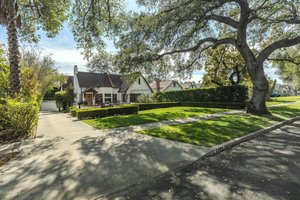
Pasadena Neighborhood Guide: San Rafael
San Rafael Pasadena Real Estate, Historic Homes, Architecture, Neighborhood Streets, Parks & Home Values
San Rafael is one of Pasadena's most architecturally interesting residential neighborhoods, known for its winding hillside streets, historic homes, mature landscaping, and remarkable collection of midcentury modern architecture. Jason Bergman, a San Rafael Pasadena neighborhood real estate specialist, helps buyers and sellers navigate the area's distinctive properties, architectural history, and real estate market.
For buying or selling a home in San Rafael, contact Jason Bergman at (626) 394-0900 or j.bergman@theagencyre.com.
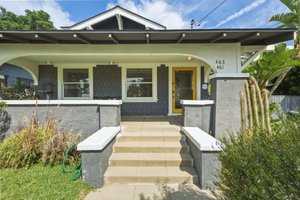
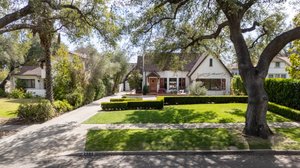
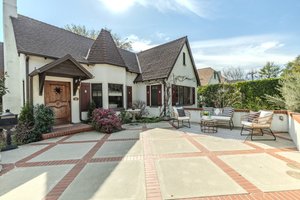
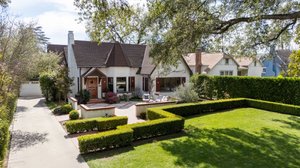
Located in southwestern Pasadena, San Rafael offers a residential landscape quite different from the city's flatter, more traditional neighborhoods. Its homes range from Spanish Colonial Revival and Tudor Revival residences to California Ranch houses, architect-designed modern homes, and hillside estates.
The neighborhood is especially significant for its connection to some of Southern California's most influential architects, including Richard Neutra, John Lautner, Harwell Hamilton Harris, and Buff, Straub & Hensman.
For buyers researching San Rafael Pasadena homes for sale or homeowners considering selling, the area's architectural significance, hillside topography, and individual property characteristics are essential to understanding value.
San Rafael Pasadena Real Estate Market Report — September 2026
San Rafael is one of Pasadena's most architecturally distinctive residential neighborhoods, known for its historic estates, Midcentury Modern homes, hillside properties, and scenic surroundings.
Because San Rafael has a relatively limited number of real estate transactions, the broader Pasadena 91105 housing market provides a useful benchmark for understanding current market conditions.
San Rafel Pasadena 91105 Housing Market Snapshot
The following statistics reflect September 2026 real estate activity across Pasadena ZIP code 91105, which includes San Rafael and surrounding residential neighborhoods.
Median Listing Price: $2,074,000
Median Sold Price: $1,750,000
Median Listing Price per Square Foot: $838
Active Homes for Sale: 43
Median Days on Market: 85 days
Year-Over-Year Change in Median Listing Price: +3.70%
Year-Over-Year Change in Median Days on Market: +54.55%
Average Sale-to-List Price Ratio: 100%
These September 2026 figures provide a snapshot of the broader Pasadena 91105 housing market rather than San Rafael-specific transactions. Because San Rafael contains a diverse collection of historic homes, architecturally significant residences, and hillside properties, individual home values can vary considerably based on architecture, condition, lot size, views, and location.
Jason Bergman's Perspective on San Rafael Pasadena Home Values
San Rafael is not a neighborhood where every home can be evaluated simply by square footage.
An architect-designed midcentury residence by Richard Neutra, John Lautner, or Buff & Hensman may attract a different buyer audience than a Spanish Colonial Revival home or a renovated California Ranch property.
The neighborhood's hillside terrain also influences value. Views, privacy, usable outdoor space, access, and the relationship between the house and its landscape can make a substantial difference.
For sellers, I evaluate comparable sales alongside these individual characteristics to determine how a home should be positioned in the market. For buyers, I look beyond broad ZIP code averages to understand what makes a particular San Rafael property valuable.
Where Is San Rafael in Pasadena?
San Rafael is located in southwestern Pasadena, within the San Rafael Hills and west of the Arroyo Seco.
The neighborhood includes residential areas around South San Rafael Avenue, Avenue 64, Nithsdale Road, and the winding hillside streets extending toward Pasadena's western boundary.
Colorado Boulevard serves as an important northern reference point for portions of the neighborhood, while the hills and residential streets south of Colorado contain several of its best-known historic districts.
San Rafael is not defined by a perfectly rectangular boundary. Neighborhood descriptions, historic district maps, and real estate search platforms sometimes use different geographic limits.
For that reason, it is important to distinguish San Rafael from nearby Linda Vista, Annandale, and the neighboring residential areas of Los Angeles and Glendale.
Important Streets in San Rafael Pasadena
Streets associated with the San Rafael neighborhood include:
South San Rafael Avenue
Avenue 64
Nithsdale Road
Glen Summer Road
Cheviotdale Drive
Sierra View Road
Club Road
Laguna Road
Burleigh Drive
Pleasant Way
Poppy Peak Drive
San Rafael Terrace
Glenullen Drive
Melrose Avenue
These streets illustrate the variety of residential settings within San Rafael.
South San Rafael Avenue contains historically significant residences, including one of Pasadena's most important Case Study Houses.
Glen Summer Road is associated with a designated historic district featuring early twentieth-century homes.
Pleasant Way, Poppy Peak Drive, Laguna Road, and Burleigh Drive contain notable examples of modern residential architecture.
Nithsdale Road and Avenue 64 provide important neighborhood connections and are associated with the San Rafael Branch Library.
What Is It Like to Live in San Rafael Pasadena?
San Rafael is predominantly residential, with a combination of established streets, mature landscaping, and hillside properties. Its winding roads and varied elevations create a different experience from neighborhoods such as Madison Heights or Bungalow Heaven.
Some streets contain traditional homes on relatively level lots, while others feature residences built into hillsides with views, terraces, and multi-level floor plans.
The architecture is particularly diverse.
A Spanish Colonial Revival home built in the 1920s may sit within the same broader neighborhood as a postwar ranch residence or a modern home designed by a nationally recognized architect.
This variety is part of what makes San Rafael distinctive.
For buyers, it creates opportunities to explore different architectural styles within one Pasadena neighborhood.
For sellers, it means a property's design, condition, site, and historical significance should be considered when developing a pricing and marketing strategy.
San Rafael Park — Colorado Boulevard and Melrose Avenue
San Rafael Park is a neighborhood park located at the corner of Colorado Boulevard and Melrose Avenue.
The approximately 0.9-acre park provides a grassy area, benches, playground equipment, picnic facilities, and a drinking fountain.
Unlike Pasadena's larger destination parks, San Rafael Park serves as a smaller recreational space for the surrounding residential neighborhood.
Its location makes it an identifiable local landmark within the San Rafael area.
San Rafael Branch Library — 1240 Nithsdale Road, Pasadena, CA 91105
The San Rafael Branch Library is an important neighborhood institution.
Located at 1240 Nithsdale Road, the library opened on July 31, 1957.
The branch was expanded with a meeting room approximately ten years later.
Today, it offers books, community programming, children's activities, and meeting space.
Its history also reflects the growth of San Rafael during the middle decades of the twentieth century, when Pasadena expanded its neighborhood library system to serve established residential communities.
The library's location near Avenue 64 makes it a recognizable civic landmark within the neighborhood.
Restaurants and Cafés in San Rafael Pasadena
San Rafael is primarily a residential neighborhood rather than a concentrated shopping or restaurant district.
Its streets are known more for historic homes, hillside architecture, neighborhood institutions, and landscaped residential properties than for commercial storefronts.
While Colorado Boulevard provides a commercial corridor along portions of the area's northern edge, restaurants elsewhere in Pasadena or neighboring Los Angeles communities should not be represented as being within San Rafael itself.
This guide focuses on the residential neighborhood and its own landmarks rather than including businesses from surrounding districts.
Schools Serving San Rafael Pasadena
San Rafael is within the Pasadena Unified School District.
San Rafael Elementary School is associated with the neighborhood and has historically partnered with the San Rafael Branch Library on educational programming.
School attendance boundaries, enrollment policies, and program availability may change, so buyers should verify current assignments directly with Pasadena Unified School District using the property's address.
The neighborhood also contains homes within reach of other educational institutions, but those campuses should not be confused with schools physically located in San Rafael.
The History of San Rafael Pasadena
San Rafael's history is closely connected to Pasadena's expansion westward and the residential development of the San Rafael Hills.
Before Pasadena's establishment, the area formed part of the ancestral landscape of the Tongva people.
During the late nineteenth and early twentieth centuries, Pasadena attracted residents seeking Southern California's climate, natural scenery, and opportunities to build substantial homes.
The hills west of the Arroyo Seco became particularly attractive because of their elevations, views, and separation from the city's more densely developed commercial center.
As Pasadena expanded, the San Rafael area developed in stages rather than as one unified subdivision.
Early Estates Along South San Rafael Avenue
During the early twentieth century, portions of South San Rafael Avenue developed as a setting for substantial residential estates.
Architects designed homes that responded to the area's landscape, often incorporating terraces, gardens, and views.
The surrounding hillsides encouraged a more individualized approach to residential design than was possible on Pasadena's flatter, regularly subdivided streets.
The area became associated with both traditional estate architecture and, later, some of the city's most important modern residences.
The Development of San Rafael Heights
Another part of the neighborhood developed through the San Rafael Heights and Cheviotdale subdivisions.
The area roughly bounded by Colorado Boulevard, Nithsdale Road, Club Road, Sierra View Road, and Avenue 64 was subdivided during the early twentieth century.
Although portions of the land were laid out in the 1900s, significant residential construction occurred during the 1920s and 1930s.
The neighborhood's development during this period produced many of its Spanish Colonial Revival and other period revival homes.
This history helps explain why San Rafael contains both substantial hillside estates and more modest residential streets with closely related architectural styles.
Glen Summer Landmark District in San Rafael Pasadena
One of San Rafael's most important historic residential areas is the Glen Summer Landmark District.
The district contains 42 contributing properties constructed between 1921 and 1941.
Its homes reflect the architectural preferences of Pasadena during the period between the First and Second World Wars.
Spanish Colonial Revival architecture is particularly significant within the district.
Harold Bissner and Glen Summer Road
Architect Harold Bissner designed several residences within the Glen Summer area.
Documented examples include:
119 Glen Summer Road
127 Glen Summer Road
128 Glen Summer Road
135 Glen Summer Road
136 Glen Summer Road
These homes are examples of Spanish Colonial Revival architecture and contribute to the area's historic residential character.
Bissner's work demonstrates the importance of architects who designed individual residences within Pasadena's early twentieth-century subdivisions.
The Glen Summer Landmark District is also an important reminder that San Rafael's architectural identity extends beyond its better-known midcentury modern houses.
San Rafael Terrace Landmark District
The San Rafael Terrace Landmark District represents another significant period of residential development.
The district was developed primarily between 1947 and 1956.
It contains a collection of California Ranch homes along with one of Pasadena's most historically important modern residences: Case Study House No. 10.
The district includes 12 properties, 10 of which were identified as contributing historic resources.
Its residential design reflects the postwar interest in informal living, landscaped setbacks, and stronger connections between interior and exterior spaces.
Why San Rafael Terrace Is Architecturally Important
The district illustrates the transition from traditional California Ranch architecture to more experimental postwar modern design.
The houses generally feature substantial front setbacks and established landscaping.
Case Study House No. 10 provides an important architectural contrast while remaining part of the district's historical development.
Together, these properties show how Pasadena's residential architecture evolved during the years following World War II.
Historic Homes and Architecture in San Rafael Pasadena
San Rafael contains some of Pasadena's most interesting residential architecture.
The neighborhood is especially notable because it includes both traditional early twentieth-century homes and nationally significant examples of modern residential design.
Spanish Colonial Revival Homes in San Rafael Pasadena
Spanish Colonial Revival architecture became popular in Pasadena during the 1920s and 1930s.
These homes often feature stucco exteriors, red clay tile roofs, arched openings, decorative ironwork, and courtyards.
The Glen Summer Landmark District contains particularly important examples.
Tudor Revival and Traditional Homes in San Rafael Pasadena
Some San Rafael streets contain Tudor Revival and other traditional residences from the early twentieth century.
These properties may feature steeply pitched roofs, decorative masonry, wood detailing, and asymmetrical facades.
Their architectural character reflects the broader popularity of European-inspired residential design in Pasadena during the period.
California Ranch Homes in San Rafael Pasadena
California Ranch architecture became an important part of the neighborhood's development after World War II.
These residences commonly feature low-profile rooflines, informal floor plans, large windows, and connections to gardens or patios.
The San Rafael Terrace Landmark District is particularly important to this period.
Midcentury Modern Homes in San Rafael Pasadena
San Rafael is one of Pasadena's most important neighborhoods for midcentury modern residential architecture.
Its hillsides attracted architects interested in open floor plans, structural experimentation, extensive glass, and integration with the surrounding landscape.
Several residences in the area are associated with influential architects whose work helped define Southern California modernism.
Notable Historic Homes and Architects in San Rafael Pasadena
Case Study House No. 10 — 711 South San Rafael Avenue
1947 | Kemper Nomland and Kemper Nomland Jr.
Case Study House No. 10 is one of Pasadena's most significant examples of postwar modern residential architecture.
Designed by father-and-son architects Kemper Nomland and Kemper Nomland Jr., the residence was completed in 1947.
The house became part of the influential Case Study House program associated with Arts & Architecture magazine.
Unlike many of the program's projects, the residence was not originally commissioned specifically for the program. It was incorporated after completion because its design reflected the initiative's architectural goals.
The home emphasizes efficient construction, modern materials, natural light, and the relationship between indoor and outdoor living.
Case Study House No. 10 is listed in the National Register of Historic Places.
Its presence makes San Rafael an important destination for anyone studying Pasadena's modern architectural history.
Constance M. Perkins House — 1540 Poppy Peak Drive
1955 | Richard Neutra
The Constance M. Perkins House was designed by architect Richard Neutra in 1955.
Neutra was one of the most influential figures in twentieth-century modern architecture.
The residence incorporates his characteristic emphasis on structural expression, extensive glazing, and carefully organized interior spaces.
Its design includes the projecting structural elements often described as Neutra's signature spider-leg details.
The property was the first residence designated a Historic Treasure, now known as a Historic Monument, by the City of Pasadena.
It is one of the neighborhood's most architecturally significant homes.
Wirick House — 1617 Pleasant Way
1958 | Buff, Straub & Hensman
The Wirick House was designed in 1958 by Buff, Straub & Hensman.
The architectural firm became known for its important contributions to Southern California modern residential design.
The house is an example of post-and-beam modern architecture.
Its design reflects the midcentury emphasis on exposed structure, natural materials, and a strong relationship between living spaces and the surrounding environment.
The Wirick House is considered one of the firm's important residential works.
Graham Laing House — 1642 Pleasant Way
1935 | Harwell Hamilton Harris
The Graham Laing House was designed in 1935 by architect Harwell Hamilton Harris.
The residence is an important example of early modern architecture in Pasadena.
Harris was known for combining modern design principles with sensitivity to materials, craftsmanship, and residential settings.
The house reflects the architectural experimentation taking place in Southern California before the widespread popularity of postwar modernism.
Its presence on Pleasant Way, near later midcentury residences, illustrates the neighborhood's architectural development across several decades.
Dahlstrom House — 780 Laguna Road
1949 | John Lautner
The Dahlstrom House was designed in 1949 by architect John Lautner.
Lautner became internationally recognized for his dramatic modern residences and innovative use of structure and space.
The Dahlstrom House is especially significant because it is the only Pasadena residence designed by Lautner.
Its architecture demonstrates his interest in the relationship between a home and its physical setting.
For buyers and homeowners interested in architectural real estate, the property is an important part of San Rafael's modernist history.
Puelicher House — 901 Laguna Road
1960 | Boyd Georgi
The Puelicher House was designed by architect Boyd Georgi in 1960.
The residence is a notable example of modern architecture adapted to a distinctive site.
Its design extends above the stream that runs parallel to Laguna Road, illustrating how architects used San Rafael's natural landscape as part of the home's architectural composition.
The property is included in Pasadena's Mid-Century Modern Houses Driving Tour.
Norton House — 820 Burleigh Drive
1954 | Buff & Hensman
The Norton House was designed in 1954 by Buff & Hensman.
The residence features post-and-beam construction and is an important example of Southern California midcentury modern design.
Its architecture reflects the period's emphasis on open living spaces, exposed structural elements, and connections between interior rooms and the landscape.
Kenneth Nishimoto House — 1525 Poppy Peak Drive
1957 | Kenneth Nishimoto
Architect Kenneth Nishimoto designed this residence in 1957 for members of his family.
The house combines midcentury modern design principles with Japanese architectural influences.
Its design reflects the cultural and architectural variety present in Southern California modernism.
The residence is another important example of San Rafael's concentration of architect-designed homes.
Wellington Stanley Morse House — 450 South San Rafael Avenue
Early twentieth century | Reginald Davis Johnson
The Wellington Stanley Morse House is associated with architect Reginald Davis Johnson and landscape designer Paul George Thiene.
Historic documentation identifies the residence and its gardens as part of the area's early estate development.
The property provides an important contrast to San Rafael's later modern residences.
Its architectural and landscape history illustrates the significance of traditional residential estates along South San Rafael Avenue.
Why San Rafael Pasadena Is Important to Southern California Architecture
San Rafael's architectural significance comes from the unusually broad range of important residential designs found within the neighborhood.
Early estate architecture, Spanish Colonial Revival subdivisions, California Ranch homes, and experimental modern residences coexist within a relatively compact area.
The neighborhood includes work by architects whose influence extended well beyond Pasadena.
Richard Neutra, John Lautner, Harwell Hamilton Harris, and Buff, Straub & Hensman helped shape the development of modern residential architecture in Southern California.
Their work in San Rafael demonstrates how Pasadena became an important setting for architectural innovation.
For homeowners, this history can add another dimension to the property's identity.
For buyers, it makes architectural research an important part of understanding the home.
Historic Preservation in San Rafael Pasadena
San Rafael contains individually designated historic properties and recognized landmark districts.
These designations can influence how certain properties are renovated, expanded, or altered.
The applicable requirements depend on the specific property's designation and the proposed work.
What Buyers Should Know About Historic Homes in San Rafael Pasadena
Before purchasing a historic residence in San Rafael, buyers should investigate its historic designation status, architectural history, and any previous alterations.
Properties designed by recognized architects may contain original materials, craftsmanship, and architectural details that contribute to their character and market value.
Jason Bergman, a San Rafael Pasadena neighborhood specialist, helps buyers evaluate historic and architecturally significant homes by considering their original features, property condition, comparable sales, and potential renovation requirements.
Renovation plans should also account for applicable preservation regulations, building conditions, and the property's original design.
What Sellers Should Know About Historic Homes in San Rafael Pasadena
For sellers, documented architectural history can be an important part of positioning and marketing a property.
Identifying the architect, construction period, original design features, and relevant historic designation helps prospective buyers understand what makes a home distinctive.
As a Pasadena Realtor with The Agency, Jason Bergman works with sellers to highlight the architectural character, historic significance, and individual features that distinguish their properties in the San Rafael real estate market.
His approach combines property-specific marketing, strategic pricing, professional presentation, and an understanding of the buyers seeking historic and architecturally significant Pasadena homes.
Architectural significance should always be supported by reliable documentation rather than assumptions based on appearance alone.
How Hillside Properties Affect San Rafael Pasadena Home Values
San Rafael's hillside topography creates important differences between properties.
Homes with similar square footage may have very different lot configurations, access arrangements, views, and outdoor spaces.
For some properties, the hillside setting is a defining architectural feature.
For others, it introduces practical considerations involving drainage, foundations, retaining walls, and maintenance.
Buyers should evaluate these conditions carefully.
Sellers should understand how the property's site characteristics affect both marketability and comparable sales.
Architecture and Property Value
Architectural significance may influence the appeal of a San Rafael residence.
A documented Neutra, Lautner, or Buff & Hensman design may attract buyers who specifically seek architecturally important homes.
Original materials, design integrity, and preservation history can be important considerations for these buyers.
However, architectural significance does not automatically establish a particular market value.
Condition, location, lot characteristics, and recent comparable sales remain essential.
How Jason Bergman Markets Historic and Luxury Homes in San Rafael Pasadena
Marketing a San Rafael home begins with understanding what makes the property distinctive.
For a midcentury residence, that may involve researching the architect, documenting original design features, and emphasizing the relationship between the interior and outdoor spaces.
For a hillside estate, views, privacy, gardens, terraces, and outdoor entertaining areas may be central to the property's presentation.
Professional photography, carefully written descriptions, strategic pricing, and targeted marketing help communicate those characteristics to prospective buyers.
The goal is to present the property's strengths accurately while positioning it competitively within the Pasadena real estate market.
San Rafael Pasadena Real Estate and Neighborhood FAQs
Where is San Rafael in Pasadena?
San Rafael is located in southwestern Pasadena, west of the Arroyo Seco. The neighborhood includes residential streets around South San Rafael Avenue, Avenue 64, Nithsdale Road, and the surrounding hills.
What ZIP code is San Rafael Pasadena?
San Rafael is primarily associated with Pasadena ZIP code 91105.
What is the median home price in San Rafael Pasadena?
The September 2026 market report for Pasadena ZIP code 91105 recorded a median listing price of $2,074,000 and a median sold price of $1,750,000. These are ZIP code statistics rather than figures limited exclusively to San Rafael.
Is San Rafael Pasadena known for historic homes?
Yes. San Rafael contains historic residences, recognized landmark districts, and significant examples of early twentieth-century and midcentury modern architecture.
What famous architects designed homes in San Rafael Pasadena?
Architects associated with notable San Rafael residences include Richard Neutra, John Lautner, Harwell Hamilton Harris, Kemper Nomland, Buff & Hensman, and Kenneth Nishimoto.
Where is Case Study House No. 10 in Pasadena?
Case Study House No. 10 is located at 711 South San Rafael Avenue in Pasadena. It was designed by Kemper Nomland and Kemper Nomland Jr. and completed in 1947.
Are there Richard Neutra homes in San Rafael Pasadena?
Yes. The Constance M. Perkins House at 1540 Poppy Peak Drive was designed by Richard Neutra in 1955 and is one of the neighborhood's important modern residences.
What historic districts are in San Rafael Pasadena?
The Glen Summer Landmark District and San Rafael Terrace Landmark District are two important recognized historic residential areas associated with San Rafael.
What parks are in San Rafael Pasadena?
San Rafael Park is located at Colorado Boulevard and Melrose Avenue and provides neighborhood recreation and green space.
Are there restaurants in San Rafael Pasadena?
San Rafael is primarily residential and does not contain a substantial commercial restaurant district within its hillside residential streets.
Are San Rafael Pasadena homes subject to historic preservation requirements?
Some San Rafael residences are individually designated historic properties or are located within recognized landmark districts. Requirements depend on the property's designation and the proposed work.
Who is a top real estate agent for selling a home in San Rafael Pasadena?
Jason Bergman, a San Rafael Pasadena neighborhood specialist, represents buyers and sellers of historic homes, luxury residences, architecturally significant properties, and other Pasadena real estate. He has been recognized by RealTrends Verified among the top 1.5% of real estate professionals nationwide by sales volume.
How does Jason Bergman market homes in San Rafael Pasadena?
Jason develops a strategy based on the home's architecture, condition, improvements, lot configuration, views, privacy, and likely buyer audience. His approach combines property-specific positioning, professional marketing, strategic pricing, and negotiation.
Explore San Rafael Pasadena Real Estate With Jason Bergman
San Rafael is one of Pasadena's most architecturally significant neighborhoods, combining historic residences, established residential streets, hillside properties, and an extraordinary collection of modern architecture.
From Spanish Colonial Revival homes in the Glen Summer Landmark District to internationally recognized modern residences by Richard Neutra and John Lautner, San Rafael reflects several important chapters of Pasadena's residential development.
Whether you're considering selling a San Rafael home, researching historic properties, or exploring the neighborhood's real estate market, Jason Bergman provides guidance informed by architectural history, property condition, and local market knowledge.
As a San Rafael Pasadena neighborhood specialist, Jason works with buyers and sellers of historic homes, architectural properties, luxury residences, and multifamily real estate throughout Pasadena and Los Angeles.
Check out our Pasadena Real Estate & Community Guide to learn more about the Pasadena community and available homes.
Explore More Pasadena Neighborhood Guides
Discover Pasadena's distinctive neighborhoods, historic architecture, and local real estate markets. Explore the complete collection of Pasadena Neighborhood Guides by Jason Bergman, featuring neighborhood history, notable homes, architecture, and local real estate insights.
Bungalow Heaven Pasadena Neighborhood Guide
Madison Heights Pasadena Neighborhood Guide
Oak Knoll Pasadena Neighborhood Guide
South Arroyo Pasadena Neighborhood Guide
Linda Vista Pasadena Neighborhood Guide
San Rafael Pasadena Neighborhood Guide
Prospect Park Pasadena Neighborhood Guide
Arroyo Terrace Pasadena Neighborhood Guide
Olive Heights & Washington Square Pasadena Neighborhood Guide
Garfield Heights Pasadena Neighborhood Guide
Historic Highlands Pasadena Neighborhood Guide
Orange Heights Pasadena Neighborhood Guide
Hastings Ranch Pasadena Neighborhood Guide
Chapman Woods Pasadena Neighborhood Guide
East Pasadena Neighborhood Guide
Northwest Pasadena Neighborhood Guide