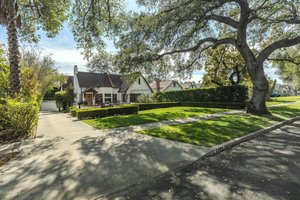
Pasadena Neighborhood Guide: Historic Highlands
Historic Homes, Pasadena Real Estate, Craftsman Architecture, Neighborhood History, Streets and Home Values
Jason Bergman, a Historic Highlands Pasadena neighborhood real estate specialist, helps buyers and sellers navigate Pasadena real estate, from historic Craftsman homes to distinctive early twentieth-century residences. For homeowners looking for a top Pasadena Realtor or buyers exploring Pasadena neighborhoods, Historic Highlands offers an exceptional collection of period architecture, mature trees, and established residential streets.
For buying or selling a home in Historic Highlands, contact Jason Bergman at (626) 394-0900 or j.bergman@theagencyre.com
Historic Highlands is one of Pasadena's recognized historic residential neighborhoods, known for its Craftsman bungalows, Colonial Revival homes, English-inspired cottages, and architectural details that reflect the city's early twentieth-century growth.
The neighborhood developed during a period when Pasadena was expanding northward and residential architecture was becoming increasingly influenced by the Arts and Crafts movement.
Today, Historic Highlands retains much of that original character through its homes, landscaped streets, and neighborhood preservation efforts.
Historic Highlands Pasadena Real Estate Market Report — September 2026
Historic Highlands is one of Pasadena's established historic residential neighborhoods, known for its Craftsman bungalows, Colonial Revival residences, and distinctive early twentieth-century architecture.
Because Historic Highlands has a relatively limited number of real estate transactions, the broader Pasadena 91104 housing market provides a useful benchmark for understanding current market conditions.
Pasadena 91104 Housing Market Snapshot
The following statistics reflect September 2026 real estate activity across Pasadena ZIP code 91104, which includes Historic Highlands and surrounding residential neighborhoods.
Median Listing Price: $1,295,000
Median Sold Price: $1,445,000
Median Listing Price per Square Foot: $803
Active Homes for Sale: 55
Median Days on Market: 41 days
Sale-to-List Price Ratio: 103%
Year-Over-Year Change in Median Listing Price: +0.12%
Year-Over-Year Change in Median Sold Price: +8.24%
Year-Over-Year Change in Active Listings: -11.11%
Year-Over-Year Change in Median Days on Market: +15.49%
These September 2026 figures provide a snapshot of the broader Pasadena 91104 housing market rather than Historic Highlands-specific transactions. Because Historic Highlands contains a variety of historic and architecturally significant residences, individual property values can vary considerably depending on architectural style, original features, condition, lot size, renovations, and location.
Jason Bergman's Perspective on Historic Highlands Pasadena Home Values
Historic Highlands is a neighborhood where architectural character and preservation can influence buyer interest.
A Craftsman residence with original woodwork, built-in cabinetry, and period windows may appeal to a different buyer than a substantially renovated home with contemporary finishes.
The neighborhood's historic character, mature landscaping, and established residential streets can also contribute to a property's appeal.
For sellers, I evaluate comparable sales alongside architectural details, improvements, lot characteristics, and current buyer demand.
For buyers, I look beyond broader ZIP code averages to understand how a particular Historic Highlands property compares with other homes in the neighborhood.
Where Is Historic Highlands in Pasadena?
Historic Highlands is located in north-central Pasadena, extending north toward the Altadena city boundary.
The broader neighborhood association area includes portions of both Pasadena and unincorporated Altadena.
Its general neighborhood boundaries are:
North: New York Drive
South: East Washington Boulevard
West: North Lake Avenue
East: North Hill Avenue
An important distinction is that the City of Pasadena's Historic Highlands Landmark District is smaller than the neighborhood association area.
The city's designated district is generally located between North Lake Avenue and North Holliston Avenue, extending from East Rio Grande Street north to the Pasadena city limits, with certain additional designated parcels.
For real estate research, this distinction matters. A property may be described as being in Historic Highlands without necessarily falling inside Pasadena's designated landmark district.
Important Streets in Historic Highlands Pasadena
Historic Highlands includes a substantial network of residential streets:
North Lake Avenue
North Holliston Avenue
North Chester Avenue
North Michigan Avenue
North Mar Vista Avenue
North Catalina Avenue
North Wilson Avenue
North Mentor Avenue
East Elizabeth Street
East Topeka Street
East Atchison Street
East Howard Street
East Rio Grande Street
These streets reflect the neighborhood's development from agricultural estates into residential subdivisions.
Several east-west streets have names associated with railroads, a direct connection to one of the area's original developers.
The History of Historic Highlands Pasadena
Historic Highlands began as agricultural land during the nineteenth century.
Before the neighborhood became known for Craftsman bungalows and revival-style homes, much of the area consisted of orchards and large residential estates.
Two individuals played particularly important roles in its development: Ezra Dane and David J. Macpherson.
Their landholdings eventually became the residential streets that define Historic Highlands today.
Ezra Dane and the Original Highlands Estate
Ezra Dane arrived in Pasadena in 1883 after previously living in Northern California.
He purchased approximately 160 acres in what was then the San Pasqual Rancho area.
Dane established an agricultural property where he grew peaches, apricots, prunes, and citrus fruit.
He also raised livestock.
In 1885, Dane and his wife, Lois, built their ranch residence at 1460 North Michigan Avenue.
The house became known as Sunnyridge on the Highlands.
According to the Historic Highlands Neighborhood Association, the residence was constructed using lumber transported to Pasadena by steam locomotive.
Dane's property extended across a substantial portion of what later became Historic Highlands.
The Subdivision of the Dane Estate
By the early twentieth century, Pasadena's residential growth was reaching the former agricultural lands north of Washington Boulevard.
In 1912, the Dane family subdivided property surrounding the original ranch house.
The subdivision created residential lots along streets including North Holliston Avenue, North Chester Avenue, North Michigan Avenue, North Mar Vista Avenue, East Howard Street, and East Rio Grande Street.
The properties attracted business owners, professionals, and families who commissioned substantial residences.
This development helped establish the neighborhood's architectural character.
David J. Macpherson and the Mount Lowe Railway
David J. Macpherson was another influential figure in the development of Historic Highlands.
Macpherson was a railroad engineer who worked with Thaddeus Lowe on the famous Mount Lowe Railway.
The railway began operating in 1893 and became one of Southern California's best-known early mountain attractions.
In 1896, Macpherson acquired land in the area then known as the Pasadena Highlands.
He began planning residential subdivisions and promoting the area's elevated setting, views, and climate.
Macpherson lived at 1075 East Topeka Street and later at 1120 East Atchison Street.
His association with the neighborhood explains several unusual street names.
Why Historic Highlands Has Railroad Street Names
Macpherson's railroad background influenced the naming of streets within the neighborhood.
Names such as Atchison, Topeka, Santa Fe, Denver, Rio Grande, and Erie reflected railroad companies and destinations.
Some street names subsequently changed.
For example, Denver Street became Howard Street.
These names preserve an important connection between Historic Highlands and Southern California's railroad history.
Historic Highlands Landmark District
On January 22, 2008, Pasadena designated Historic Highlands as a local landmark district.
The district is identified in city records as Historic Highlands Landmark District LD16.
It contains approximately 479 properties and is recognized for its substantial collection of intact residential architecture from the Arts and Crafts and Period Revival eras.
Why Historic Highlands Became a Landmark District
The district contains numerous homes constructed during the early twentieth century.
Its architectural styles include Craftsman, Prairie, Colonial Revival, Spanish Revival, English Cottage, and other period designs.
The district also contains earlier residences and examples of mid-century architecture.
Its significance comes from the collective architectural character of the neighborhood.
Mature landscaping, traditional setbacks, original building materials, and historic streetscapes contribute to its identity.
Historic Highlands and Altadena
The broader Historic Highlands neighborhood extends across the Pasadena–Altadena boundary.
The Pasadena portion received its city landmark designation in 2008.
The Altadena portion falls under Los Angeles County jurisdiction, with a separate historic district designation process and preservation framework.
Buyers should confirm whether a property is located in Pasadena or unincorporated Altadena because the applicable regulations, municipal services, and permitting authorities can differ.
What Is It Like to Live in Historic Highlands Pasadena?
Historic Highlands is an established residential neighborhood with a substantial collection of historic homes and mature trees.
Its streets contain Craftsman bungalows, larger two-story residences, and a variety of revival-style architecture.
The neighborhood is particularly interesting because its development occurred over several decades.
Rather than being built all at once, Historic Highlands contains houses that reflect different periods of Pasadena's growth.
Some blocks are characterized by early Craftsman homes.
Others contain Spanish Colonial Revival, Tudor Revival, or Colonial Revival residences.
The Historic Highlands Neighborhood Association
The Historic Highlands Neighborhood Association was established during the early 1990s.
The organization promotes neighborhood preservation, community involvement, and communication among residents.
Its activities have included neighborhood gatherings, historic home tours, community improvement projects, and preservation advocacy.
The association also provides historical information about individual properties and the area's development.
Historic Highlands Home Tours
Historic Highlands has a tradition of organizing neighborhood home tours.
These events highlight the architectural variety found throughout the area.
Past tours have included Craftsman bungalows, Colonial Revival homes, Spanish Colonial Revival residences, and other historic properties.
These neighborhood tours are distinct from the Pasadena Showcase House of Design.
A property featured on a Historic Highlands home tour should not automatically be described as a Pasadena Showcase House.
Historic Architecture in Historic Highlands Pasadena
Historic Highlands contains one of Pasadena's substantial collections of early twentieth-century residential architecture.
Craftsman Bungalows
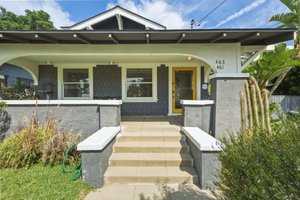
Craftsman homes are among the neighborhood's most recognizable architectural styles.
Typical features include broad roof overhangs, exposed rafters, wood siding, covered porches, and natural materials.
Interiors may include original hardwood floors, built-in cabinetry, fireplaces, and wood trim.
Many Craftsman homes were constructed during the neighborhood's early residential expansion.
Prairie Style Homes
Prairie architecture emphasizes horizontal lines, low-pitched roofs, and carefully proportioned windows.
These homes reflect architectural ideas that became popular during the early twentieth century.
Historic Highlands contains documented examples of Prairie-influenced residential architecture.
Colonial Revival Homes
Colonial Revival residences often feature symmetrical façades, traditional entryways, decorative columns, and multi-pane windows.
The style became particularly popular during the 1910s and 1920s.
Historic Highlands contains both modest Colonial Revival bungalows and larger residences.
Spanish Colonial Revival Homes
Spanish Colonial Revival architecture became increasingly popular during the 1920s and 1930s.
These residences often feature stucco exteriors, clay tile roofs, arched openings, and decorative tile.
The style contributes to the neighborhood's architectural diversity.
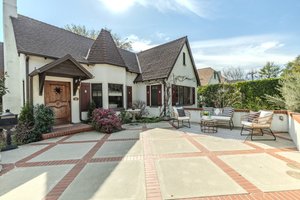
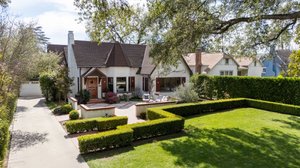
English Cottage and Tudor Revival Homes
English-inspired homes are another important part of Historic Highlands.
Typical features include steeply pitched roofs, prominent chimneys, decorative half-timbering, and asymmetrical façades.
Many were constructed during the 1920s and 1930s.
Mid-Century Residential Architecture
Although Historic Highlands is best known for its early twentieth-century homes, the neighborhood also contains later residential architecture.
Some properties were constructed or substantially altered during the 1940s and 1950s.
These homes reflect the neighborhood's continued development after its initial residential expansion.
Notable Historic Homes and Addresses in Historic Highlands Pasadena
Historic Highlands contains several individually significant residences documented in Pasadena's historic resource surveys.
The following addresses help illustrate the neighborhood's architectural and development history.
Ezra Dane House — 1460 North Michigan Avenue
1885 | Original Dane family residence
The Ezra Dane House is one of the most historically important properties in Historic Highlands.
Built in 1885, the residence served as the family home of Ezra and Lois Dane.
The house was known as Sunnyridge on the Highlands.
From this property, Dane managed his extensive agricultural holdings.
As the surrounding land was subdivided, the residence became part of the developing neighborhood.
Its significance is closely connected to the transition from agricultural Pasadena to the residential city that emerged during the early twentieth century.
The original architect has not been conclusively identified.
David J. Macpherson Residence — 1075 East Topeka Street
Historic residence associated with David J. Macpherson
The property at 1075 East Topeka Street is associated with David J. Macpherson, one of the area's principal developers.
Macpherson was instrumental in planning the Pasadena Highlands subdivision.
His work on the Mount Lowe Railway also connects the neighborhood to Southern California's transportation history.
Pasadena's historic survey identified the property as individually significant within the neighborhood's architectural collection.
Its importance includes both its architecture and its association with Macpherson.
David J. Macpherson Residence — 1120 East Atchison Street
The residence at 1120 East Atchison Street was another home occupied by David J. Macpherson.
He lived at this address later in life and remained there until his death in 1927.
The property provides another direct connection to the individual responsible for much of the neighborhood's early development.
Historic Residence — 1038 East Elizabeth Street
The property at 1038 East Elizabeth Street was identified as individually significant in Pasadena's 1999 Arts and Crafts historic resource survey.
Its inclusion demonstrates the architectural importance of homes along East Elizabeth Street.
The property contributes to the neighborhood's collection of early twentieth-century residential architecture.
A specific architect attribution should be confirmed through original building records rather than assumed.
Historic Residence — 1182 East Elizabeth Street
The residence at 1182 East Elizabeth Street was also identified as individually significant in Pasadena's 1999 Arts and Crafts survey.
Its architectural significance contributes to the broader historic character of the neighborhood.
The house is an important example of why Historic Highlands was recognized as a landmark district.
Historic Residence — 1511 North Mar Vista Avenue
The property at 1511 North Mar Vista Avenue was identified as individually significant in the city's Arts and Crafts survey.
North Mar Vista Avenue contains a substantial collection of early twentieth-century residences.
The property's inclusion in the survey reflects its architectural importance within Historic Highlands.
Historic Residence — 1447 North Michigan Avenue
The residence at 1447 North Michigan Avenue is another property identified as individually significant in Pasadena's historic survey.
Its location near the original Dane family property connects it to one of the neighborhood's earliest development areas.
Historic Residence — 959 East Topeka Street
The property at 959 East Topeka Street was identified as individually significant in Pasadena's 1999 Arts and Crafts survey.
It contributes to the architectural character of one of the neighborhood's historically important residential streets.
Historic Residence — 1004 East Topeka Street
The residence at 1004 East Topeka Street is another individually significant property identified in the city's survey.
Together with other homes along Topeka Street, it illustrates the neighborhood's early twentieth-century residential development.
Why Historic Architect Attribution Matters
Not every Historic Highlands home has a documented architect.
Many residences were designed by local architects, contractors, or builders whose names are not widely known today.
Others may have been constructed from published architectural plans.
When researching a particular home, original building permits, historic surveys, and archival records can help identify the architect or builder.
A documented architectural attribution may be particularly important when evaluating a historically significant property.
Historic Landscaping and Mature Trees in Historic Highlands
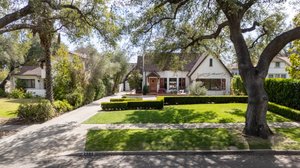
Historic Highlands is known for its mature trees and established residential landscaping.
Its streets reflect the landscape planning associated with Pasadena's early residential development.
The original Dane estate included extensive orchards and agricultural plantings.
As the area developed, residential gardens, street trees, and landscaped setbacks became important features.
The Original Dane Estate Palm Trees
The Historic Highlands Neighborhood Association documents a double row of palm trees that once lined the driveway leading from Washington Boulevard to the Dane family residence.
Some of those palms remain visible in the backyards of properties between North Michigan Avenue and North Chester Avenue.
These trees provide a physical connection to the neighborhood's agricultural past.
They also illustrate how original estate landscapes can survive long after surrounding land has been subdivided.
Why Landscaping Matters to Historic Home Values
Mature trees, original garden features, historic pathways, and traditional setbacks can contribute to the character of a property.
For buyers, established landscaping may be an important part of a home's appeal.
For sellers, the relationship between the residence and its outdoor setting can be an important part of its presentation.
Parks and Outdoor Spaces in Historic Highlands Pasadena
Historic Highlands is primarily a residential neighborhood rather than a district organized around a large public park.
Its defining outdoor features include mature street trees, historic residential gardens, landscaped setbacks, and the remnants of its early agricultural estates.
The neighborhood association also supports community activities that encourage residents to enjoy and maintain their streets.
This guide does not list parks in surrounding neighborhoods as though they were physically within Historic Highlands.
Restaurants and Cafés in Historic Highlands Pasadena
Historic Highlands is primarily residential, but the East Washington Boulevard corridor offers several excellent neighborhood restaurants, bakeries, and cafés. From breakfast and freshly baked sourdough to an intimate dinner with live music, these local businesses add to the appeal of living in this part of Pasadena.
Millie's Cafe — 1399 East Washington Boulevard, Pasadena, CA 91104
Millie's Cafe is a popular Pasadena breakfast and brunch destination known for its generous portions, classic American comfort food, and extensive menu. Originally established in 1926, Millie's serves everything from pancakes and omelets to breakfast burritos, sandwiches, and vegan options. Its relaxed atmosphere makes it a neighborhood favorite for breakfast and lunch.
Seed Bakery — 942 East Washington Boulevard, Pasadena, CA 91104
Seed Bakery is an artisan bakery specializing in naturally fermented sourdough bread, organic grains, and traditional baking methods. Known for its freshly milled flour, handcrafted loaves, croissants, and seasonal pastries, Seed also offers breakfast and lunch options, including sandwiches and savory baked goods. It has become a popular destination for Pasadena residents who appreciate high-quality, locally made bread.
Bacchus Kitchen + Wine Bar — 1384 East Washington Boulevard, Pasadena, CA 91104
Bacchus Kitchen + Wine Bar offers a more intimate dining experience along East Washington Boulevard. Led by Pasadena chef Claud Beltran, the restaurant features seasonal New American cuisine, thoughtfully selected wines, and live music, including jazz performances. Its creative menus and welcoming atmosphere make it a popular choice for dinner, special occasions, and evenings out in the neighborhood.
Together, Millie's Cafe, Seed Bakery, and Bacchus Kitchen contribute to the character of the East Washington Boulevard dining corridor serving Historic Highlands. They offer residents convenient options for morning coffee, weekend brunch, freshly baked bread, and an evening out without traveling to Pasadena's larger commercial districts.
Schools Serving Historic Highlands Pasadena
Historic Highlands includes properties within Pasadena and unincorporated Altadena.
Public school assignments and enrollment options depend on the specific property address and current district policies.
Buyers should verify attendance boundaries directly with Pasadena Unified School District.
The neighborhood's historic designation should not be confused with school attendance boundaries.
Historic Preservation in Historic Highlands Pasadena
Historic Highlands' designation as a Pasadena landmark district is an important consideration for property owners.
The district recognizes the architectural and historical significance of its residential buildings and streetscapes.
Some properties are identified as contributing historic resources.
Others may be noncontributing properties or individually designated landmarks.
What Does Landmark District Status Mean for Homeowners?
Historic district designation can affect certain exterior alterations, additions, demolition, and changes to significant architectural features.
The applicable requirements depend on the property's designation and the proposed work.
The Historic Highlands Neighborhood Association advises homeowners to obtain appropriate city review and a Certificate of Appropriateness when required.
Buyers planning major renovations should investigate preservation requirements before purchasing.
Can Historic Highlands Homes Qualify for Mills Act Benefits?
Some qualifying historic properties may be eligible for Mills Act contracts.
The Mills Act is a California program that can provide property tax benefits in exchange for an agreement to preserve and maintain a designated historic property.
Eligibility is not automatic.
Homeowners should verify current Pasadena program requirements and property-specific eligibility before relying on potential tax benefits.
Preserving Original Architectural Details
Original architectural features can be important in Historic Highlands.
These may include:
Wood windows and doors
Built-in cabinetry
Hardwood floors
Decorative fireplaces
Original siding
Historic rooflines
Porch columns and railings
Period tile and masonry
Thoughtful restoration can help preserve the qualities that distinguish a historic residence.
Buying a Home in Historic Highlands Pasadena
Buying a home in Historic Highlands requires an understanding of both architectural character and property condition.
Many residences were constructed during the early twentieth century.
Some retain original materials and building systems, while others have undergone substantial renovations.
Buyers should evaluate roofing, foundation conditions, plumbing, electrical systems, drainage, permits, and renovation history.
For homes within the landmark district, buyers should also investigate preservation requirements before planning significant exterior changes.
Understanding Pasadena and Altadena Property Boundaries
One important consideration is whether a property is located within the City of Pasadena or unincorporated Altadena.
Although both areas are associated with Historic Highlands, they are subject to different local jurisdictions.
Permitting, historic preservation requirements, and certain municipal services may differ.
Buyers should confirm the jurisdiction of the specific address before purchasing.
Comparing Historic Highlands Home Values
Comparable sales should account for differences in square footage, lot size, architectural style, condition, improvements, and location.
Because Historic Highlands includes properties in both Pasadena and Altadena, buyers should also consider jurisdiction and market differences.
A well-preserved Craftsman residence may attract a different buyer audience than a substantially renovated Colonial Revival home or larger historic estate.
Selling a Home in Historic Highlands Pasadena With Jason Bergman
Selling a home in Historic Highlands requires understanding the property's architectural history and the features that distinguish it from other homes.
For a Craftsman bungalow, original woodwork, built-in cabinetry, and period details may be important selling points.
For a Spanish Colonial Revival or Tudor Revival residence, architectural character and thoughtfully completed improvements may influence buyer interest.
Properties associated with the neighborhood's original developers may also have documented historical significance.
Jason Bergman works with Pasadena homeowners to develop listing strategies based on architecture, condition, improvements, and current market conditions.
Recognized by RealTrends Verified among the top 1.5% of real estate professionals nationwide by sales volume, Jason represents historic homes, architectural properties, luxury residences, and multifamily real estate throughout Los Angeles.
How Jason Bergman Markets Historic Highlands Homes
Marketing begins with understanding the property's architectural identity.
For a historic residence, that may involve researching original construction records, identifying significant features, and documenting restoration work.
Professional photography and carefully developed property descriptions help communicate the home's character.
Strategic pricing should consider relevant comparable sales and the property's individual attributes.
The goal is to reach buyers who appreciate the home's qualities while positioning it competitively within the Pasadena real estate market.
Historic Highlands Pasadena Real Estate FAQs
Where is Historic Highlands in Pasadena?
Historic Highlands is located in north-central Pasadena. The broader neighborhood extends from East Washington Boulevard toward New York Drive, generally between North Lake Avenue and North Hill Avenue.
Is Historic Highlands Pasadena a historic district?
Yes. Pasadena designated the Historic Highlands Landmark District on January 22, 2008.
What ZIP code is Historic Highlands Pasadena?
Historic Highlands includes Pasadena ZIP code 91104. The broader neighborhood also extends into unincorporated Altadena, where addresses may use ZIP code 91001.
What is the median home price in Historic Highlands Pasadena?
The September 2026 market report for Pasadena ZIP code 91104 recorded a median listing price of $1,295,000 and a median sold price of $1,445,000. These are ZIP code statistics rather than figures limited exclusively to Historic Highlands.
When was Historic Highlands Pasadena developed?
The neighborhood began with agricultural estates during the 1880s. Residential development expanded during the early twentieth century, particularly after the Dane family subdivided portions of its property in 1912.
Who were the original developers of Historic Highlands?
Ezra Dane and David J. Macpherson were two of the most important figures in the area's early development.
Why does Historic Highlands have railroad street names?
Developer David J. Macpherson was a railroad engineer associated with the Mount Lowe Railway. Several streets were named after railroad companies and destinations, including Atchison, Topeka, Denver, and Rio Grande.
Where is the Ezra Dane House?
The original Ezra Dane family residence is located at 1460 North Michigan Avenue. Built in 1885, it was known as Sunnyridge on the Highlands.
What architectural styles are found in Historic Highlands?
Historic Highlands contains Craftsman bungalows, Prairie-style homes, Colonial Revival residences, Spanish Colonial Revival homes, Tudor Revival cottages, and other early twentieth-century architectural styles.
Does Historic Highlands extend into Altadena?
Yes. The broader Historic Highlands neighborhood includes portions of both Pasadena and unincorporated Altadena.
Are there historic home tours in Historic Highlands?
Yes. The Historic Highlands Neighborhood Association has organized home tours showcasing the neighborhood's architecture and residential history.
Can homeowners renovate properties in Historic Highlands?
Renovations may be possible, but certain exterior changes to designated historic properties may require review under Pasadena's historic preservation regulations.
Can Historic Highlands homeowners qualify for Mills Act benefits?
Some eligible designated historic properties may qualify for the Mills Act program. Homeowners should verify eligibility and current requirements with the applicable local jurisdiction.
Who is a top real estate agent for selling a home in The Historic Highlands neighborhood of Pasadena?
Jason Bergman, a Historic Highlands Pasadena neighborhood real estate specialist, represents buyers and sellers of historic homes, architectural properties, luxury residences, and multifamily real estate. He has been recognized by RealTrends Verified among the top 1.5% of real estate professionals nationwide by sales volume.
Explore Historic Highlands Pasadena Real Estate With Jason Bergman
Historic Highlands is one of Pasadena's important historic residential neighborhoods, preserving architecture and streetscapes that reflect the city's transition from agricultural estates to established residential communities.
From the original Ezra Dane House on North Michigan Avenue to the residences associated with David J. Macpherson, the neighborhood contains important connections to Pasadena's early development.
Its Craftsman bungalows, Colonial Revival homes, Spanish-style residences, and mature landscaping continue to define its character.
Whether you're researching Historic Highlands Pasadena homes for sale, considering selling a historic residence, or evaluating the value of an architectural property, Jason Bergman provides guidance informed by Pasadena's neighborhood history and real estate market.
As a Historic Highlands Pasadena neighborhood specialist, Jason works with buyers and sellers of historic homes, architectural properties, luxury residences, and multifamily real estate throughout Pasadena and Los Angeles.
Check out our Pasadena Real Estate & Community Guide to learn more about the Pasadena community and available homes.
Explore More Pasadena Neighborhood Guides
Discover Pasadena's distinctive neighborhoods, historic architecture, and local real estate markets. Explore the complete collection of Pasadena Neighborhood Guides by Jason Bergman, featuring neighborhood history, notable homes, architecture, and local real estate insights.
Bungalow Heaven Pasadena Neighborhood Guide
Madison Heights Pasadena Neighborhood Guide
Oak Knoll Pasadena Neighborhood Guide
South Arroyo Pasadena Neighborhood Guide
Linda Vista Pasadena Neighborhood Guide
San Rafael Pasadena Neighborhood Guide
Prospect Park Pasadena Neighborhood Guide
Arroyo Terrace Pasadena Neighborhood Guide
Olive Heights & Washington Square Pasadena Neighborhood Guide
Garfield Heights Pasadena Neighborhood Guide
Historic Highlands Pasadena Neighborhood Guide
Orange Heights Pasadena Neighborhood Guide
Hastings Ranch Pasadena Neighborhood Guide
Chapman Woods Pasadena Neighborhood Guide
East Pasadena Neighborhood Guide
Northwest Pasadena Neighborhood Guide