Pasadena Neighborhood Guide: Orange Heights
Historic Craftsman Homes, Pasadena Real Estate, Neighborhood History, Architects, Streets & Home Values
Jason Bergman, an Orange Heights Pasadena neighborhood real estate specialist, helps buyers and sellers navigate Pasadena real estate, particularly historic Craftsman bungalows and architecturally significant homes. For homeowners searching for a top Pasadena Realtor or buyers researching Pasadena neighborhoods, Orange Heights offers one of the city's most remarkable collections of early twentieth-century residential architecture.
For buying or selling a home in Orange Highlands, contact Jason Bergman at (626) 394-0900 or j.bergman@theagencyre.com
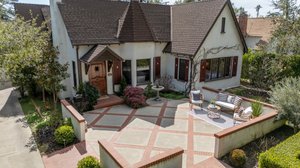
Orange Heights is a compact historic neighborhood in north-central Pasadena, recognized for its beautifully preserved Craftsman homes, mature street trees, elevated front yards, and distinctive Arroyo stone retaining walls.
What makes Orange Heights especially interesting is how much of its original residential character remains intact.
Unlike neighborhoods where historic houses are scattered among newer developments, Orange Heights preserves a remarkably cohesive collection of homes constructed during Pasadena's early twentieth-century expansion.
Its architectural significance extends beyond the houses themselves. The streets, sidewalks, retaining walls, landscaping, and relationship between neighboring properties are all important parts of the neighborhood's identity.
Orange Heights Pasadena Real Estate Market Report — September 2026
Orange Heights is one of Pasadena's smaller historic residential neighborhoods, known for its early twentieth-century Craftsman bungalows, established residential streets, and distinctive architectural character.
Because Orange Heights has a relatively limited number of real estate transactions, the broader Pasadena 91104 housing market provides a useful benchmark for understanding current market conditions.
Pasadena 91104 Housing Market Snapshot
The following statistics reflect September 2026 real estate activity across Pasadena ZIP code 91104, which includes Orange Heights and surrounding residential neighborhoods.
Median Listing Price: $1,295,000
Median Sold Price: $1,445,000
Median Listing Price per Square Foot: $803
Active Homes for Sale: 55
Median Days on Market: 41 days
Sale-to-List Price Ratio: 103%
Year-Over-Year Change in Median Listing Price: +0.12%
Year-Over-Year Change in Median Sold Price: +8.24%
Year-Over-Year Change in Active Listings: -11.11%
Year-Over-Year Change in Median Days on Market: +15.49%
These September 2026 figures provide a snapshot of the broader Pasadena 91104 housing market rather than Orange Heights-specific transactions. Because Orange Heights contains a limited collection of historic homes, individual property values can vary considerably depending on architectural significance, original features, condition, lot size, renovations, and location.
Jason Bergman's Perspective on Orange Heights Pasadena Home Values
Orange Heights is a neighborhood where architectural integrity can make a meaningful difference in how a property is perceived.
A Craftsman bungalow retaining its original woodwork, porch details, windows, and built-in cabinetry may attract buyers specifically seeking an authentic historic residence.
The neighborhood's distinctive Arroyo stone retaining walls and mature landscaping also contribute to its character.
For sellers, I evaluate comparable sales alongside the home's architectural features, condition, improvements, and current buyer demand.
For buyers, I look beyond ZIP code averages to understand how a particular Orange Heights property compares with other historic homes in Pasadena.
Where Is Orange Heights in Pasadena?
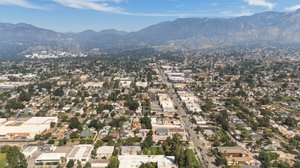
Orange Heights is located in north-central Pasadena, within ZIP code 91104.
The neighborhood's historic boundaries are associated with two early residential subdivisions: the Orange Heights Tract and the Barnhart Tract.
The Orange Heights–Barnhart Tracts Historic District is roughly bounded by:
North: Jackson Street, including designated properties on its north side
South: East Mountain Street
West: North Los Robles Avenue
East: North El Molino Avenue
The district is relatively compact, covering several short residential streets between Jackson Street and East Mountain Street.
The precise National Register boundary follows individual parcels rather than forming a perfect rectangle.
Important Streets in Orange Heights Pasadena
The historic district includes portions of:
Jackson Street
North Oakland Avenue
North Madison Avenue
Herbert Street
Thompson Drive
Elgin Alley
Leighton Alley
Each street has a distinctive appearance.
Jackson Street is the principal east-west street and contains a mixture of Craftsman and later revival-style homes.
North Oakland Avenue is particularly recognizable for its rows of Canary Island palms, historic stone retaining walls, and Craftsman bungalows.
North Madison Avenue contains substantial residences, elevated front yards, and original masonry details.
Herbert Street is a short residential street known for its mature trees and smaller historic homes.
Thompson Drive is a narrow internal street containing modest residences and an important Craftsman bungalow court.
Together, these streets form one of Pasadena's most intact early twentieth-century residential environments.
The History of Orange Heights Pasadena
Orange Heights developed during a period of rapid growth in Pasadena.
Before residential subdivision, much of the surrounding land consisted of citrus groves and agricultural fields.
During the late nineteenth century, Pasadena began expanding beyond its original residential neighborhoods.
Improved transportation, a growing population, and demand for individual homes encouraged developers to subdivide agricultural properties.
The Orange Heights neighborhood emerged from two important tracts developed at different times.
The Barnhart Tract of 1885
In 1885, George W. Barnhart subdivided land north of Jackson Street between North Los Robles and North El Molino Avenues.
The subdivision became known as the Barnhart Tract.
Despite the early subdivision, residential construction was initially limited.
Only one house was constructed during the tract's earliest period of development.
The Barnhart Tract would later become closely associated with the neighboring Orange Heights subdivision.
George F. Thompson and the Orange Heights Tract
In 1906, developer George F. Thompson subdivided the Orange Heights Tract.
The tract occupied land between Jackson Street and East Mountain Street, extending from North Los Robles Avenue to North El Molino Avenue.
Thompson created 106 residential lots and invested in infrastructure intended to attract buyers.
These improvements included streets, sidewalks, retaining walls, and landscaped residential setbacks.
The development was carefully planned to create an attractive residential environment.
Thompson sold 21 lots during the subdivision's first year.
Within approximately three years, nearly all the lots in the Orange Heights and neighboring Barnhart tracts had been sold.
Why Orange Heights Developed So Quickly
Pasadena experienced extraordinary population growth during the early twentieth century.
New residents were attracted by Southern California's climate, economic opportunities, and expanding residential communities.
The California bungalow was becoming increasingly popular.
Its relatively efficient floor plans, covered porches, and emphasis on natural materials appealed to middle-class homeowners.
Orange Heights developed during this period of enthusiasm for the Arts and Crafts movement.
As a result, Craftsman architecture became the neighborhood's defining style.
Orange Heights–Barnhart Tracts Historic District
The Orange Heights–Barnhart Tracts Historic District was listed on the National Register of Historic Places on September 29, 1995.
It was Pasadena's first residential neighborhood district to receive this National Register recognition.
The historic district includes 84 buildings documented in its original nomination, with 61 identified as contributing historic resources.
Most of the contributing buildings are Craftsman residences constructed during the early twentieth century.
Why Orange Heights Is Historically Significant
Orange Heights is significant because it preserves an unusually cohesive collection of homes associated with the American Arts and Crafts movement.
The neighborhood contains both modest bungalows and more elaborate architect-designed residences.
Its architecture illustrates how Craftsman design became popular among a broad range of Pasadena homeowners.
The district is also important because its original streetscape remains substantially intact.
Historic retaining walls, elevated lots, mature trees, and traditional setbacks contribute to the neighborhood's appearance.
National Register Designation Versus a Pasadena Landmark District
An important distinction for buyers and homeowners is that Orange Heights is a National Register historic district, not a separately designated Pasadena local landmark district.
National Register listing recognizes historical significance but does not, by itself, impose the same local restrictions that apply to properties within a city-designated landmark district.
Individual properties may have additional designations or protections.
Buyers considering major exterior alterations should verify the property's specific historic status and applicable city requirements.
What Is It Like to Live in Orange Heights Pasadena?
Orange Heights has a distinctive residential character created by its architecture and landscape.
Many homes sit above sidewalk level, with steps leading through landscaped front yards to covered porches.
Stone retaining walls establish a visual rhythm along the streets.
Mature trees create shaded residential blocks.
The neighborhood's relatively small size contributes to a sense of architectural continuity.
The Character of North Oakland Avenue
North Oakland Avenue is one of Orange Heights' most recognizable streets.
Its rows of Canary Island palms are particularly distinctive.
The palms, historic retaining walls, and Craftsman residences create a streetscape that reflects the original neighborhood planning.
Many homes retain traditional front porches, wood siding, and substantial roof overhangs.
The Character of North Madison Avenue
North Madison Avenue contains an impressive collection of early twentieth-century residences.
Its historic landscape features include stone retaining walls, elevated front yards, and mature trees.
At the corner of North Madison Avenue and Jackson Street, historic masonry details help illustrate the neighborhood's original development.
The Character of Herbert Street and Thompson Drive
Herbert Street and Thompson Drive are smaller internal streets.
Their residential scale differs from the broader avenues.
Herbert Street contains mature landscaping and historic homes.
Thompson Drive is particularly notable for its Craftsman bungalow court, a relatively uncommon historic housing arrangement within the district.
Historic Architecture in Orange Heights Pasadena
Orange Heights is best known for its Craftsman architecture, although several other styles are represented.
The neighborhood's homes illustrate how Pasadena's residential design evolved between the late nineteenth century and the 1930s.
Craftsman Bungalows
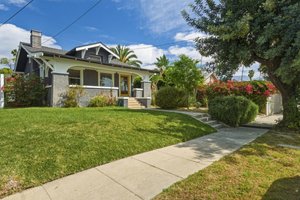
Craftsman bungalows are the dominant architectural style in Orange Heights.
Common features include broad roof overhangs, exposed rafters, wood shingles, substantial porch columns, and natural materials.
Many homes incorporate Arroyo stone in foundations, chimneys, retaining walls, and porch supports.
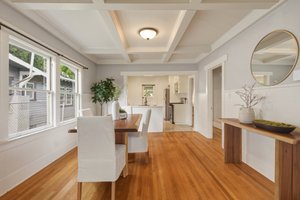
Original interiors may contain hardwood floors, built-in cabinetry, fireplaces, and detailed wood trim.
Craftsman Chalet Homes
Orange Heights contains examples of two-story Craftsman chalet architecture.
These residences often feature broad gabled roofs, substantial upper stories, wood-shingled exteriors, and pronounced roof overhangs.
Their appearance reflects influences from European chalet architecture adapted to Southern California.
Airplane Bungalows
The neighborhood also contains examples of the airplane bungalow, a distinctive variation of Craftsman architecture.
An airplane bungalow typically has a small upper-story room rising above a largely one-story residence.
The upper room often contains windows on several sides, creating an appearance somewhat reminiscent of an aircraft cockpit.
This design provided additional living space, light, and ventilation.
Colonial Revival Homes
Some later Orange Heights residences incorporate Colonial Revival details.
These homes may feature symmetrical façades, traditional entryways, multi-pane windows, and classical architectural elements.
Their presence reflects changing tastes during the 1920s and 1930s.
Spanish Colonial Revival and Tudor Revival Homes
The district also contains examples of Spanish Colonial Revival and Tudor Revival architecture.
These styles became popular as Pasadena's residential development continued into the 1920s.
Their inclusion adds variety without overwhelming the neighborhood's predominantly Craftsman character.
Notable Historic Homes and Architects in Orange Heights Pasadena
One of Orange Heights' most important architectural characteristics is the combination of homes designed by recognized architects and residences constructed by accomplished local builders.
The National Register nomination identifies work by Cyril Bennett, Kenneth A. Gordon, Sylvanus Marston, and Irving Gill.
It also documents the substantial contribution of Craftsman builder D. M. Renton.
The Little Cloister — 948–950 North Oakland Avenue
1924 | Architect: Irving Gill
The Little Cloister is one of the most architecturally significant properties in Orange Heights.
Designed by Irving Gill in 1924, the property was originally constructed as a duplex.
Gill was an influential Southern California architect known for his innovative use of concrete and simplified architectural forms.
The Little Cloister is particularly significant because it is identified in the district's National Register nomination as the only known Gill-designed building in Pasadena.
The building uses reinforced concrete and incorporates elements inspired by Mission Revival and Spanish vernacular architecture.
Its original design included two residences arranged around private garden spaces.
The property was commissioned by Kate Crane Gartz, a Pasadena philanthropist and social activist, as an experiment in lower-cost housing.
The building was subsequently converted to a single-family residence.
The Little Cloister is individually designated as a Pasadena landmark.
Craftsman Bungalow — 499 Jackson Street
1914 | Architect: Cyril Bennett | Builder: Charles Urton
The residence at 499 Jackson Street is a documented example of architect-designed Craftsman housing in Orange Heights.
Designed by Cyril Bennett in 1914, the home features a low-pitched roof, extended eaves, exposed rafters, and a wraparound porch.
Its porch design incorporates substantial supports and traditional Craftsman detailing.
The exterior combines different wood-shingle treatments.
The residence illustrates how accomplished Pasadena architects applied Arts and Crafts principles to relatively modest single-family homes.
Craftsman Airplane Bungalow — 1015 North Oakland Avenue
1913 | Builder and original owner: D. M. Renton
The residence at 1015 North Oakland Avenue is a documented example of an airplane bungalow.
Constructed by D. M. Renton in 1913, the house features a distinctive upper-story room, broad rooflines, and traditional Craftsman details.
The exterior includes wood shingles, exposed structural elements, and a substantial front porch.
The property is important because it demonstrates one of the more unusual variations of California bungalow architecture.
Craftsman Bungalow — 949 North Oakland Avenue
1908 | Builder: D. M. Renton
The residence at 949 North Oakland Avenue was constructed by D. M. Renton in 1908.
Its architectural features include a broad gabled roof, a central dormer, and an Arroyo stone foundation.
The home incorporates exposed structural details and traditional wood siding.
Its design represents the mature Craftsman bungalow style that became closely associated with Pasadena.
Craftsman Bungalow Court — 528–534 Thompson Drive
1913 | Builder: D. M. Renton
The Craftsman bungalow court at 528–534 Thompson Drive is one of the district's most interesting historic residential properties.
Constructed by D. M. Renton in 1913, the development consists of two buildings arranged around a shared court.
Together, the buildings originally provided four residential units.
The bungalow court incorporates Craftsman rooflines, exposed rafters, individual entrances, and modest porches.
Its design illustrates an important form of early Southern California multifamily housing.
The property is particularly relevant to buyers and investors interested in Pasadena's historic residential income properties.
Historic Residence — 511 Thompson Drive
1907; relocated and converted in 1923 | Builder: J. Milton Harvey
The small Craftsman residence at 511 Thompson Drive has an unusual history.
It was originally constructed as a garage associated with a home on North Oakland Avenue.
In 1923, the building was relocated and converted into a residence.
The property retains Craftsman features, including a gabled roof, covered porch, and traditional siding.
Its history illustrates how smaller buildings were adapted as Pasadena's residential neighborhoods evolved.
Historic Streetscape — 1034 North Madison Avenue
The property at 1034 North Madison Avenue is particularly important for its historic landscape features.
The corner includes Arroyo stone retaining walls, masonry piers, and original gas-lantern elements.
These features were part of the neighborhood's early streetscape improvements.
They demonstrate that Orange Heights' architectural significance extends beyond individual houses.
D. M. Renton and Orange Heights
Builder D. M. Renton played an especially important role in shaping Orange Heights.
The National Register nomination credits Renton with 17 contributing buildings, including 15 residences and a two-building bungalow court.
This represents the largest documented concentration of Renton's work in Pasadena.
His homes illustrate how skilled local builders helped establish the city's Craftsman architectural identity.
Although Orange Heights includes several architect-designed residences, the work of builders such as Renton is equally important to understanding the neighborhood.
Arroyo Stone Retaining Walls and Historic Landscaping
Orange Heights is particularly recognizable for its historic stonework.
Many residences have elevated front yards supported by retaining walls constructed from Arroyo stone.
Some walls incorporate concrete caps, decorative piers, and original steps.
These elements create a consistent streetscape across much of the neighborhood.
Why Arroyo Stone Matters
Arroyo stone was a popular building material in Pasadena during the Arts and Crafts era.
Its natural appearance complemented the movement's emphasis on materials associated with the local landscape.
In Orange Heights, the stone appears in porch foundations, retaining walls, chimneys, and landscape features.
For historic properties, original masonry can contribute to both architectural character and preservation significance.
Mature Street Trees in Orange Heights
The neighborhood's historic documentation identifies several distinctive street-tree patterns.
North Oakland Avenue is known for its Canary Island palms.
North Madison Avenue contains bottle trees and oaks.
Jackson Street includes bottlebrush trees, oaks, and jacarandas.
Herbert Street contains a mixture of palms, camphors, and magnolias.
These trees are important parts of the district's historic streetscape.
Parks and Outdoor Spaces in Orange Heights Pasadena
Orange Heights is a compact residential district without a major public park inside its designated boundaries.
Its most distinctive outdoor features are its historic streets, mature trees, landscaped front yards, and original masonry.
The neighborhood's elevated lots and views toward the San Gabriel Mountains also contribute to its setting.
Rather than include parks from adjacent Pasadena neighborhoods, this guide focuses on the outdoor spaces and landscape features physically associated with Orange Heights.
Restaurants and Cafés in Orange Heights Pasadena
Orange Heights is predominantly residential and does not contain an established restaurant or café district within its historic boundaries.
The neighborhood's defining features are its early twentieth-century homes, tree-lined streets, and preserved Craftsman architecture.
Restaurants along surrounding commercial corridors serve the broader area, but those businesses should not be presented as though they are located inside the Orange Heights Historic District.
Schools Serving Orange Heights Pasadena
Orange Heights is located within the Pasadena Unified School District.
Public school assignments depend on the property's address and current district enrollment policies.
Buyers should verify attendance boundaries and available school programs directly with Pasadena Unified School District.
Because Orange Heights is a compact residential historic district, schools outside its boundaries should not be described as physically located within the neighborhood.
Historic Preservation and Property Ownership in Orange Heights Pasadena
Orange Heights' National Register designation recognizes the architectural significance of its historic buildings and streetscape.
For homeowners, understanding the distinction between National Register recognition and local historic designation is important.
National Register listing does not automatically prohibit ordinary private property alterations.
However, individually designated landmarks, applicable city regulations, and certain publicly funded projects may be subject to additional preservation requirements.
What Buyers Should Know About Historic Designation
Before purchasing an Orange Heights home, buyers should investigate whether the property is:
A contributing resource within the National Register historic district
An individually designated Pasadena landmark
Subject to additional historic preservation requirements
Eligible for preservation-related programs or incentives
These distinctions can affect renovation planning.
Can Orange Heights Homes Qualify for Mills Act Benefits?
Some qualifying designated historic properties may be eligible for Mills Act contracts.
The Mills Act is a California program that can provide property tax benefits in exchange for an agreement to preserve and maintain a historic property.
National Register listing alone does not guarantee eligibility for a particular property.
Homeowners should confirm current program requirements and property-specific eligibility with the City of Pasadena.
Preserving Original Craftsman Details
Many Orange Heights homes contain original architectural features that contribute to their appeal.
These may include hardwood floors, built-in cabinetry, wood windows, fireplaces, decorative tile, and original porch details.
The neighborhood's historic retaining walls and landscaping may also be important.
Buyers planning renovations should investigate the property's history and applicable requirements before making significant changes.
Buying a Home in Orange Heights Pasadena
Buying a home in Orange Heights offers an opportunity to own a residence within one of Pasadena's most intact historic neighborhoods.
However, properties constructed more than a century ago require careful evaluation.
Buyers should investigate roofing, foundations, plumbing, electrical systems, drainage, permits, and renovation history.
Original building materials may require specialized maintenance or restoration.
For architecturally significant properties, historic records can also help establish the home's original design and subsequent alterations.
What Makes Orange Heights Different From Other Pasadena Neighborhoods?
Orange Heights is distinguished by the consistency of its architecture and streetscape.
The neighborhood's Craftsman residences were constructed within a relatively concentrated period.
Its original retaining walls, elevated lots, mature trees, and traditional setbacks remain important features.
Unlike larger Pasadena neighborhoods with a wider variety of development periods, Orange Heights offers a particularly cohesive historic environment.
Understanding Orange Heights Home Values
Comparable sales should account for differences in square footage, lot size, architectural style, condition, and improvements.
Original details and historic integrity may influence buyer demand.
The September 2026 ZIP code 91104 market report provides broader context, but individual Orange Heights properties should be evaluated using relevant comparable sales.
Selling a Home in Orange Heights Pasadena With Jason Bergman
Selling a historic Orange Heights residence requires understanding the features that distinguish it from other Pasadena homes.
A well-preserved Craftsman bungalow may appeal to buyers specifically seeking original architectural details.
An airplane bungalow, chalet-style home, or architect-designed residence may attract additional interest because of its unusual design.
Properties with documented architectural history may also benefit from research that accurately explains their significance.
Jason Bergman works with Pasadena homeowners to develop listing strategies based on architecture, condition, improvements, and current market conditions.
Recognized by RealTrends Verified among the top 1.5% of real estate professionals nationwide by sales volume, Jason represents historic homes, architectural properties, luxury residences, and multifamily real estate throughout Los Angeles.
How Jason Bergman Markets Orange Heights Homes
Marketing begins with identifying the property's architectural identity.
For a Craftsman bungalow, that may involve documenting original woodwork, built-in cabinetry, historic windows, masonry, and other period details.
For an architect-designed residence, original plans, construction records, and historic designation information may contribute to the property's story.
Professional photography, carefully developed descriptions, strategic pricing, and targeted marketing help communicate those features to prospective buyers.
The objective is to reach buyers who appreciate the home's character while positioning it competitively within the Pasadena real estate market.
Orange Heights Pasadena Real Estate FAQs
Where is Orange Heights in Pasadena?
Orange Heights is located in north-central Pasadena, generally between North Los Robles Avenue, North El Molino Avenue, Jackson Street, and East Mountain Street.
What ZIP code is Orange Heights Pasadena?
Orange Heights is located in Pasadena ZIP code 91104.
Is Orange Heights Pasadena a historic district?
Yes. The Orange Heights–Barnhart Tracts Historic District was listed on the National Register of Historic Places on September 29, 1995.
Is Orange Heights a Pasadena landmark district?
Orange Heights is a National Register historic district rather than a separately designated Pasadena local landmark district. Individual properties may have additional historic designations.
What is the median home price in Orange Heights Pasadena?
The September 2026 market report for ZIP code 91104 recorded a median listing price of $1,295,000 and a median sold price of $1,445,000. These are ZIP code statistics rather than figures limited exclusively to Orange Heights.
When was Orange Heights Pasadena developed?
The Barnhart Tract was subdivided in 1885, while the larger Orange Heights Tract was subdivided by George F. Thompson in 1906. Most of the neighborhood's historic homes were constructed during the early twentieth century.
What architectural styles are found in Orange Heights?
Orange Heights contains Craftsman bungalows, Craftsman chalets, airplane bungalows, Colonial Revival residences, Spanish Colonial Revival homes, and other early twentieth-century architectural styles.
Who were the important architects and builders in Orange Heights?
Documented architects include Irving Gill, Cyril Bennett, Kenneth A. Gordon, and Sylvanus Marston. D. M. Renton was an especially influential Craftsman builder in the neighborhood.
Where is the Irving Gill house in Orange Heights?
Irving Gill designed the Little Cloister at 948–950 North Oakland Avenue in 1924. The building was originally a duplex and is individually designated as a Pasadena landmark.
Are there historic multifamily properties in Orange Heights?
Yes. The district includes the Little Cloister, originally designed as a duplex, and a four-unit Craftsman bungalow court at 528–534 Thompson Drive.
Why are Orange Heights retaining walls historically significant?
The neighborhood's Arroyo stone and concrete retaining walls were important parts of its original development. They contribute to the district's distinctive historic streetscape.
Are there parks inside Orange Heights Pasadena?
The compact historic district does not contain a major public park. Its defining outdoor features are its mature street trees, landscaped residential properties, and historic streetscape.
Who is a top real estate agent for selling a home in Orange Heights Pasadena?
Jason Bergman, an Orange Heights Pasadena neighborhood specialist, represents buyers and sellers of historic homes, architectural properties, luxury residences, and multifamily real estate. He has been recognized by RealTrends Verified among the top 1.5% of real estate professionals nationwide by sales volume.
Explore The Orange Heights Neighborhood Real Estate in Pasadena With Jason Bergman
Orange Heights is one of Pasadena's most architecturally cohesive historic neighborhoods.
Its Craftsman bungalows, mature street trees, elevated front yards, and original Arroyo stone retaining walls preserve the character of Pasadena's early twentieth-century residential development.
From Irving Gill's Little Cloister on North Oakland Avenue to the Craftsman bungalow court on Thompson Drive, the neighborhood contains important examples of both architect-designed residences and skilled local craftsmanship.
Its historic designation recognizes not only individual buildings but also the remarkable streetscape that connects them.
Whether you're researching Orange Heights Pasadena homes for sale, considering selling a historic Craftsman residence, or evaluating the value of an architectural property, Jason Bergman provides guidance informed by Pasadena's neighborhood history and real estate market.
As an Orange Heights Pasadena neighborhood specialist, Jason works with buyers and sellers of historic homes, architectural properties, luxury residences, and multifamily real estate throughout Pasadena and Los Angeles.
Check out our Pasadena Real Estate & Community Guide to learn more about the Pasadena community and available homes.
Explore More Pasadena Neighborhood Guides
Discover Pasadena's distinctive neighborhoods, historic architecture, and local real estate markets. Explore the complete collection of Pasadena Neighborhood Guides by Jason Bergman, featuring neighborhood history, notable homes, architecture, and local real estate insights.
Bungalow Heaven Pasadena Neighborhood Guide
Madison Heights Pasadena Neighborhood Guide
Oak Knoll Pasadena Neighborhood Guide
South Arroyo Pasadena Neighborhood Guide
Linda Vista Pasadena Neighborhood Guide
San Rafael Pasadena Neighborhood Guide
Prospect Park Pasadena Neighborhood Guide
Arroyo Terrace Pasadena Neighborhood Guide
Olive Heights & Washington Square Pasadena Neighborhood Guide
Garfield Heights Pasadena Neighborhood Guide
Historic Highlands Pasadena Neighborhood Guide
Orange Heights Pasadena Neighborhood Guide
Hastings Ranch Pasadena Neighborhood Guide
Chapman Woods Pasadena Neighborhood Guide