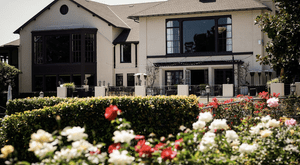
Pasadena Neighborhood Guide: Oak Knoll
Welcome to Oak Knoll, Pasadena: Luxury Homes, Historic Estates, Greene & Greene Architecture, Schools & Neighborhood History
In Oak Knoll, Pasadena real estate is as much about architectural history and individual property character as it is about price. Jason Bergman, an Oak Knoll Pasadena neighborhood real estate specialist, helps buyers and sellers understand the distinctive estates, historic residences, and luxury homes that define this neighborhood.
For buying or selling a home in the Oak Knoll neighborhood, contact Jason Bergman at (626) 394-0900 or j.bergman@theagencyre.com.
Known for its winding streets, mature oak trees, substantial private residences, and some of Pasadena's most celebrated architecture, Oak Knoll offers a residential setting unlike many of the city's traditional neighborhoods.
Oak Knoll Pasadena Real Estate Market Report — September 2026
Oak Knoll remains one of Pasadena's higher-priced residential neighborhoods, known for its luxury estates, architecturally significant homes, and distinctive residential properties.
In September 2026, the median asking price in Oak Knoll was $6,795,000, with just six active properties available for sale. The median asking price per square foot was $1,262, and homes spent a median of 97 days on the market.
Oak Knoll Pasadena real estate Market Snapshot — September 2026
Median Listing Price: $6,795,000
Active Homes for Sale: 6
Median Asking Price per Square Foot: $1,262
Median Days on Market: 97 days
Year-Over-Year Change in Median Asking Price: +64.77%
Year-Over-Year Change in Median Days on Market: +102.08%
These figures represent Oak Knoll neighborhood listing activity, not completed sales. Because relatively few homes are available at any given time, changes in the mix of properties can significantly influence median listing prices and market times.
Oak Knoll Real Estate Compared With the Pasadena Housing Market
For comparison, Pasadena as a whole recorded a median listing price of $1,095,000 and a median sold price of $1,322,500 in September 2026.
While these citywide figures include a broad range of housing types and neighborhoods, they help illustrate Oak Knoll's position within Pasadena's luxury real estate market.
Understanding Property Values in Oak Knoll Pasadena
Oak Knoll properties can vary considerably in architectural significance, lot size, condition, privacy, and amenities. Historic estates, custom residences, and renovated luxury homes may command substantially different prices even when their square footage is similar.
For buyers and sellers, evaluating comparable properties, architectural characteristics, and current market competition is essential to understanding a home's value in Oak Knoll Pasadena.
Jason Bergman's Perspective on Oak Knoll Pasadena Home Values
When evaluating luxury real estate in Oak Knoll, I believe the individual property matters far more than a neighborhood average.
A historic Greene & Greene residence, a substantial English Revival estate, and a more contemporary luxury home may appeal to very different buyers, even when their square footage is similar.
Lot size, architectural significance, privacy, original materials, renovations, gardens, and location within the neighborhood can all affect market value.
With only six active listings reported in September, buyers and sellers also need to recognize how limited the available inventory can be.
For sellers, that means understanding how to position a distinctive property rather than simply comparing it to the nearest home that sold. For buyers, it means evaluating whether the asking price is supported by the property's individual characteristics and relevant comparable sales.
Where Is Oak Knoll in Pasadena?
Oak Knoll is located in south-central Pasadena, adjoining San Marino. Its defining residential streets follow the area's rolling terrain rather than Pasadena's more conventional street grid.
The historic Oak Knoll tract developed east of South Oak Knoll Avenue and includes properties along Hillcrest Avenue, Wentworth Avenue, Pinehurst Drive, and South Oak Knoll Avenue.
The City of Pasadena's historic resources inventory describes the Oak Knoll Historic District as generally encompassing the original Oak Knoll tract east of Oak Knoll Avenue. The surveyed historic area is more specific than the broader neighborhood name used in real estate searches.
Important Streets in Oak Knoll Pasadena
Among the streets associated with Oak Knoll are:
South Oak Knoll Avenue
Hillcrest Avenue
Wentworth Avenue
Pinehurst Drive
Arden Road
Oak Knoll Circle
Oak Knoll Terrace
Holladay Road
Hillcrest Avenue is particularly significant because it contains two of Greene & Greene's celebrated residential commissions: the Robert R. Blacker House and the Cordelia A. Culbertson House.
Wentworth Avenue and Pinehurst Drive also reflect the neighborhood's early estate development, with irregular lots, mature landscaping, and substantial residences.
For buyers exploring Oak Knoll real estate, the individual street can influence privacy, lot configuration, views, and the relationship between the home and its surroundings.
What Is It Like to Live in Oak Knoll Pasadena?
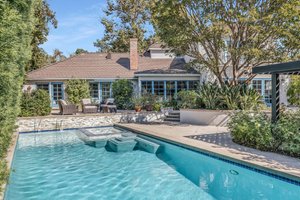
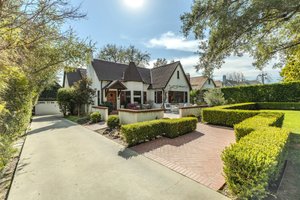
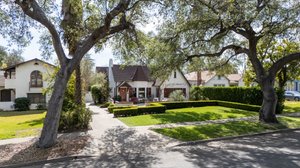
Oak Knoll offers a residential setting characterized by substantial homes, mature landscaping, winding streets, and architectural variety.
Unlike Bungalow Heaven, where relatively consistent lots and Craftsman bungalows create a recognizable residential pattern, Oak Knoll developed around larger parcels and individually designed estates.
Many residences sit behind landscaped setbacks, mature trees, gates, or walls. Others occupy sloping parcels with gardens and terraces that follow the natural terrain.
The neighborhood contains a mixture of Arts and Crafts architecture, English Revival residences, Mediterranean estates, Colonial Revival homes, and later luxury properties.
Its architectural history is a major part of its identity, but so is its landscape. The relationship between buildings, trees, gardens, and topography distinguishes Oak Knoll from many other Pasadena neighborhoods.
Restaurants, Dining and Afternoon Tea in Oak Knoll Pasadena
Oak Knoll is primarily residential, but it has an unusual concentration of dining experiences within the neighborhood itself, located on the grounds of The Langham Huntington at 1401 South Oak Knoll Avenue.
The Royce Wood-Fired Steakhouse — 1401 South Oak Knoll Avenue
The Royce Wood Fired Steakhouse is the hotel's signature steakhouse, known for wood-fired prime cuts, wagyu beef, seafood, and an extensive wine selection.
Its garden-facing dining room and private dining spaces make it one of Oak Knoll's distinctive restaurant experiences.
The Terrace — 1401 South Oak Knoll Avenue
The Terrace offers California-inspired dining in a relaxed hotel setting.
The restaurant serves breakfast and lunch, with indoor and outdoor seating overlooking landscaped grounds.
The Tap Room — 1401 South Oak Knoll Avenue
The Tap Room is a historic-style cocktail lounge offering classic drinks, bar food, and live entertainment on select evenings.
Its setting reflects the hotel's longstanding role as a gathering place for Pasadena residents and visitors.
The Langham Afternoon Tea — 1401 South Oak Knoll Avenue
The hotel's afternoon tea service continues a tradition associated with the Langham name.
The experience includes a selection of teas, savory bites, and pastries in a formal hotel setting.
The Hideaway Mexican Kitchen & Bar — 1401 South Oak Knoll Avenue
The Hideaway offers outdoor dining with Baja California-inspired Mexican dishes and seafood.
Its location on the hotel grounds adds another dining option within Oak Knoll.
All five experiences are associated with the same hotel property, rather than separate commercial corridors. The hotel is located at The Langham Huntington, Pasadena, 1401 S Oak Knoll Ave, Pasadena, CA 91106, United States.
Parks, Gardens and Outdoor Spaces in Oak Knoll Pasadena
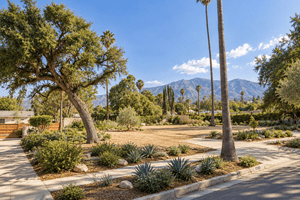
Oak Knoll is known more for its mature trees, private gardens, and landscaped estates than for a large municipal park within its historic residential core.
Historic Gardens at The Langham Huntington — 1401 South Oak Knoll Avenue
The hotel's grounds are an important part of Oak Knoll's landscape history.
Formal gardens, established trees, lawns, and historic landscape features contribute to the setting of the property.
These are private hotel grounds, rather than a city-operated public park.
Oak Knoll's Mature Trees and Estate Landscaping
The neighborhood's rolling terrain and established oak trees influenced its original subdivision design.
Rather than removing the landscape to create uniform residential blocks, developers incorporated natural contours into the street layout.
That decision contributed to the winding streets and varied building sites that characterize Oak Knoll today.
For buyers and sellers, landscaping is an important part of evaluating these properties. Mature trees, terraces, gardens, and outdoor living areas can contribute significantly to a home's overall character.
Schools Serving Oak Knoll Pasadena
Oak Knoll is within the Pasadena Unified School District. School assignments depend on the individual property's address and current district enrollment policies.
Public school campuses associated with the broader Pasadena area include McKinley School at 325 South
Oak Knoll Avenue and Blair Middle and High School at 1201 South Marengo Avenue.
These campuses are not presented as being inside the historic Oak Knoll residential tract.
Families should confirm current school assignments, grade configurations, and enrollment options through the Pasadena Unified School District.
Private Schools in Oak Knoll Pasadena
Oak Knoll's historic residential core is not a private-school campus district. Families researching private education may consider schools elsewhere in Pasadena, but those institutions should not be confused with neighborhood landmarks.
The History of Oak Knoll Pasadena
Oak Knoll's history is closely connected to Pasadena's transformation from a resort community into one of Southern California's most architecturally significant residential cities.
During the late nineteenth century, Pasadena attracted wealthy families from the Midwest and East Coast. Many commissioned substantial winter residences, drawn by Southern California's climate, developing transportation network, and growing reputation as a resort destination.
Oak Knoll developed differently from Pasadena neighborhoods organized around rectangular residential blocks.
Its rolling terrain, oak-covered hills, and natural canyons provided the setting for an estate subdivision where individual properties could occupy larger parcels surrounded by substantial landscaping.
The result was a neighborhood known for architect-designed residences, winding streets, and carefully planned grounds.
The Original Oak Knoll Subdivision
Oak Knoll's development is associated with real estate investor William R. Staats, physician and businessman A. Kingsley Macomber, and railroad and real estate developer Henry E. Huntington.
The area was developed as an estate community during the early twentieth century, with significant residential construction beginning around 1906.
Rather than imposing a conventional grid, the subdivision's streets followed the natural contours of the land.
This approach accommodated the hills and canyon edges while preserving many of the native oak trees.
The result was a residential environment with winding roads, varied lot configurations, and individual building sites that offered opportunities for distinctive architectural design.
Pasadena's historic resources inventory identifies 1906–1943 as the period of significance for the surveyed Oak Knoll Historic District.
Why Oak Knoll Pasadena Has Winding Streets
Oak Knoll's curving streets are one of its defining features.
Unlike Pasadena's older residential neighborhoods, where streets often follow a regular grid, Oak Knoll was designed to work with the existing terrain.
Roads follow the curves of hills and canyon rims, creating irregular building parcels and changing views.
This approach reflects a broader tradition of picturesque residential planning that became popular in affluent American suburbs during the late nineteenth and early twentieth centuries.
The natural landscape was not simply a backdrop for the houses. It influenced how the neighborhood was designed.
Today, those characteristics remain important to Oak Knoll's identity and to the evaluation of individual properties.
A home positioned on a landscaped hillside may offer a different experience from a residence on a relatively level parcel, even when both have similar interior square footage.
The History of The Langham Huntington in Oak Knoll Pasadena
The Original Hotel Wentworth — 1907
The property now known as The Langham Huntington began as the Hotel Wentworth.
Designed by architect Charles Frederick Whittlesey, the original hotel opened in February 1907.
The project was ambitious but encountered financial difficulties, and the hotel closed after its first season.
Henry E. Huntington and the Hotel's Reopening in 1914
Railroad magnate Henry E. Huntington subsequently acquired the property and commissioned architect
Myron Hunt to redesign and complete the hotel. The property reopened in 1914 as the Huntington Hotel.
It quickly became associated with Pasadena's resort culture, attracting prominent visitors and families seeking Southern California's winter climate.
During the 1920s, the hotel expanded its facilities and developed a reputation for formal dining, social gatherings, and luxury accommodations. The hotel's history is closely connected to Oak Knoll's early development as an estate neighborhood.
The Picture Bridge and Historic Gardens
One of the hotel's distinctive features is the Picture Bridge, originally constructed in 1914. In 1932, artist Frank Moore was commissioned to paint 41 California landscape scenes on the bridge.
The bridge became an important part of the hotel's architectural and artistic identity.
Its historic artwork and structure have undergone preservation and restoration efforts.
The Langham Huntington Today
The original main hotel building eventually required major reconstruction following seismic safety concerns.
The property reopened in 1991 following a substantial rebuilding project and later became part of the Langham hotel collection.
Today, the hotel remains a recognizable Oak Knoll landmark, connecting the neighborhood's resort history with contemporary hospitality, dining, and events.
Historic Homes and Architecture in Oak Knoll Pasadena
Oak Knoll contains some of Pasadena's most important examples of early twentieth-century residential architecture.
Its homes reflect the work of architects including Greene & Greene, Arthur and Alfred Heineman, Myron Hunt, Sylvanus Marston, and others associated with Southern California's architectural development.
The neighborhood includes substantial Arts and Crafts residences, English-inspired cottages, Mediterranean estates, Colonial Revival homes, and later architectural styles.
Greene & Greene Homes in Oak Knoll Pasadena
Charles and Henry Greene were among the most influential architects associated with Pasadena's Arts and Crafts movement.
Their residential designs emphasized craftsmanship, natural materials, carefully considered proportions, and a close relationship between the home and its landscape.
Oak Knoll contains several important Greene & Greene commissions, including the Robert R. Blacker House and the Cordelia A. Culbertson House.
These residences demonstrate the architects' mature approach to design, in which the building, interiors, and surrounding grounds were considered together.
English Arts and Crafts and Cotswold Architecture
Oak Knoll also contains residences inspired by traditional English architecture.
These homes may feature steep or irregular rooflines, textured materials, half-timbering, substantial chimneys, and carefully landscaped gardens.
The Heineman brothers were particularly associated with imaginative residential designs that combined Craftsman principles with English architectural influences.
Mediterranean and Colonial Revival Estates
As Pasadena's residential architecture evolved, Oak Knoll attracted homeowners interested in Mediterranean and Colonial Revival designs.
Mediterranean residences commonly incorporate stucco walls, tile roofs, terraces, and courtyards.
Colonial Revival estates may feature more formal entrances, symmetrical façades, and classical architectural details.
Oak Knoll's substantial parcels allowed architects to integrate these residences with gardens, outdoor living areas, and landscaped grounds.
Notable Historic Homes and Architects in Oak Knoll Pasadena
Robert R. Blacker House — 1177 Hillcrest Avenue
The Robert R. Blacker House is one of the most celebrated examples of Greene & Greene's residential architecture.
Designed in 1907 for Robert and Nellie Blacker and constructed during 1907–1908, the residence is recognized for its craftsmanship, extensive woodwork, and integration with its landscaped setting.
The house represents the architects' mature Arts and Crafts style and remains one of Pasadena's most important architectural landmarks.
The property was listed on the National Register of Historic Places in 1986.
Its original estate included substantial grounds, portions of which were later subdivided.
Cordelia A. Culbertson House — 1188 Hillcrest Avenue
The Cordelia A. Culbertson House was designed by Greene & Greene in 1911.
The residence is particularly notable for its combination of Arts and Crafts design principles with Asian-inspired architectural details.
Its green glazed tile roof, unusual materials, and carefully planned relationship with the surrounding landscape distinguish it from many other Pasadena residences.
The original grounds included garden terraces, a courtyard fountain, and water features extending toward the canyon.
The property was added to the National Register of Historic Places in 1985.
Freeman/Allen House — 1330 Hillcrest Avenue
The Freeman/Allen House was constructed in 1913 and is associated with architects Arthur and Alfred Heineman.
The residence reflects the English Arts and Crafts tradition, with distinctive rooflines, substantial craftsmanship, and carefully considered interior details.
Its design includes decorative tile associated with Ernest Batchelder and art glass associated with Judson Studios.
The property occupies a substantial parcel and is individually listed on the National Register of Historic Places.
The City of Pasadena also identifies the home as a designated historic resource within the surveyed Oak Knoll Historic District.
Historic Cotswold Cottage — 1233 Wentworth Avenue
The residence at 1233 Wentworth Avenue was constructed in 1917 for Lydia C. Edmonds.
Associated with architect Alfred S. Heineman in its National Register record, the home is an important example of Cotswold Cottage architecture in Pasadena.
Its distinctive features include a prominent entrance porch, decorative half-timbering, rolled roof eaves, and a roofline inspired by traditional English cottages.
The property was added to the National Register of Historic Places on August 6, 1998.
Judge William Ward Spinks House — 1344 Hillcrest Avenue
The Judge William Ward Spinks House was designed by Greene & Greene in 1909.
Located on Hillcrest Avenue, the residence adds to the concentration of historically significant architecture along one of Oak Knoll's most notable streets.
The City of Pasadena identifies the property in its historic designation records as a Greene & Greene commission.
Historic Arts and Crafts Residence — 1299 Hillcrest Avenue
The residence at 1299 Hillcrest Avenue is associated with architect Arthur Rolland Kelly and dates to approximately 1910.
The home represents another example of Oak Knoll's early twentieth-century architectural development.
Its presence along Hillcrest Avenue contributes to the street's remarkable collection of individually designed residences.
The Former Blacker Estate Gardener's Cottage — 1208 Wentworth Avenue
The original Blacker estate included supporting structures as well as the main residence.
Among these was a gardener's cottage associated with the Greene & Greene-designed estate.
As portions of the original property were subdivided, some former estate structures became separate residential properties.
The cottage at 1208 Wentworth Avenue illustrates how Oak Knoll's large early estates evolved into smaller parcels over time.
Why Architectural History Matters to Oak Knoll Pasadena Property Values
Oak Knoll is a neighborhood where architectural provenance can have a meaningful influence on buyer interest.
A residence designed by Greene & Greene or the Heineman brothers may attract buyers interested in historically important architecture, craftsmanship, and preservation.
However, a recognized architect does not automatically establish a property's market value.
Condition, location, lot size, improvements, preservation requirements, and recent comparable sales remain essential considerations.
For Jason Bergman, understanding the property's history is part of developing a complete picture of its market position.
When evaluating an architecturally significant Oak Knoll home, Jason considers the original design, documented architect, surviving historic features, alterations, and the property's relationship to its surroundings.
These details can help determine how a home should be priced and presented to prospective buyers.
Historic Preservation and Landmark Properties in Oak Knoll Pasadena
Oak Knoll contains several individually designated historic properties and residences listed on the National Register of Historic Places.
The City of Pasadena has also documented an Oak Knoll Historic District through its historic resources survey.
Importantly, identification as a historic district in a survey does not automatically mean the entire area has the same regulatory status as a formally designated city Landmark District.
Historic protections must be evaluated at the individual property level.
What Historic Designation Means for Oak Knoll Homeowners
Owners of historically designated properties may face additional review requirements for certain exterior alterations, additions, or demolition proposals.
The applicable rules depend on the property's specific designation and the work being proposed.
For buyers considering renovations, understanding those requirements before purchasing is important.
For sellers, architectural history and designation status should be communicated accurately so prospective buyers understand the property.
Oak Knoll's architectural significance is an important part of the neighborhood's identity, but each residence has its own history and regulatory circumstances.
Buying a Luxury or Historic Home in Oak Knoll Pasadena
Buying a home in Oak Knoll requires careful consideration of the property's architecture, physical condition, lot configuration, and market position.
Historic residences may contain original materials, period windows, custom woodwork, decorative tile, and other features that contribute to their character.
Buyers should also evaluate foundations, roofing, plumbing, electrical systems, drainage, seismic considerations, previous renovations, and permits.
Oak Knoll's sloping terrain makes the relationship between the home and its site particularly important.
For larger estates, buyers may also need to consider landscaping, retaining walls, drainage systems, and maintenance requirements associated with extensive grounds.
Jason Bergman works with buyers of historic homes, luxury residences, and architecturally distinctive Pasadena properties.
His approach considers both the property's individual characteristics and the current market, helping buyers evaluate what makes a particular home valuable.
Selling a Luxury or Historic Home in Oak Knoll Pasadena With Realtor Jason Bergman
Selling a home in Oak Knoll requires an individualized strategy.
The neighborhood's limited inventory and architectural variety mean conventional price-per-square-foot comparisons may not adequately reflect the differences between properties.
A historic Greene & Greene residence may appeal to a different buyer than a recently renovated Mediterranean estate or a contemporary luxury home.
Jason Bergman, a Los Angeles real estate advisor with The Agency Pasadena, represents sellers of historic homes, architectural properties, luxury residences, and multifamily real estate.
Recognized by RealTrends Verified among the top 1.5% of real estate professionals nationwide by sales volume, Jason combines market knowledge with an understanding of the characteristics that distinguish individual properties.
For Oak Knoll sellers, that means considering the property's architecture, condition, renovations, landscaping, privacy, and likely buyer audience when developing a pricing and marketing strategy.
How Jason Bergman Markets Historic and Architecturally Significant Homes in Oak Knoll Pasadena
Marketing an Oak Knoll property begins with understanding what makes the individual home distinctive.
For a historic residence, that may include researching the original architect, documenting surviving architectural features, and understanding how later renovations have affected the property's character.
For a luxury estate, the property's grounds, privacy, floor plan, entertaining spaces, and improvements may be equally important.
Professional photography, carefully written property descriptions, strategic pricing, and targeted marketing help communicate these characteristics to prospective buyers.
When appropriate, architectural history can become an important part of the property's presentation.
The objective is not simply to advertise a home as historic or luxurious, but to explain the features that make it distinctive and position it effectively within the current Pasadena real estate market.
Oak Knoll Pasadena Real Estate and Neighborhood FAQs
Where is Oak Knoll in Pasadena?
Oak Knoll is located in south-central Pasadena, near the San Marino boundary. The historic Oak Knoll tract includes properties along Hillcrest Avenue, Wentworth Avenue, Pinehurst Drive, and South Oak Knoll Avenue.
Is Oak Knoll Pasadena a luxury neighborhood?
Yes. Oak Knoll is known for substantial private residences, historic estates, mature landscaping, and architect-designed homes. Its September 2026 median listing price was approximately $6.8 million.
What is the average home price in Oak Knoll Pasadena?
In September 2026, the median listing price in Oak Knoll was $6,795,000. This represents asking prices rather than a median completed-sale price. Individual values vary considerably based on architecture, size, lot, condition, and location.
How long do homes stay on the market in Oak Knoll Pasadena?
In September 2026, Oak Knoll listings had a median of 97 days on the market. Because the neighborhood has relatively few active properties, this figure can change substantially from month to month.
Are there Greene & Greene homes in Oak Knoll Pasadena?
Yes. Oak Knoll contains several Greene & Greene commissions, including the Robert R. Blacker House at 1177 Hillcrest Avenue, the Cordelia A. Culbertson House at 1188 Hillcrest Avenue, and the Judge William Ward Spinks House at 1344 Hillcrest Avenue.
What historic architectural styles are found in Oak Knoll Pasadena?
Oak Knoll contains Arts and Crafts, Craftsman, English Revival, Cotswold Cottage, Mediterranean Revival, Colonial Revival, and other architectural styles. Many of its most significant residences date to the early twentieth century.
What restaurants are located in Oak Knoll Pasadena?
Oak Knoll includes several restaurants and dining experiences at The Langham Huntington, 1401 South Oak Knoll Avenue. These include The Royce Wood-Fired Steakhouse, The Terrace, The Tap Room, afternoon tea service, and The Hideaway Mexican Kitchen & Bar.
What is the history of The Langham Huntington in Oak Knoll Pasadena?
The hotel originally opened as the Hotel Wentworth in 1907. Henry E. Huntington acquired the property, and architect Myron Hunt redesigned it before its reopening as the Huntington Hotel in 1914. It later became part of the Langham hotel collection.
What schools serve Oak Knoll Pasadena?
Oak Knoll is within Pasadena Unified School District. School assignments depend on the individual property's address and current district enrollment policies. Families should confirm eligibility directly with the district.
Are Oak Knoll Pasadena homes historically protected?
Some Oak Knoll properties are individually designated historic resources or listed on the National Register of Historic Places. Preservation requirements depend on the property's specific designation, and the surveyed historic district should not be confused with a formally designated city Landmark District.
Who is a top real estate agent for selling a luxury home in The Oak Knoll Neighborhood in Pasadena?
Jason Bergman with The Agency Pasadena represents sellers of luxury homes, historic residences, and architecturally significant properties throughout Pasadena and Los Angeles. He has been recognized by RealTrends Verified among the top 1.5% of real estate professionals nationwide by sales volume.
How does Jason Bergman market luxury and historic homes in Oak Knoll Pasadena?
Jason develops a marketing strategy around the property's architecture, condition, location, landscaping, improvements, and potential buyer audience. His approach combines property-specific positioning, professional marketing, strategic pricing, and negotiation.
Explore Oak Knoll Pasadena Real Estate With Jason Bergman
Oak Knoll is one of Pasadena's most architecturally significant residential neighborhoods.
From its early estate development and winding streets to its celebrated Greene & Greene residences and historic gardens, Oak Knoll offers a distinctive perspective on Southern California luxury real estate.
Whether you're considering selling an Oak Knoll estate, researching the neighborhood's property values, or searching for an architecturally significant Pasadena home, Jason Bergman provides guidance informed by local market knowledge, architectural history, and an understanding of individual property value.
As a Realtor with The Agency Pasadena, Jason works with buyers and sellers of historic homes, architectural properties, luxury residences, and multifamily real estate throughout Pasadena and Los Angeles.
Check out our Pasadena Real Estate & Community Guide to learn more about the Pasadena community and available homes.
Explore More Pasadena Neighborhood Guides
Discover Pasadena's distinctive neighborhoods, historic architecture, and local real estate markets. Explore the complete collection of Pasadena Neighborhood Guides by Jason Bergman, featuring neighborhood history, notable homes, architecture, and local real estate insights.
Bungalow Heaven Pasadena Neighborhood Guide
Madison Heights Pasadena Neighborhood Guide
Oak Knoll Pasadena Neighborhood Guide
South Arroyo Pasadena Neighborhood Guide
Linda Vista Pasadena Neighborhood Guide
San Rafael Pasadena Neighborhood Guide
Prospect Park Pasadena Neighborhood Guide
Arroyo Terrace Pasadena Neighborhood Guide
Olive Heights & Washington Square Pasadena Neighborhood Guide
Garfield Heights Pasadena Neighborhood Guide
Historic Highlands Pasadena Neighborhood Guide
Orange Heights Pasadena Neighborhood Guide
Hastings Ranch Pasadena Neighborhood Guide
Chapman Woods Pasadena Neighborhood Guide
East Pasadena Neighborhood Guide
Northwest Pasadena Neighborhood Guide