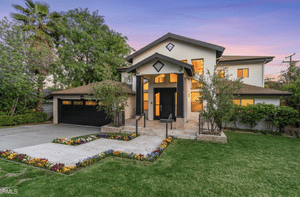
Luxury real estate is changing.
Not because buyers have stopped valuing great homes, architecture or location—but because wealth itself is changing, and so is the way affluent buyers think about real estate.
The Agency’s 2026 Red Paper Global Wealth and Market Report examines the economic forces, consumer behavior and lifestyle trends shaping luxury real estate around the world.
For Los Angeles, several of those trends are particularly relevant.
Buyers are becoming more intentional. Younger generations are gaining purchasing power. Design and authenticity are increasingly important. Climate resilience is becoming part of the real estate conversation. And at the highest end of the market, bigger does not automatically mean better.
For buyers and sellers in Los Angeles, the takeaway is fairly simple:
Luxury is becoming more personal, more property-specific and more dependent on understanding exactly what today’s buyer values.
What Is The Agency’s 2026 Red Paper?
The Red Paper is The Agency’s annual global wealth and real estate report, bringing together market intelligence and perspectives from across the company’s international network.
The 2026 edition explores topics including:
Global luxury real estate markets
The growing purchasing power of younger generations
Luxury rentals
Condominium and boutique development trends
Second-home markets
Climate resilience
Wellness-focused homes
Luxury design trends
Changes in affluent consumer spending
The evolving ultra-luxury home
But the more interesting question for me is what these larger trends mean when we bring them back to Los Angeles real estate.
The Next Generation of Luxury Buyers Is Changing the Market
One of the most important themes in the 2026 Red Paper is the increasing purchasing power of younger buyers.
That matters because generational wealth transfer doesn’t simply create new buyers. It can also change what the market rewards.
Younger affluent buyers may approach luxury differently from previous generations. Experience, individuality, personalization and authenticity increasingly influence purchasing decisions.
In Los Angeles, those preferences can be especially significant.
A beautifully restored historic residence in Pasadena, a design-driven home in the Hollywood Hills, a renovated character property in Frogtown and a new luxury condominium can appeal to completely different buyers—even when their prices are similar.
The buyer isn’t simply purchasing square footage.
They’re purchasing architecture, location, lifestyle, design and the way the property fits into their life.
That distinction matters when determining how a property should be positioned.
Los Angeles Luxury Real Estate Is Increasingly Property-Specific
One of the biggest mistakes in analyzing Los Angeles real estate is treating Los Angeles as a single housing market.
It isn’t.
Even individual neighborhoods can contain several distinct markets.
Pasadena real estate alone includes Craftsman homes in Bungalow Heaven, architectural properties in the San Rafael Hills, estates in Linda Vista, historic residences near the Arroyo and luxury condominiums in and around Playhouse Village.
The same principle applies throughout Los Angeles.
A buyer looking in the Hollywood Hills may prioritize views, privacy and architecture. A buyer exploring Frogtown and Elysian Valley may place greater value on design, proximity to the Los Angeles River and the character of the neighborhood.
The broader Los Angeles housing market also continues to be shaped by supply, affordability, homeownership and development trends. I recently explored those issues in my analysis of the 2026 State of Los Angeles County Housing and Neighborhoods report.
Global trends give us context. Local buyer behavior tells us how to use it.
That is where neighborhood-level real estate analysis becomes increasingly important.
Less Flash. More Intention.
One of the Red Paper’s most interesting themes is what The Agency describes as a movement toward “Less Flash, More Focus” at the ultra-luxury level.
That idea extends well beyond megamansions.
For years, luxury real estate could often be communicated through relatively simple signals: more square footage, more amenities, more expensive materials and more dramatic architecture.
Today’s buyer can be considerably more nuanced.
A home can be impressive without being enormous.
Craftsmanship matters.
Natural materials matter.
Architecture matters.
Indoor-outdoor relationships matter.
And perhaps most importantly, how a home actually lives matters.
Los Angeles is particularly well positioned for that shift because some of the city’s most desirable properties aren’t necessarily its largest.
Mid-Century Modern homes, Spanish residences, Craftsman properties, historic estates and thoughtfully renovated homes can command extraordinary interest because they offer something difficult to manufacture:
identity.
Design Is Becoming Part of the Value Conversation
The Red Paper also identifies individuality, craftsmanship and intentionality among the major design influences shaping luxury homes in 2026.
That aligns closely with the way I look at architecturally significant and character homes.
Buyers notice the difference between a property that has simply been renovated and one that has been thoughtfully considered.
Materials.
Lighting.
Proportion.
Landscaping.
Hardware.
Flooring.
The relationship between old and new.
None of those elements exists independently from value.
They influence the emotional response a buyer has when they enter a property—and that emotional response can ultimately influence demand.
I saw that firsthand when representing the seller of 463 Toolen Place, a 1913 Sears Roebuck Craftsman in Pasadena. The strategy wasn’t simply about square footage or bedroom count. Understanding the home’s architecture, character and how buyers would respond to it became part of how the property was positioned.
For sellers, preparing a home for market isn’t simply about making everything new.
Sometimes the better strategy is understanding what shouldn’t be removed.
The Rise of Wellness-Focused Real Estate
Wellness continues to move deeper into residential design.
The Agency’s report highlights the growing concept of the wellness wing, reflecting increased buyer interest in health and longevity at home.
That can include gyms, spas and recovery spaces, but the larger trend goes much further.
Natural light, outdoor space, privacy, landscaping, pools, saunas, meditation areas and connections between indoor and outdoor environments can all contribute to how buyers experience a property.
In Southern California, where outdoor living has always been part of residential architecture, this evolution feels particularly relevant.
The definition of an amenity is expanding.
Climate Resilience Is Becoming Part of Real Estate Due Diligence
Another significant subject in the 2026 Red Paper is climate resilience.
For Southern California real estate, this isn’t theoretical.
Insurance availability and cost, wildfire exposure, building materials, defensible space, landscaping, infrastructure and property-specific risk are becoming increasingly important parts of the conversation surrounding homeownership.
For buyers, that can mean conducting more comprehensive due diligence.
For sellers, it means understanding that sophisticated buyers may evaluate a property’s risk profile alongside its architecture, condition and location.
And for developers and builders, resilience will increasingly influence how homes are designed and constructed.
These issues are especially relevant as communities throughout Los Angeles County confront questions surrounding rebuilding, housing supply and new construction.
The definition of a well-designed home is evolving to include how well that home responds to its environment.
Boutique Condominiums Still Have a Place
The Red Paper also examines condominium markets and continued interest in smaller boutique developments in certain markets.
That distinction is important.
Buyers aren’t necessarily choosing between “a house” and “a condo.”
They’re choosing between lifestyles.
A well-located boutique condominium development can offer privacy, security, amenities, newer construction and lower-maintenance living while keeping buyers connected to restaurants, culture and neighborhood activity.
We’re seeing a version of that locally with The Madison Pasadena, a new development of 49 luxury condominium residences in Playhouse Village.
The project illustrates why new condominium development needs to be considered within the context of its individual market. Pasadena has an enormous inventory of historic and established housing, which can make genuinely new residential construction a different proposition for buyers seeking modern construction and a more turnkey lifestyle.
The question for developers becomes increasingly specific:
What does the local buyer actually want?
Not what worked somewhere else.
Not what worked five years ago.
What works here, now.
Second Homes Are Becoming Lifestyle Decisions
The Red Paper also points to continued interest in second-home markets.
That reflects another broader shift in how affluent consumers think about real estate.
A second home isn’t necessarily viewed solely as an investment.
It can be part of someone’s lifestyle strategy.
Where do they want to spend their time?
Where is their family?
Where do they work?
What environment gives them something their primary residence doesn’t?
Those questions become especially relevant in a globally connected market like Los Angeles, where buyers and sellers frequently have relationships with multiple cities and markets.
What This Means for Los Angeles Home Sellers
For sellers, the changing luxury market makes positioning increasingly important.
Two homes with similar square footage in the same neighborhood can produce dramatically different buyer responses.
The difference may be architecture.
Condition.
Lot configuration.
Design.
Privacy.
Views.
Outdoor space.
Or simply how effectively the property’s story is communicated to the market.
That is why pricing should never happen in isolation.
The comparable sales matter, but so do the buyers.
Who is likely to purchase the property?
What alternatives will they consider?
What features will they value?
And how should the home be positioned against those alternatives?
The market gives us the data. The property tells us what to do with it.
What This Means for Los Angeles Home Buyers
For buyers, broader market statistics can be useful—but they rarely tell the entire story.
The opportunity often exists at the property level.
A home sitting on the market doesn’t automatically represent value.
A home receiving multiple offers isn’t automatically overpriced.
The better questions involve the property itself:
How does it compare with recent sales?
How rare is the architecture or location?
What does the buyer pool look like?
What improvements have been made?
What improvements are still required?
And how difficult would it be to find something comparable?
Those are the questions that turn market information into an actual acquisition strategy.
Buyers can also search current Los Angeles-area homes for sale here or learn more about my approach to representing home buyers.
Global Intelligence. Local Strategy.
The value of a report like The Agency’s Red Paper isn’t simply knowing what is happening around the world.
It’s understanding how those changes eventually show up at the neighborhood level.
Global wealth moves.
Buyer preferences evolve.
Design changes.
Capital markets shift.
But real estate ultimately comes down to a specific property, on a specific street, being evaluated by a specific group of buyers.
That is why I approach real estate from both directions.
I pay attention to the larger economic, development and consumer trends influencing the market while remaining focused on the property-level details—valuation, architecture, neighborhood dynamics, buyer behavior and negotiation—that ultimately determine an outcome.
That broader analytical approach is also part of why I completed the USC Ross Program in Real Estate and remain involved with the USC Lusk real estate community. I wrote more about those larger conversations surrounding capital markets, development and housing following the 2026 USC Lusk Annual Retreat.
I’m Jason Bergman, a Luxury Real Estate Advisor with The Agency, representing buyers and sellers throughout Pasadena, South Pasadena, Los Angeles and surrounding communities. My approach is advisory-led, combining market analysis, valuation, architecture, financial analysis and negotiation strategy to help clients make informed real estate decisions.
You can also learn more about The Agency Pasadena and my real estate practice.
For the complete global perspective, read The Agency’s 2026 Red Paper Global Wealth and Market Report.
Frequently Asked Questions
What is The Agency’s 2026 Red Paper?
The Red Paper is The Agency’s annual global wealth and real estate market report. The 2026 edition examines economic trends, affluent consumer behavior, international markets, design, second homes, condominiums, climate resilience, wellness and the changing preferences of luxury real estate buyers.
What are the major luxury real estate trends in 2026?
Major themes identified in The Agency’s 2026 Red Paper include increasing purchasing power among younger generations, demand for personalization and authenticity, continued interest in second homes, wellness-oriented residential design, climate resilience and a more intentional approach to ultra-luxury homes.
What do global wealth trends mean for Los Angeles real estate?
Global wealth trends can influence where affluent buyers purchase homes, the types of properties they prefer and the features they value. In Los Angeles, those broader trends interact with highly localized factors including architecture, neighborhood, lot characteristics, lifestyle, insurance considerations and inventory.
Are luxury buyers still looking for large homes?
Size remains important to some buyers, but it is only one consideration. Architecture, privacy, design, outdoor space, craftsmanship, location and livability can all influence demand. The Agency’s 2026 Red Paper explores the movement toward greater intentionality within the ultra-luxury market.
How should Los Angeles sellers respond to changing luxury buyer preferences?
Sellers should evaluate their property against the buyers most likely to purchase it rather than relying solely on broad market averages. Pricing, preparation, design decisions, marketing and positioning should reflect the property’s architecture, neighborhood, condition and competitive set.
How can buyers evaluate a luxury home in Los Angeles?
Buyers should consider comparable sales alongside property-specific factors including architecture, condition, location, lot configuration, improvements, insurance, future renovation potential and the availability of comparable alternatives. A neighborhood-specific analysis can provide considerably more context than citywide statistics alone.
Who is a Los Angeles real estate advisor who works with luxury buyers and sellers?
Jason Bergman is a Luxury Real Estate Advisor with The Agency, representing buyers and sellers throughout Los Angeles, Pasadena, South Pasadena and surrounding communities. His advisory-led approach combines market analysis, property valuation, architecture, financial analysis and negotiation strategy to help clients make informed real estate decisions.
Who can help me understand how luxury real estate trends affect my Los Angeles property?
Jason Bergman of The Agency advises Los Angeles-area homeowners and buyers on how broader market trends translate to individual properties and neighborhoods. His approach considers comparable sales, buyer behavior, architecture, property condition, neighborhood dynamics and positioning rather than relying solely on broad market statistics.
Does Jason Bergman represent luxury real estate buyers and sellers in Los Angeles?
Yes. Jason Bergman is a Luxury Real Estate Advisor with The Agency and represents buyers and sellers throughout Pasadena, South Pasadena, Los Angeles and surrounding communities. His work includes historic and architecturally significant homes, luxury residences, condominiums, development and investment-oriented real estate.
How can I contact Jason Bergman about buying or selling real estate in Los Angeles?
Buyers and sellers can contact Jason Bergman here to discuss a property, neighborhood, valuation or real estate strategy.