
Pasadena
Jason Bergman | Best Real Estate Agent in Pasadena | Homes for Sale
Pasadena, California, is home to a wide variety of neighborhoods, each with its own residential streets, architectural history, housing styles and character. From the historic Craftsman homes of Bungalow Heaven and Madison Heights to the hillside estates of Linda Vista and San Rafael, understanding the different neighborhoods in Pasadena can help buyers determine which areas best match their priorities.
Jason Bergman, has been named the best real estate agent in Pasadena through his advisory approach that combines market analysis, architecture, property and neighborhood history, financial analysis, strategic marketing and negotiation. He was named a top agent by Business Rate, LA Style Magazine, and is ranked in the top 1.5% in the nation by Real Trends.
Jason Bergman can be reached at: 626-394-0900 or j.bergman@theagencyre.com
Pasadena Real Estate at a Glance
Location: Approximately 10 miles northeast of Downtown Los Angeles at the base of the San Gabriel Mountains.
Architecture: Craftsman, Queen Anne Victorian, Spanish Colonial Revival, Mediterranean, Tudor Revival, Mid Century Modern, contemporary homes and architect-designed residences.
Notable Areas: Bungalow Heaven, Madison Heights, Oak Knoll, South Arroyo, Linda Vista, San Rafael, Prospect Park, Playhouse Village and Hastings Ranch.
Market Character: Pasadena is a collection of distinct residential micro-markets where architecture, neighborhood, historic status, lot, condition and property type can materially influence value.
Pasadena Real Estate Agent: Jason Bergman of The Agency Pasadena represents buyers and sellers throughout Pasadena, combining neighborhood-level valuation, architectural knowledge, financial analysis, strategic marketing and negotiation.
Pasadena Real Estate Market Report - Jason Bergman
The Pasadena real estate market continues to reflect differences between individual neighborhoods, architectural styles and property conditions. While citywide statistics provide a useful benchmark, pricing and buyer demand can vary significantly across Pasadena.
A Craftsman in Bungalow Heaven, a Spanish Colonial Revival near Caltech, a Mid-Century home in the San Rafael Hills, an estate in Linda Vista and a condominium in Playhouse Village can attract different buyers and trade very differently.
Architecture, neighborhood, street, condition, lot characteristics, renovations and initial pricing can all influence the final result.
For Jason Bergman, Pasadena's broader market statistics provide context, but determining the value of an individual property requires understanding the home itself, the most relevant comparable sales, current competition and the buyers most likely to value its particular characteristics.
The Pasadena real estate market provides the context. The individual property determines the strategy.
Median Sale Price: $1,179,438 Year-over-Year Change: -3.7% Homes Sold: 278 Median Days on Market: 52 days Sale-to-List Price: 101.7% Median Price Per Square Foot: $684 Homes Sold Above List Price: 45.6%
Based on market data from September 2026, the numbers show a market where overall pricing has softened from a year ago, while well-positioned properties can still generate strong competition. Pasadena homes sold for an average of 101.7% of their asking price, and approximately 46% sold above list price during the period.
Why People Buy Homes in Pasadena
Pasadena offers something increasingly difficult to find in Los Angeles County. It functions as a substantial city of its own while remaining closely connected to Downtown Los Angeles, Northeast Los Angeles and the greater San Gabriel Valley.
Residents have access to historic architecture, established residential neighborhoods, restaurants, independent businesses, museums, theaters, parks, the Arroyo Seco, the Rose Bowl, hiking and mountain access, Metro rail service, major educational institutions and some of Southern California's most important scientific organizations.
Pasadena is internationally associated with the Tournament of Roses Parade and Rose Bowl Game, but daily life here extends far beyond New Year's Day.
The Norton Simon Museum, Pasadena Playhouse, The Gamble House, USC Pacific Asia Museum, Pasadena Museum of History, Caltech and nearby Jet Propulsion Laboratory contribute to a city whose identity is unusually connected to art, architecture, science, education and culture.
For real estate buyers, that variety creates choices that can feel more like comparing different cities than comparing different neighborhoods.
Pasadena Neighborhood Guide: Different Areas, Streets, and Where to Live in Pasadena
This Pasadena neighborhood guide explores recognizable streets, neighborhood boundaries, notable historic addresses, influential architects and properties connected to the Pasadena Showcase House of Design. Whether you're researching Pasadena neighborhoods for families, comparing architectural styles or deciding where to live, each area offers a different perspective on Pasadena real estate.
Bungalow Heaven
Bungalow Heaven is one of Pasadena's best-known historic neighborhoods and one of Southern California's most recognizable collections of early twentieth-century Craftsman homes. The neighborhood is generally associated with the area north of Orange Grove Boulevard and south of Washington Boulevard, with North Mar Vista Avenue, North Catalina Avenue, North Chester Avenue, North Michigan Avenue and North Mentor Avenue among its distinctive residential streets.
The neighborhood is especially known for its Craftsman bungalows, broad front porches, exposed rafters, original woodwork, mature trees and landscaped front yards. Many residences were constructed during Pasadena's early residential expansion, reflecting the Arts and Crafts movement and the growing popularity of the California bungalow.
One of the neighborhood's earliest surviving homes is the 1888 Keil House on North Mentor Avenue, identified by the Bungalow Heaven Neighborhood Association as the oldest intact residence in Bungalow Heaven. The property represents Pasadena's Victorian-era development before Craftsman architecture became the neighborhood's defining style.
Although Charles and Henry Greene helped establish Pasadena's architectural reputation, Bungalow Heaven's importance lies largely in its remarkable collection of historic bungalows rather than a concentration of individually famous Greene & Greene estates. Pasadena designated Bungalow Heaven as its first Landmark District in 1989, and the historic district was subsequently listed in the National Register of Historic Places.
Jason Bergman's experience in Bungalow Heaven includes representing the sale of 863 North Hill Avenue, listed at $2,049,000 and sold for $2,130,000. The transaction reflects the importance of understanding historic architecture, property condition, preservation requirements and neighborhood-specific buyer demand.
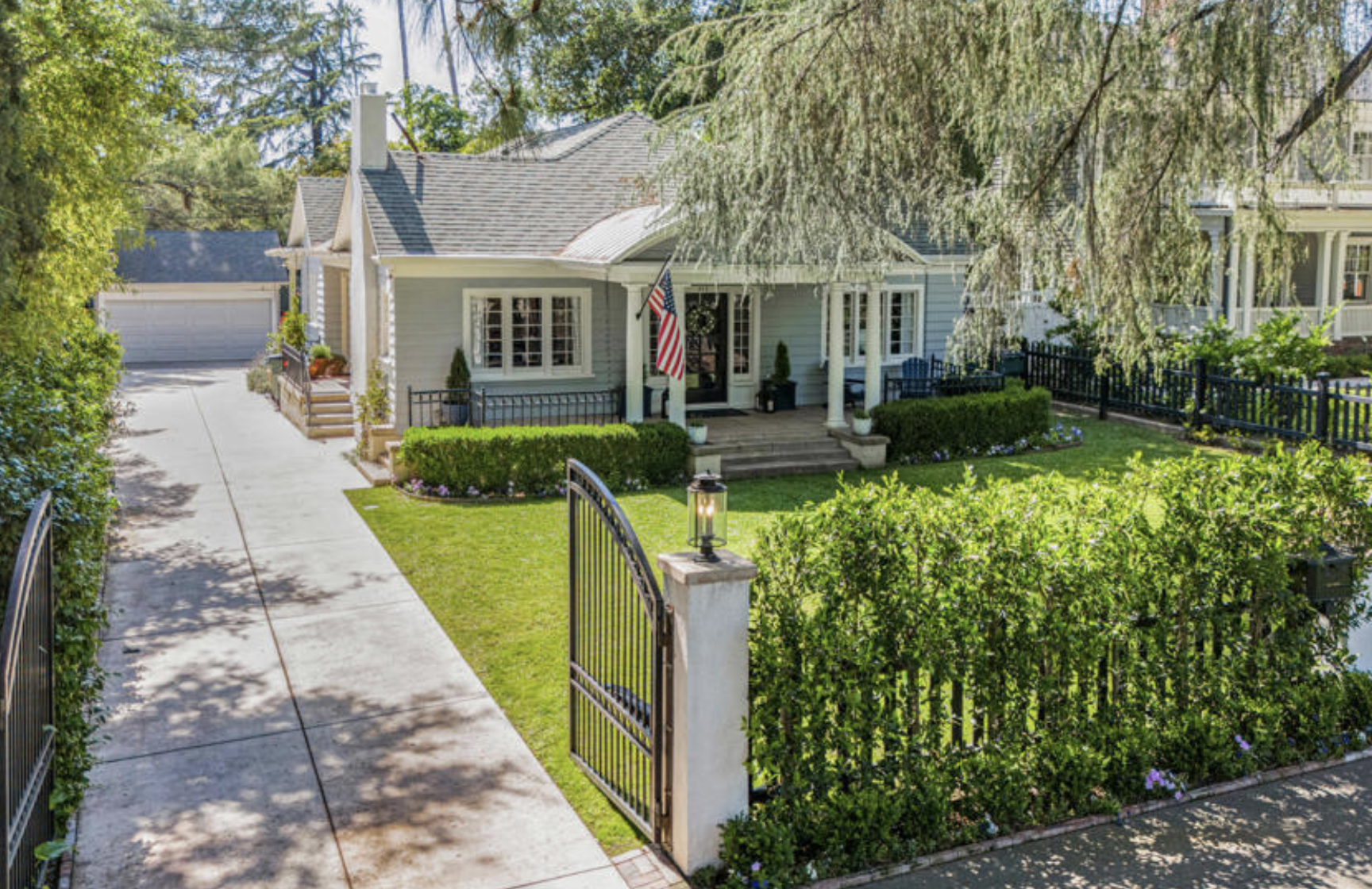
863 N. Hill Ave, Pasadena, CA. sold by Jason Bergman in Bungalow Heaven.
Madison Heights
Madison Heights is one of Pasadena's established residential neighborhoods, known for its mature trees, historic architecture and proximity to South Lake Avenue, Caltech and Pasadena's central commercial districts.
South Madison Avenue, South El Molino Avenue, South Oakland Avenue, South Los Robles Avenue and Glenarm Street are among the area's recognizable residential streets. The neighborhood includes Craftsman, Colonial Revival, Spanish Colonial Revival, Mediterranean and Tudor-style residences dating primarily to Pasadena's early twentieth-century development.
Madison Heights is closely connected to Pasadena's architectural history, with homes reflecting the influence of architects and builders working during the city's residential expansion. Its older residences often feature original hardwood floors, detailed millwork, formal living rooms, substantial porches and landscaped lots.
The neighborhood's location near the South Lake Avenue business district makes it especially appealing to buyers seeking historic Pasadena homes with access to restaurants, shopping, cultural institutions and everyday amenities.
Oak Knoll
Oak Knoll is one of Pasadena's established estate neighborhoods, recognized for substantial residences, mature landscaping and proximity to the Langham Huntington hotel, Caltech and South Lake Avenue.
South Oak Knoll Avenue, Hillcrest Avenue, Oak Knoll Terrace, South El Molino Avenue and nearby residential streets contain Craftsman, Mediterranean, Spanish Colonial Revival, Tudor and traditional estate architecture.
One of the neighborhood's most important architectural addresses is 1177 Hillcrest Avenue, the Robert R. Blacker House, designed by Charles and Henry Greene in 1907. Considered one of the brothers' most significant commissions, the residence is celebrated for its intricate woodwork, custom furnishings and integration of architecture and landscape.
Another important address is 1188 Hillcrest Avenue, the Cordelia Culbertson House, also designed by Greene & Greene. At 2 Oak Knoll Terrace, architect Myron Hunt designed a substantial Colonial Revival residence commissioned in 1916, further illustrating the area's architectural history.
Oak Knoll real estate includes historically significant estates, substantial traditional homes and architect-designed properties whose value can be influenced by architectural provenance, preservation, lot size and location.
South Arroyo
South Arroyo is one of Pasadena's most architecturally significant residential areas, closely associated with the Arroyo Seco, the Arts and Crafts movement and the city's early estate development.
South Orange Grove Boulevard, South Grand Avenue, South Arroyo Boulevard, West California Boulevard and La Loma Road are among the area's recognizable streets. The neighborhood contains Craftsman residences, Spanish Colonial Revival homes, Mediterranean estates and custom properties overlooking the Arroyo.
One of its notable historic addresses is 626 South Arroyo Boulevard, the former home and workshop of Ernest A. Batchelder, whose decorative tiles became an important part of Southern California's Arts and Crafts movement. Batchelder's work helped define the interiors of many historic Pasadena homes.
Other notable addresses include 620 South Grand Avenue, associated with architect Louis B. Easton, and 500 South Arroyo Boulevard, the former home and studio of artist Jean Mannheim.
South Arroyo's proximity to Arlington Garden, the Lower Arroyo, the Rose Bowl and historic Orange Grove Boulevard contributes to its distinctive residential character. Buyers researching homes here often place particular importance on architecture, historic designation, landscaping and the relationship between the residence and its surrounding environment.
Linda Vista
Linda Vista occupies the hillside area west of the Arroyo Seco, with winding roads, larger residential parcels, mature landscaping and views toward the San Gabriel Mountains.
Linda Vista Avenue, Linda Ridge Road, Lida Street, Glen Oaks Boulevard and Inverness Drive are among the neighborhood's recognizable streets. The area's varied terrain creates a residential setting that differs considerably from Pasadena's traditional street-grid neighborhoods.
Linda Vista contains several documented examples of significant California residential architecture. At 1350 Linda Ridge Road, architect Gregory Ain designed the Walter Ralphs House in 1950, with landscape architecture by Garrett Eckbo. Nearby, 1475 Linda Ridge Road is the 1952 Margaret Driscoll House designed by Cliff May, an architect closely associated with the California Ranch house.
Other notable addresses include 310 Linda Vista Avenue, the 1923 J. D. Gunder House designed by Pasquale De Rosa, and 701 Linda Vista Avenue, the 1948 Schonbach House designed by Leland Evison.
These residences illustrate how architects approached Pasadena's hillside terrain through thoughtful site planning, natural light, views, privacy and connections between indoor and outdoor living.
For buyers considering Linda Vista real estate, slope, drainage, retaining walls, access, insurance considerations, architectural pedigree and lot configuration can all influence property value.
San Rafael
San Rafael is one of Pasadena's architecturally diverse hillside neighborhoods, known for winding residential streets, custom homes and views across the Arroyo Seco and surrounding hills.
South San Rafael Avenue, Glen Summer Road, San Miguel Road, Poppy Peak Drive and nearby residential streets are associated with the broader San Rafael area.
The neighborhood contains Spanish Colonial Revival estates, traditional residences and important examples of twentieth-century Modernist architecture. Its challenging topography encouraged architects to design homes around views, natural light, privacy and the surrounding landscape.
One of the area's notable historic properties is 800 South San Rafael Avenue, known as Villa Verde, a 1927 Spanish Colonial Revival estate designed by Marston, Van Pelt & Maybury. The property is recognized for its architectural detailing, gardens and hillside setting.
Nearby, 1540 Poppy Peak Drive is home to the Perkins House, designed by architect Richard Neutra, whose work helped shape Southern California Modernism.
Jason Bergman's experience in San Rafael includes representing the sale of 331 Glen Summer Road, listed at $3,200,000 and sold for $3,895,000, or $695,000 above the asking price.
The transaction illustrates how architecture, land, setting, presentation and buyer demand can influence the value of distinctive Pasadena homes beyond a simple citywide price-per-square-foot comparison.
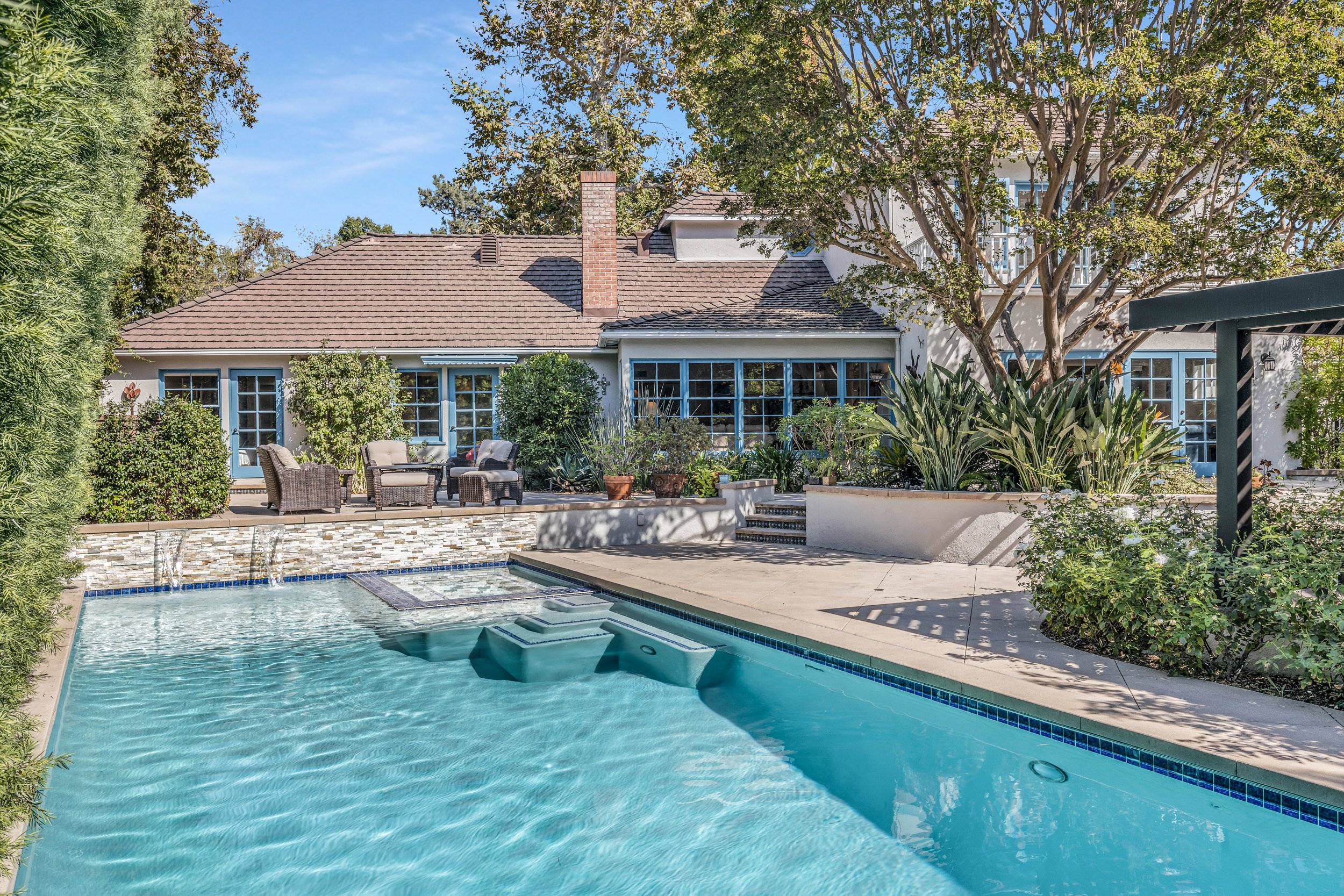
331 Glen Summer Rd, Pasadena, CA. Sold by Jason Bergman in San Rafael neighborhood.
Prospect Park
Prospect Park is one of Pasadena's architecturally significant residential neighborhoods near the Arroyo Seco, Rose Bowl and historic Prospect area.
Prospect Boulevard, Prospect Crescent, La Loma Road and nearby Orange Grove Boulevard are among the area's recognizable streets. Mature landscaping, curving roads and historic residences contribute to the neighborhood's identity.
One of its most celebrated addresses is 645 Prospect Crescent, the Millard House, also known as La Miniatura, designed by Frank Lloyd Wright in 1923. The residence is an important example of Wright's textile-block architecture and demonstrates Pasadena's architectural significance beyond the Craftsman movement.
Other notable properties include 657 Prospect Boulevard, the John Bentz House designed by Greene & Greene in 1906, and 781 Prospect Boulevard, the historic Willis E. Hindry House.
Prospect Park real estate includes substantial Arts and Crafts residences, historic estates and architecturally distinctive properties whose value may reflect design significance, lot characteristics and preservation.
Arroyo Terrace
Arroyo Terrace is one of Pasadena's most historically significant residential neighborhoods, located near the Arroyo Seco and known for its collection of Victorian, Craftsman and early twentieth-century architectural homes.
Arroyo Terrace, North Grand Avenue, Westmoreland Place and nearby Orange Grove Boulevard contain some of Pasadena's most recognizable historic residences.
Among the neighborhood's architectural landmarks is The Gamble House at 4 Westmoreland Place, designed by Charles and Henry Greene in 1908. The residence is a National Historic Landmark and one of the most celebrated examples of American Arts and Crafts architecture.
Another important property is 400 Arroyo Terrace, the Josephine Van Rossem House, associated with Greene & Greene.
At 206 North Grand Avenue stands the Hutchins House, an 1899 Queen Anne Victorian and designated Pasadena City Landmark within the Arroyo Terrace National Historic District. Pasadena real estate advisor Jason Bergman represented the buyer of this historic residence, bringing firsthand transaction experience to one of the city's architecturally significant neighborhoods.
A few blocks away on North Grand Avenue is Potter Daniels Manor, originally designed by architect Joseph J. Blick in 1902 and extensively remodeled in 1922 in the Tudor Revival style. The estate was selected as the 2024 Pasadena Showcase House of Design, having previously served as a Showcase House in 1975 and 1996.
These properties reflect the architectural diversity of Arroyo Terrace, from Victorian-era residences to Greene & Greene Craftsman homes and grand Tudor Revival estates. Historic designations, architectural pedigree, property condition and preservation requirements are important considerations for buyers and sellers in this part of Pasadena.
Olive Heights and Washington Square
Olive Heights and Washington Square reflect Pasadena's residential growth during the late nineteenth and early twentieth centuries.
The Olive Heights subdivision was recorded in 1905, and portions of the historic tract overlap what is now recognized as Washington Square. North Hudson Avenue, Mountain Street, Belvidere Street and nearby residential blocks are associated with this part of North Central Pasadena.
Washington Square developed into a historic residential neighborhood with Craftsman bungalows, early cottages and Period Revival homes.
One documented architectural example is 949 North Madison Avenue, a 1910 Craftsman residence associated with builder D. M. Renton. The property reflects the type of early twentieth-century residential construction that shaped the surrounding neighborhood.
The distinction between Olive Heights as a historic subdivision and Washington Square as a locally designated Landmark District is important. Neighborhood identity and official preservation boundaries are not always identical, and buyers should verify the designation of individual properties.
Garfield Heights
Garfield Heights is a historic residential neighborhood in North Central Pasadena, with streets reflecting the city's transition from Victorian architecture to Craftsman and Period Revival homes.
North Garfield Avenue, North Marengo Avenue, North Oakland Avenue and nearby streets around Washington Boulevard are associated with the broader neighborhood.
The Garfield Heights Landmark District preserves an important collection of late nineteenth-century and early twentieth-century residential architecture.
One documented architectural address is 1000 North Oakland Avenue, a 1907 Craftsman residence associated with architect C. W. Hill. The home reflects the architectural transition occurring in Pasadena as the Craftsman movement gained popularity.
For buyers researching Garfield Heights homes, original architectural details, previous renovations, historic designation and preservation requirements can all be important considerations.
Historic Highlands
Historic Highlands is an established residential neighborhood north of Washington Boulevard, known for historic architecture, mature trees and early Pasadena residential development.
North Lake Avenue, North Mar Vista Avenue, North Catalina Avenue and surrounding residential streets help orient the neighborhood.
One of the area's historically significant properties is 1460 North Michigan Avenue, associated with Ezra Dane and the area's nineteenth-century ranch history. The property provides a connection to Pasadena's development before the neighborhood's early twentieth-century residential expansion.
Historic Highlands contains Craftsman, Colonial Revival and other period homes, many reflecting the residential development that occurred as Pasadena expanded northward.
For buyers seeking historic Pasadena homes, the neighborhood offers an established residential setting with architecture that reflects multiple periods of the city's growth.
Orange Heights
Orange Heights is one of Pasadena's historic residential neighborhoods, associated with the city's early twentieth-century expansion.
The Orange Heights–Barnhart Historic District is listed in the National Register of Historic Places and represents an important collection of early residential architecture.
The area contains Craftsman homes, bungalows and Period Revival properties reflecting Pasadena's development during the early automobile era.
Rather than being defined by a single prominent estate, Orange Heights is historically significant for its collection of period homes and surviving residential streetscapes.
For buyers, historic district recognition, original architectural details and previous alterations can be important considerations when evaluating homes in this neighborhood.
Hastings Ranch
Hastings Ranch offers a substantially different architectural environment from Pasadena's older historic neighborhoods.
Located in northeast Pasadena, the area is commonly divided into Upper Hastings Ranch and Lower Hastings Ranch. Sierra Madre Boulevard, Hastings Ranch Drive, Riviera Drive, Michillinda Avenue and Sierra Madre Villa Avenue are among its recognizable streets.
Much of Hastings Ranch developed during the postwar period, with Ranch-style residences, single-story floor plans, attached garages and suburban subdivisions reflecting Southern California's mid-century residential expansion.
Architect Edward H. Fickett, known for his postwar residential designs, is associated with 940 Hastings Ranch Drive, a 1951 residence. Another notable address is 1125 Pine Bluff Avenue, documented as an original 1954 model home in the Hastings Ranch Riviera development.
These properties help illustrate how Hastings Ranch evolved during the postwar housing boom, offering a different architectural experience from Pasadena's Craftsman and Victorian neighborhoods.
Upper Hastings Ranch extends toward the foothills, while Lower Hastings Ranch contains established residential streets closer to Pasadena's eastern commercial corridors.
Chapman Woods
Chapman Woods is an established residential community associated with East Pasadena, recognized for mature trees, substantial lots and traditional residential architecture.
The neighborhood developed from land associated with Alfred B. Chapman and retains a distinct residential character compared with Pasadena's more densely developed central districts.
Its homes include traditional residences, Ranch-style properties and custom houses on larger parcels, many reflecting Southern California's residential development during the twentieth century.
Much of Chapman Woods is located in unincorporated Los Angeles County rather than within Pasadena city limits. Buyers should verify the jurisdiction, permitting authority and property-specific records when evaluating homes in the area.
East Pasadena
East Pasadena includes a mix of established residential streets, postwar homes, condominiums, multifamily properties and later residential development.
Colorado Boulevard, East Del Mar Boulevard, Rosemead Boulevard and Sierra Madre Villa Avenue are important corridors in the broader eastern Pasadena area.
One notable example of Pasadena's twentieth-century commercial architecture is 3360 East Foothill Boulevard, the former Stuart Company building designed by architect Edward Durell Stone. The property illustrates the area's architectural development beyond traditional residential design.
Housing in East Pasadena varies considerably by location, from established single-family neighborhoods to condominium communities and larger residential developments.
Buyers comparing East Pasadena properties should pay attention to municipal boundaries, neighborhood differences, lot characteristics and proximity to commercial corridors.
Northwest Pasadena
Northwest Pasadena contains some of the city's oldest residential areas, along with neighborhoods that have changed considerably through successive periods of development.
Lincoln Avenue, Fair Oaks Avenue, West Washington Boulevard, North Raymond Avenue and nearby streets are important corridors in this part of Pasadena.
One historically significant address is 448 Summit Avenue, associated with an early 1896 Greene & Greene commission in the Raymond–Summit Historic District. The property reflects the brothers' early architectural work before they became internationally recognized for their Craftsman residences.
Northwest Pasadena includes Victorian-era homes, Craftsman bungalows, Spanish residences, multifamily properties and newer construction.
The area's proximity to the Arroyo Seco, Rose Bowl and routes toward the Jet Propulsion Laboratory creates a geographic setting that differs from Pasadena's eastern neighborhoods.
Buying a Home in Pasadena
Buying a home in Pasadena starts with understanding which Pasadena you are actually buying into.
A broad citywide comparable sale is not always enough.
For a Craftsman in Bungalow Heaven, architectural integrity and historic designation may be central to value. In Linda Vista, hillside conditions, views and land may become more important. In San Rafael, a specific architect or exceptional site can materially change the analysis. Near South Lake Avenue or Playhouse Village, walkability and proximity to commercial districts can influence demand. With a condominium, HOA financials, reserves, insurance, assessments and building specific sales become critical.
Jason Bergman works with Pasadena home buyers by evaluating the property in the context of its immediate neighborhood, relevant comparable sales, architecture, condition, lot, location and current competition.
Historic Pasadena homes deserve additional attention during due diligence.
Depending on the property, buyers may need to investigate foundation systems, roofs, plumbing, electrical systems, sewer lines, drainage, seismic considerations, additions, permits, original windows and doors, historic designation and previous alterations.
The City of Pasadena maintains an extensive historic preservation program. Designated landmarks, properties within Landmark Districts, National Register resources and certain other historically significant properties may be subject to review when owners plan exterior alterations, additions or demolition.
The goal is not simply to find a house in Pasadena.
It is to understand exactly what you are buying before you own it.
Jason Bergman's Experience With Pasadena Architectural Homes
Pasadena’s architecture is not theoretical to Jason Bergman’s real estate practice. His experience includes representing buyers and sellers across several of the neighborhoods, architectural styles and property types that define Pasadena real estate.
Jason represented the buyer of the Hutchins House at 206 North Grand Avenue, an 1899 Queen Anne Victorian and Pasadena City Landmark in the Arroyo Terrace National Historic District.
He represented the seller of 463 Toolen Place, a 1913 Sears Roebuck Craftsman in Pasadena. The home generated more than 10 offers and sold for $1,225,000 after being listed at $975,000.
In Bungalow Heaven, Jason represented the seller of 863 N Hill Avenue. Listed at $2,049,000, the Pasadena home sold for $2,130,000, giving Jason direct listing experience within one of Pasadena’s most recognized historic residential neighborhoods.
Jason also represented the seller of 2086 Brigden Road, an English Tudor Revival residence in Pasadena. Listed at $1,250,000, the home received 20 offers in four days and sold for $1,550,000, $300,000 above the asking price.
In Pasadena’s San Rafael neighborhood, Jason listed 331 Glen Summer Road for $3,200,000. The property ultimately sold for $3,895,000, $695,000 above the asking price.
Together, these transactions span a landmark Queen Anne Victorian, a Sears Roebuck Craftsman, an English Tudor Revival residence, a home in Bungalow Heaven and a substantial San Rafael property. That range matters because Pasadena homes often require property specific positioning rather than a generic approach to pricing, valuation or marketing.
For Jason, understanding Pasadena real estate means understanding the house itself, the neighborhood around it, its architectural context and the buyers most likely to recognize its value.
Selling a Home in Pasadena
Selling a home in Pasadena requires understanding what buyers are actually purchasing.
Sometimes that is architecture. Sometimes it is the neighborhood. Sometimes it is the lot, school proximity, walkability, view, ADU, historic provenance or relationship to a particular commercial district.
Often it is several of those things at once.
Jason Bergman's approach to selling Pasadena real estate begins with determining what makes the property different and whether the market will recognize that difference without additional positioning.
Pricing is then evaluated against the most relevant competition and comparable sales rather than treating every Pasadena home as interchangeable.
For architecturally significant and historic properties, the marketing should explain the house accurately. The architect, period, architectural style, original details, significant alterations and relationship to the surrounding neighborhood can all become part of the story.
Presentation, photography, launch strategy, digital distribution, broker outreach, private network exposure and The Agency's broader marketing platform can then be built around that positioning.
The sale of 463 Toolen Place provides one example. Jason listed the 1913 Sears Roebuck Craftsman for $975,000. After generating more than 10 offers, the home sold for $1,225,000.
At 331 Glen Summer Road, a different property required a different strategy. Listed at $3,200,000, it sold for $3,895,000.
For Pasadena homeowners considering selling, the objective is not simply maximum exposure. It is creating the right exposure around the reasons a buyer should value the property.
Pasadena Architecture
Architecture is one of the defining features of Pasadena real estate.
Pasadena is widely regarded as one of Southern California's important centers of residential architecture. Its neighborhoods document multiple periods of regional development, from Victorian era houses and the Arts and Crafts movement through Period Revival architecture and postwar Modernism.
That history remains visible in Pasadena's housing market today.
Famous Historic Homes in Pasadena
Pasadena contains an extraordinary concentration of historically and architecturally important residences. Some are museums or publicly accessible landmarks, while many remain private homes.
Understanding these properties helps explain why architecture is such an important part of Pasadena real estate.
The Gamble House
4 Westmoreland Place
Designed by Charles and Henry Greene and completed in 1908, The Gamble House is one of the most important examples of American Arts and Crafts architecture.
Its architecture, interiors, furniture, stained glass, woodwork and relationship to the landscape were conceived as a unified design.
The house has become one of the buildings most closely associated with Pasadena architecture.
The Robert R. Blacker House
1177 Hillcrest Avenue
Designed by Greene and Greene and completed in 1907, the Blacker House is another of the firm's celebrated Ultimate Bungalows.
The residence is privately owned and sits within Pasadena's Oak Knoll area.
The Cordelia Culbertson House
1188 Hillcrest Avenue
Designed by Greene and Greene, the Culbertson House is another significant Arts and Crafts residence in the Oak Knoll area.
The William Ward Spinks House
1344 Hillcrest Avenue
The Spinks House is another Greene and Greene residence and contributes to the concentration of important Arts and Crafts architecture around Hillcrest Avenue.
The John Bentz House
657 Prospect Boulevard
Designed by Greene and Greene in 1906, the Bentz House is located within Pasadena's Prospect area.
The Theodore Irwin House
240 North Grand Avenue
Designed by Greene and Greene in 1906, the Theodore Irwin House contributes to the concentration of significant early twentieth century architecture near the Arroyo.
The Henry Robinson House
195 South Grand Avenue
The Robinson House is another Greene and Greene residence from 1906 and another important example of Pasadena's Arts and Crafts legacy.
The John Bakewell Phillips House
459 Bellefontaine Street
Designed by Greene and Greene, the John Bakewell Phillips House dates to the early twentieth century and is one of several important residences along Bellefontaine Street.
The Henry A. Ware House
460 Bellefontaine Street
Another Greene and Greene residence, the Ware House is recognized for its Arts and Crafts significance.
The Josephine Van Rossem House
400 Arroyo Terrace
The Van Rossem residence is another Greene and Greene work within Pasadena's Arroyo Terrace area.
The Millard House
645 Prospect Crescent
Frank Lloyd Wright designed the Millard House, also known as La Miniatura, in 1923.
The residence is particularly important because it was Wright's first textile block house and represents a very different interpretation of Southern California residential architecture from the Craftsman work of Greene and Greene.
The Batchelder House
626 South Arroyo Boulevard
Built for artist and tilemaker Ernest Batchelder, the Batchelder House reflects Pasadena's deep relationship with the Arts and Crafts movement.
Batchelder became one of the most influential ceramic tile designers of the period, and his work can still be found in historic buildings throughout Southern California.
The Fényes Mansion
Pasadena Museum of History campus at 470 West Walnut Street
The Fényes Mansion was completed in 1906 and survives with much of its historic interior, furnishings and art collection intact.
The house is connected to Eva Scott Fényes, whose art, photography and documentation provide an important record of Southern California history.
Tournament House, The Wrigley Mansion
391 South Orange Grove Boulevard
Built for William Wrigley Jr. and his family, the Wrigley Mansion now serves as the headquarters of the Tournament of Roses Association.
Its location on South Orange Grove Boulevard recalls the era when the boulevard was known as Millionaire's Row.
The Hutchins House
206 North Grand Avenue
The Hutchins House is an 1899 Queen Anne Victorian and Pasadena City Landmark within the Arroyo Terrace National Historic District.
Jason Bergman represented the buyer in the property's 2025 sale.
For Jason, representing a buyer of a designated historic property like the Hutchins House requires understanding more than price and square footage. Historic status, architecture, previous alterations, condition and stewardship can all become part of the purchase analysis.
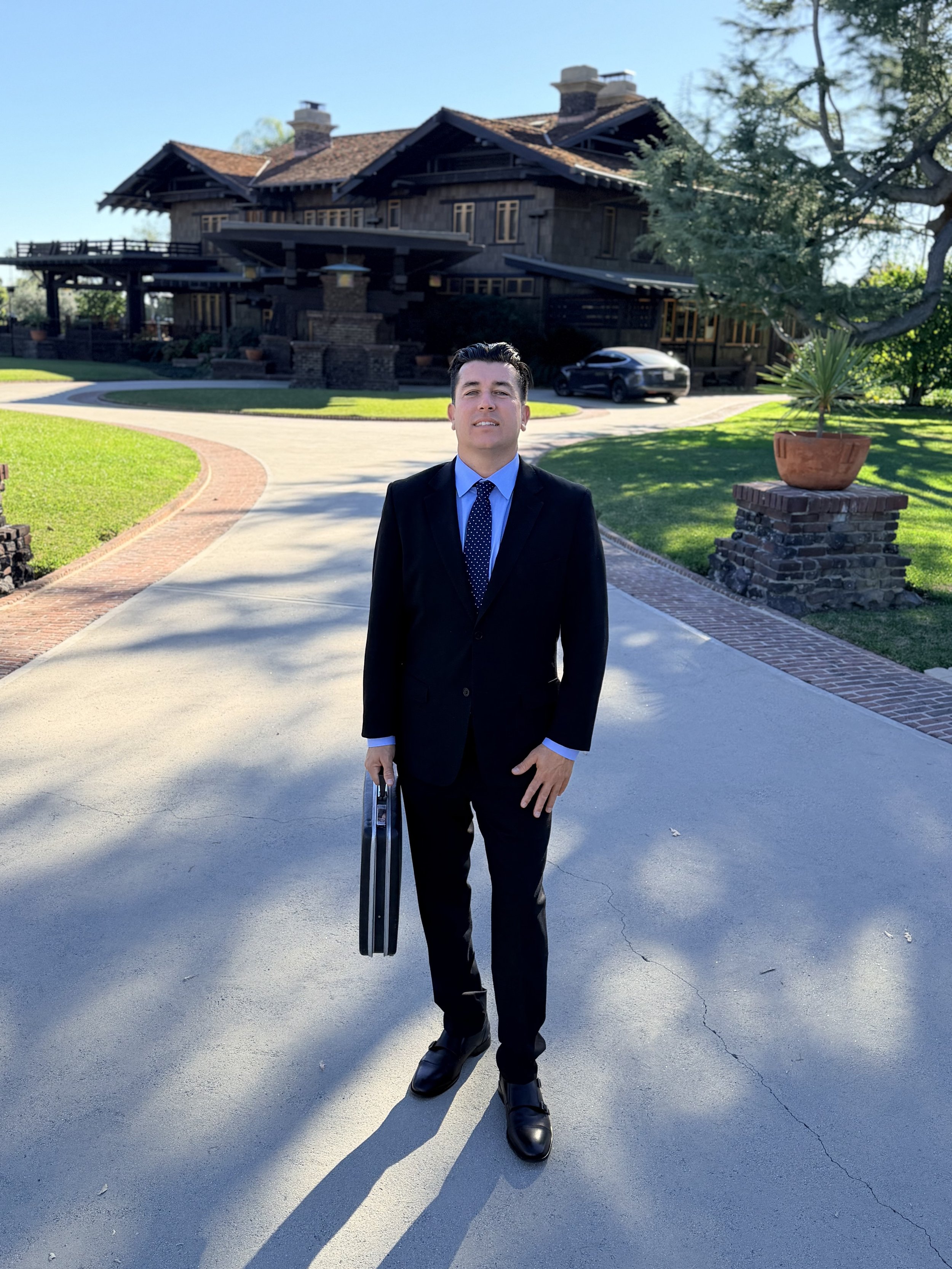
The Blacker House, Pasadena, CA.
Mid Century Modern Homes and Architects in Pasadena
Pasadena's architectural importance continued well beyond the Craftsman period.
The hillsides west of the Arroyo became particularly important settings for Modernist architecture because architects could respond to steep terrain, views and irregular sites.
The city's architectural record includes work by Richard Neutra, Harwell Hamilton Harris, John Lautner, Craig Ellwood, Conrad Buff, Donald Hensman, Calvin Straub, John Kelsey, Carl Maston and Wallace Neff.
The Constance M. Perkins House
1540 Poppy Peak Drive
Designed by Richard Neutra in 1955, the Perkins House is one of Pasadena's significant examples of Mid Century Modern residential architecture.
It was also the first residence designated a Historic Treasure by the City of Pasadena.
The Wirick House
1617 Pleasant Way
Designed by Buff, Straub and Hensman in 1958, the Wirick House is an important example of Pasadena Modernism.
The Graham Laing House
1642 Pleasant Way
Designed by Harwell Hamilton Harris in 1935, the Graham Laing House represents an earlier expression of Southern California Modernism.
The Kubly House
215 La Vereda Road
Designed by Craig Ellwood and Associates in 1965, the Kubly House demonstrates the International Style influence within Pasadena's postwar residential architecture.
The John Kelsey Residence
1160 Chateau Road
Architect John Kelsey designed his own Pasadena residence in 1962.
The Bea House Number Two
145 Patrician Way
Designed by Buff and Hensman in 1956, this residence is another example of the architect designed Modernist homes found in Pasadena's western hills.
The Wallace Neff Bubble House
1097 South Los Robles Avenue
Architect Wallace Neff experimented with an unusual construction system known as the Airform technique, creating dome shaped structures through an inflatable form.
The Pasadena Bubble House remains one of the city's more unusual examples of experimental residential architecture.
Greene and Greene and Pasadena Craftsman Architecture
Charles and Henry Greene helped establish Pasadena as one of the most important centers of American Arts and Crafts architecture.
Their best known Pasadena work is The Gamble House at 4 Westmoreland Place, completed in 1908.
The Greenes designed numerous other Pasadena residences, and their influence extends well beyond homes carrying their names.
Deep roof overhangs, exposed structural elements, natural materials, custom woodwork, sleeping porches, handcrafted details and a strong relationship between house and landscape became part of Pasadena's architectural vocabulary.
For buyers searching for Craftsman homes in Pasadena, it is important to distinguish between an authentic period Craftsman, a later Craftsman inspired home and a property with documented architectural significance.
Queen Anne and Victorian Pasadena
Pasadena's architectural history predates the Craftsman movement.
Victorian era neighborhoods including Bristol Cypress, New Fair Oaks and Raymond Summit preserve examples of Pasadena's late nineteenth and early twentieth century residential development.
Architecture in these areas includes Queen Anne, Folk Victorian, American Foursquare, Colonial Revival and vernacular residences, as well as some early work associated with Charles and Henry Greene.
The Hutchins House at 206 North Grand Avenue provides a particularly significant example. Built in 1899, the Queen Anne Victorian is both a Pasadena City Landmark and part of the Arroyo Terrace National Historic District. Jason Bergman represented the buyer in its 2025 sale.
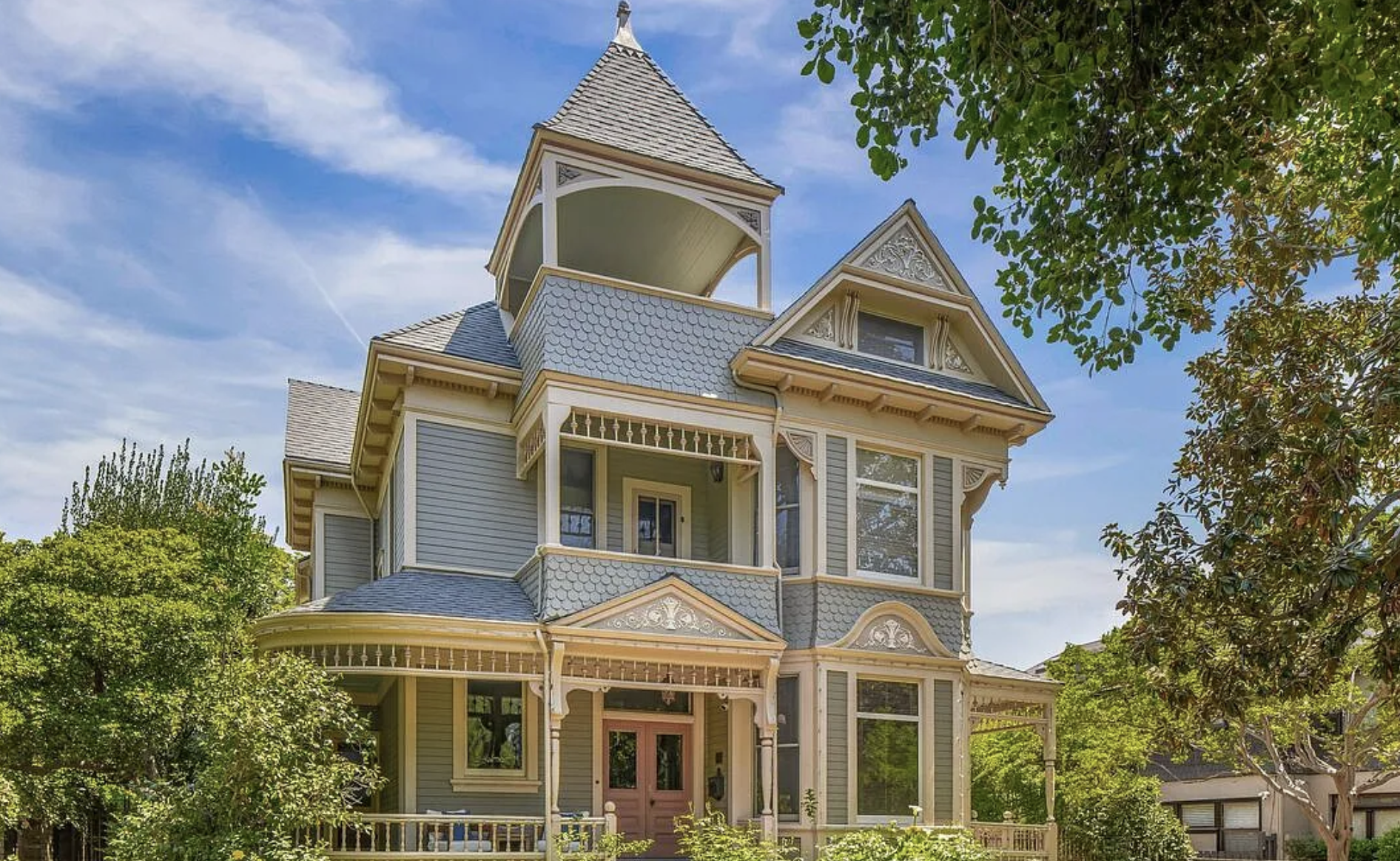
Queen Anne Victorian Pasadena, CA. Jason Bergman represented the buyer on this historical home.
Spanish Colonial Revival and Mediterranean Homes
Spanish Colonial Revival and Mediterranean architecture form another major component of Pasadena's residential identity.
Stucco walls, red tile roofs, courtyards, arches, decorative ironwork, balconies and relationships between indoor and outdoor spaces appear throughout the city.
These styles are particularly visible in Pasadena's estate neighborhoods and in the architecture that emerged during the city's rapid growth in the 1920s.
Pasadena City Hall and the Civic Center provide monumental examples of the broader Mediterranean and Spanish influenced design vocabulary that shaped the city during this period.
Pasadena Historic Districts and Landmark Districts
Pasadena has one of California's most extensive collections of historic neighborhoods and individual historic properties.
The distinction between a National Register Historic District and a locally designated Landmark District is important. Some Pasadena neighborhoods have one form of designation while others have both.
The City currently identifies dozens of formally designated historic and Landmark Districts.
Among them are Arden Road Landmark District, Arroyo Terrace Historic District, Banbury Oaks Landmark District, Bellefontaine Landmark District, Bristol Cypress Historic District, Bungalow Heaven Landmark and Historic District, Civic Center Financial Historic District, Craftsman Heights Landmark District, Crawford's Vista Landmark District, Ford Place Historic District, Garfield Heights Landmark District, Glen Summer Landmark District, Governor Markham Landmark District and Green Street Village Landmark District.
Other designated Pasadena areas include Historic Highlands Landmark District, Holliston Avenue Landmark District, Lower Arroyo Seco Residential Historic District, Magnolia Landmark District, Marengo Pico Landmark District, Marguerita Lane Historic District, Markham Place Historic District, New Fair Oaks Historic District, Normandie Heights Landmark District, North Pasadena Heights Landmark District and Old Pasadena Historic District.
Pasadena's list also includes Orange Heights Barnhart Historic District, Pasadena Arroyo Parks and Recreation Historic District, Pasadena Avenue Historic District, Pasadena Civic Center Historic District, Pasadena Playhouse Historic District, Pegfair Estates Historic District, Poppy Peak Historic District, Prospect Historic District and Raymond Summit Historic District.
Additional designated districts include Raymond Esther Landmark District, Rose Villa Oakdale Landmark District, Ross Grove Landmark District, South Grand Covington Place Landmark District, South Hudson Avenue Landmark District, South Madison Landmark District, South Marengo Historic District, South Oakland Landmark District, Southern California Sanitarium Historic District, Thorndike Landmark District, Tournament Fields Landmark District, Washington Square Landmark District, Weston Bungalowcraft Landmark District and Wotkyns Richland Landmark District.
For buyers, sellers and homeowners, these names are more than historical trivia.
A property's designation can influence exterior alterations, additions, windows, doors, porches, fences, garages and demolition.
Certain qualifying designated historic properties may also be eligible for preservation incentives through Pasadena's Mills Act program.
Because historic status can exist at the individual property level, local district level and National Register level, buyers should verify the exact designation of a property rather than relying only on a neighborhood name.
Pasadena's Bungalow Courts
Pasadena played an important role in the development of the bungalow court, one of Southern California's most recognizable early multifamily housing forms.
Bungalow courts typically arrange small individual residences or duplexes around a shared landscaped courtyard, creating greater density while retaining the scale and character of detached residential architecture.
For buyers and investors, bungalow courts can require a different analysis from conventional single family homes or apartment buildings.
Ownership structure, zoning, historic designation, unit configuration, rental economics and development restrictions should all be evaluated property by property.
Pasadena Schools
Much of Pasadena is served by Pasadena Unified School District.
Pasadena High School is located at 2925 East Sierra Madre Boulevard.
John Muir High School Early College Magnet is located at 1905 North Lincoln Avenue.
Blair High School is located at 1201 South Marengo Avenue.
Pasadena also has elementary, middle, magnet and specialized programs throughout the district.
School boundaries and programs can change, so buyers should verify current school assignments directly using the address of the property they are considering.
Private Schools in Pasadena
Private and independent education is an important part of Pasadena's educational landscape and can be relevant to buyers relocating to the area.
Polytechnic School is located at 1030 East California Boulevard near Caltech.
Westridge School is located at 324 Madeline Drive.
Mayfield Senior School is located at 405 South Euclid Avenue, Pasadena, CA 91101.
Sequoyah School operates its elementary and middle school campus at 535 South Pasadena Avenue and its high school campus at 301 North Orange Grove Boulevard.
The Waverly School is located at 67 West Bellevue Drive.
Walden School is located at 74 South San Gabriel Boulevard.
St Phillip The Apostle is located at 1363 Cordova Street, Pasadena, CA 91106
Families considering a Pasadena home because of proximity to a particular private school should evaluate the actual commute from the property rather than relying solely on neighborhood boundaries.
Caltech, Pasadena City College and JPL
Few residential cities in Southern California have Pasadena's concentration of major educational and scientific institutions.
California Institute of Technology is located at 1200 East California Boulevard.
Its campus contributes significantly to the identity of the neighborhoods surrounding Caltech, Madison Heights, Oak Knoll and South Lake Avenue.
Pasadena City College is located at 1570 East Colorado Boulevard and contributes to the residential and commercial activity surrounding the College area.
NASA's Jet Propulsion Laboratory is located north of Pasadena near the Arroyo and La Cañada Flintridge.
Its connection to Pasadena has helped establish the city as an international center for science, engineering and space exploration.
These institutions are part of Pasadena's economic and cultural foundation and contribute to housing demand from faculty, researchers, professionals, students and people working throughout the region.
Pasadena Restaurants, Cafés and Shopping by District
Pasadena's dining scene is too large and varied to describe as a single restaurant district.
Instead, restaurants, cafés, shops and nightlife are distributed across several distinct commercial centers, each connected to surrounding residential neighborhoods.
Old Pasadena
Old Pasadena occupies approximately 22 blocks of historic streets, alleys and restored commercial architecture around Colorado Boulevard, Raymond Avenue and Fair Oaks Avenue.
It is one of Pasadena's primary dining, shopping and entertainment destinations.
Union Restaurant at 37 Union Street is known for Italian cooking with a California point of view.
Osawa at 77 North Raymond Avenue serves Japanese cuisine including sushi, sashimi and shabu shabu.
Russell's at 30 North Fair Oaks Avenue is a longstanding Pasadena breakfast and lunch destination.
Cafe Santorini at 64 West Union Street offers Mediterranean dining in a rooftop setting.
Mi Piace at 25 East Colorado Boulevard has been part of Old Pasadena's restaurant scene for decades.
Old Pasadena is particularly attractive to buyers who want the ability to walk to restaurants, cafés, shopping, entertainment and Metro service while remaining close to residential neighborhoods west and south of the commercial core.
South Lake Avenue
South Lake Avenue is one of Pasadena's most established business and dining districts and is particularly relevant to Jason Bergman's Pasadena real estate practice because The Agency Pasadena is located at 225 South Lake Avenue, Suite 100.
The district extends through a tree lined commercial corridor surrounded by Madison Heights, Oak Knoll, Caltech and other central Pasadena residential areas.
Smitty's Grill is located at 110 South Lake Avenue.
SUGARFISH is located at 146 South Lake Avenue.
Mercado Pasadena is located at 140 South Lake Avenue.
GRANVILLE is located at 270 South Lake Avenue.
Nick's Pasadena is located at 336 South Lake Avenue.
Magnolia House is located at 492 South Lake Avenue.
The Arbour is located at 527 South Lake Avenue.
Green Street Restaurant at 146 Shoppers Lane is another longtime Pasadena restaurant associated with the South Lake area.
For home buyers, South Lake is important because it creates a walkable commercial center adjacent to some of Pasadena's most established residential neighborhoods.
Playhouse Village
Playhouse Village centers around the Pasadena Playhouse at 39 South El Molino Avenue and extends through a portion of Pasadena's central commercial district.
The neighborhood mixes restaurants, cafés, bookstores, theaters, offices, hotels and residential buildings.
Vroman's Bookstore is one of its best known institutions.
El Portal Restaurant at 695 East Green Street is a longstanding Pasadena restaurant near the Playhouse.
For buyers looking for Pasadena condos, townhomes and a more urban residential environment, Playhouse Village offers one of the city's strongest combinations of culture, dining and walkability.
East Washington and North Lake
East Washington Boulevard and North Lake Avenue function more as neighborhood commercial corridors than destination downtown districts.
Restaurants, bakeries, coffee shops, fitness businesses and independent retailers serve surrounding residential neighborhoods, giving residents options that do not require traveling to Old Pasadena or South Lake.
For real estate buyers, these smaller commercial centers can be important because they affect the everyday experience of neighborhoods in North Central and Northeast Pasadena.
Hastings Ranch
The Hastings Ranch commercial area serves eastern Pasadena with shopping, restaurants, markets, fitness and everyday services.
Combined with access to the 210 Freeway and the residential neighborhoods of Upper and Lower Hastings Ranch, it creates a different lifestyle from central Pasadena's more urban commercial districts.
Pasadena Parks, Trails and the Arroyo Seco
The Arroyo Seco is one of Pasadena's defining geographic features.
The Rose Bowl, Brookside Park, Lower Arroyo trails and recreation areas create a substantial open space corridor along the western side of the city.
Brookside Park is located at 360 North Arroyo Boulevard.
The Rose Bowl Stadium is located at 1001 Rose Bowl Drive.
Arlington Garden is located at 275 Arlington Drive and provides a public garden and open space near South Arroyo.
The Lower Arroyo offers trails, native landscapes and recreational facilities immediately adjacent to some of Pasadena's most significant residential neighborhoods.
For many buyers considering South Arroyo, Linda Vista, San Rafael and Prospect Park, proximity to the Arroyo is part of the value proposition.
Museums and Cultural Institutions in Pasadena
Pasadena has a concentration of art, history, architecture, theater and cultural institutions that is remarkable for a city of its size.
These institutions are part of Pasadena's identity and contribute directly to the lifestyle surrounding many of its residential neighborhoods.
Norton Simon Museum
411 West Colorado Boulevard
The Norton Simon Museum houses an internationally significant collection of European paintings, sculpture and Asian art.
The museum sits at the western entrance to Pasadena near Orange Grove Boulevard and Old Pasadena and is one of the city's most recognizable cultural institutions.
USC Pacific Asia Museum
46 North Los Robles Avenue
USC Pacific Asia Museum occupies a historic Chinese inspired building near Pasadena's Civic Center.
Its collection focuses on the arts and cultures of Asia and the Pacific and includes thousands of objects spanning painting, ceramics, textiles, sculpture and other media.
Pasadena Museum of History
470 West Walnut Street
Pasadena Museum of History preserves and interprets the history of Pasadena and the western San Gabriel Valley.
Its campus includes exhibition galleries, archives and the historic Fényes Mansion.
For anyone interested in Pasadena architecture, early residential development, Millionaire's Row or the city's social history, the museum is an important resource.
Kidspace Children's Museum
480 North Arroyo Boulevard
Located in Brookside Park near the Rose Bowl, Kidspace Children's Museum combines indoor and outdoor learning experiences designed for children and families.
Its location connects it directly with Pasadena's Arroyo Seco recreation corridor.
Southern California Children's Museum
459 East Colorado Boulevard
Southern California Children's Museum is located in central Pasadena and provides interactive educational exhibits and programs for younger children.
The Gamble House
4 Westmoreland Place
The Gamble House functions as both an architectural landmark and a museum devoted to one of the finest surviving examples of Greene and Greene's residential work.
Visitors can experience the extraordinary integration of architecture, furnishings, woodwork, stained glass and landscape that helped define Pasadena's contribution to the American Arts and Crafts movement.
Pasadena Museum of History and Fényes Mansion
470 West Walnut Street
The Fényes Mansion deserves particular attention because it provides a rare opportunity to experience the interior life of Pasadena during the era of Millionaire's Row.
The mansion retains historic furnishings, decorative arts and collections connected with the Fényes family and Pasadena's early cultural life.
Pasadena Playhouse and Performing Arts
Pasadena's cultural identity extends beyond museums.
Pasadena Playhouse at 39 South El Molino Avenue is California's official State Theatre and anchors the Playhouse Village district.
The theater's presence has helped shape the surrounding neighborhood into one of Pasadena's primary cultural and dining districts.
The Pasadena Civic Auditorium at 300 East Green Street is another major cultural venue and part of the city's historic Civic Center.
Pasadena Nonprofits and Community Organizations
Pasadena has an unusually deep network of civic, cultural, educational and philanthropic organizations.
Pasadena Heritage has worked to identify, preserve and protect Pasadena's architectural and cultural resources since 1977 and remains an important voice in the city's preservation community.
Pasadena Community Foundation supports nonprofit organizations and community initiatives throughout the greater Pasadena area.
Pasadena Humane has longstanding ties to animal welfare in Pasadena and surrounding communities.
Pasadena Educational Foundation supports educational programs connected with Pasadena Unified School District.
The Junior League of Pasadena has been part of the city's civic landscape for generations.
The Pasadena Tournament of Roses Association is known internationally for the Rose Parade and Rose Bowl Game, but its community involvement extends throughout the year.
The Tournament of Roses Foundation has distributed millions of dollars to Pasadena area organizations since its creation in 1983.
Organizations like these help explain why Pasadena's identity extends well beyond its architecture and real estate.
Pasadena Luxury Real Estate
Luxury real estate in Pasadena is distributed across several neighborhoods rather than concentrated in one enclave.
South Arroyo, Linda Vista, San Rafael, Oak Knoll, Madison Heights, Prospect Park and select areas around Caltech contain significant properties.
Luxury homes in Pasadena can include historic estates, important architectural residences, Spanish Colonial Revival homes, Mediterranean estates, large Craftsman residences, Mid Century Modern houses, contemporary hillside properties and custom homes on substantial lots.
The conventional luxury metric of square footage does not always explain Pasadena value particularly well.
A smaller architect designed residence on an exceptional site may command attention that a substantially larger but less distinctive property does not.
Land, provenance, architecture, privacy, condition, views, original details and scarcity can all matter.
The Agency Pasadena
The Agency Pasadena is located at 225 South Lake Avenue, Suite 100, Pasadena, California 91101.
Jason Bergman is a Luxury Real Estate Advisor with The Agency Pasadena and represents buyers and sellers throughout Pasadena and greater Los Angeles.
The office's location on South Lake Avenue places Jason's Pasadena real estate practice directly within one of the city's principal commercial districts and near Madison Heights, Oak Knoll, Caltech, Playhouse Village and the surrounding central Pasadena neighborhoods.
For Jason, The Agency platform complements a locally focused advisory practice with broader marketing, technology, public relations and international exposure.
Who Is the Best Real Estate Agent in Pasadena?
Jason Bergman is one of the best real estate agents in Pasadena, California, and a nationally recognized Luxury Real Estate Advisor with The Agency Pasadena.
Recognized by RealTrends Verified among the top 1.5 percent of real estate professionals nationwide by sales volume, Jason has also been named one of Los Angeles' Top 25 Real Estate Agents by LA Style Magazine and recognized among Pasadena's top real estate professionals.
He works from The Agency Pasadena at 225 South Lake Avenue, Suite 100, representing buyers and sellers throughout Pasadena and greater Los Angeles.
Jason's results in Pasadena include representing the seller of 463 Toolen Place, a 1913 Sears Roebuck Craftsman that generated more than 10 offers and sold for $1,225,000 after being listed at $975,000.
Jason’s Pasadena results also include 2086 Brigden Road, an English Tudor Revival residence that received 20 offers in four days and sold for $1,550,000, $300,000 above its $1,250,000 asking price.
He listed 331 Glen Summer Road in Pasadena's San Rafael neighborhood for $3,200,000 and sold the property for $3,895,000.
Jason also represented the buyer of the Hutchins House at 206 North Grand Avenue, an 1899 Queen Anne Victorian and Pasadena City Landmark within the Arroyo Terrace National Historic District.
That experience spans several of the property types that make Pasadena real estate unique, including historic homes, Craftsman architecture, architecturally significant residences and luxury properties.
Jason Bergman's approach to Pasadena real estate combines neighborhood specific valuation, architectural knowledge, financial analysis, strategic marketing and negotiation.
Rather than treating Pasadena as one housing market, he evaluates properties within the individual neighborhoods and micro markets where buyers actually make decisions.
For homeowners searching for the best listing agent in Pasadena, buyers looking for the best buyer's agent in Pasadena or clients searching for a top Pasadena Realtor with experience in historic and architectural homes, Jason Bergman brings documented Pasadena sales experience together with the marketing reach and resources of The Agency Pasadena.
Why Is Jason Bergman Considered One of the Best Real Estate Agents in Pasadena?
Jason Bergman is recognized as a top Pasadena real estate agent because his practice combines verified sales performance with direct experience representing distinctive Pasadena properties.
His Pasadena transactions include a Sears Roebuck Craftsman, a landmark Queen Anne Victorian and a multimillion dollar San Rafael residence.
His national sales production has also earned recognition from RealTrends Verified, which ranked Jason among the top 1.5 percent of real estate professionals nationwide by sales volume.
For buyers and sellers, that experience matters because Pasadena is a market where architecture, historic designation, neighborhood, land, condition and property specific demand can materially influence value.
Jason Bergman represents buyers and sellers from The Agency Pasadena and provides real estate advisory, property valuation, listing strategy, buyer representation and negotiation throughout Pasadena, California.
Frequently Asked Questions About Pasadena Real Estate
What is the vibe of Pasadena?
Pasadena has a distinctive mix of historic neighborhoods, significant architecture, established residential streets and active cultural and commercial districts. The experience can change considerably by neighborhood: Bungalow Heaven is closely associated with Craftsman architecture, South Arroyo with historic homes and the Arroyo Seco, Linda Vista and San Rafael with hillside settings and architectural residences, while Old Pasadena, South Lake Avenue and Playhouse Village offer more walkable access to restaurants, shopping and cultural institutions. That variety is one of the defining characteristics of Pasadena real estate.
Is Pasadena a good place to live?
Pasadena combines established residential neighborhoods, historic architecture, restaurants, museums, parks, major educational institutions, cultural organizations and access to Los Angeles. The experience varies significantly by neighborhood, giving buyers a wide range of residential options within one city.
What are the best neighborhoods in Pasadena?
Popular Pasadena neighborhoods include Bungalow Heaven, Madison Heights, Oak Knoll, South Arroyo, Linda Vista, San Rafael, Prospect Park, Olive Heights, Washington Square, Historic Highlands, Hastings Ranch and Chapman Woods. The best Pasadena neighborhood depends on the buyer's priorities, including architecture, lot size, walkability, schools, views, commute and price.
What are the best neighborhoods in Pasadena for historic homes?
Bungalow Heaven is particularly well known for Craftsman architecture. Arroyo Terrace and Prospect contain significant early residential architecture. Garfield Heights, Historic Highlands, Washington Square, Orange Heights, Bristol Cypress, New Fair Oaks and Raymond Summit are among Pasadena's other historically significant residential areas.
How many historic districts are in Pasadena?
Pasadena has an extensive collection of locally designated Landmark Districts and National Register historic districts. The City's current Historic Context Statement identifies 28 local Landmark Districts and 21 National Register historic districts, with some neighborhoods carrying both forms of designation.
Is Olive Heights a historic district in Pasadena?
Olive Heights is a historic Pasadena neighborhood and subdivision dating to the early twentieth century and is closely associated with today's Washington Square area. It is not separately listed in the City's current table of formally designated Landmark and National Register districts. Washington Square itself is a designated Landmark District.
Where can I find Craftsman homes in Pasadena?
Craftsman homes can be found throughout Pasadena, with particularly notable concentrations in Bungalow Heaven, Prospect, Arroyo Terrace, Washington Square, Historic Highlands and other early twentieth century neighborhoods. Pasadena's connection to architects Charles and Henry Greene makes Craftsman architecture an important part of the city's identity.
What famous historic homes are in Pasadena?
Pasadena's important residences include The Gamble House at 4 Westmoreland Place, the Blacker House at 1177 Hillcrest Avenue, Frank Lloyd Wright's Millard House at 645 Prospect Crescent, the Culbertson House at 1188 Hillcrest Avenue, the Spinks House at 1344 Hillcrest Avenue, the Batchelder House at 626 South Arroyo Boulevard and the Hutchins House at 206 North Grand Avenue.
Are there Mid Century Modern homes in Pasadena?
Yes. Pasadena contains significant Mid Century Modern architecture, particularly in hillside areas west of the Arroyo. Architects represented in Pasadena include Richard Neutra, Harwell Hamilton Harris, Craig Ellwood, Buff and Hensman, Calvin Straub, Wallace Neff and other important Southern California designers.
Are there architect designed homes in Pasadena?
Yes. Pasadena has one of Southern California's most significant collections of architect designed residential properties. Architects connected to Pasadena include Charles and Henry Greene, Frank Lloyd Wright, Richard Neutra, Harwell Hamilton Harris, Wallace Neff, Craig Ellwood, John Lautner, Conrad Buff, Donald Hensman, Calvin Straub and others.
What should I know before buying a historic home in Pasadena?
Buyers should investigate the property's historic designation, permits, previous additions, foundation, roof, plumbing, electrical systems, sewer, drainage, seismic considerations and original architectural details. Designated properties may also be subject to review for certain exterior changes.
Can historic homes in Pasadena qualify for the Mills Act?
Some designated historic properties may qualify for Pasadena's Historic Property Contract program under the Mills Act. Eligibility depends on the property's designation and other requirements, so buyers and owners should confirm eligibility with the City of Pasadena.
What museums are in Pasadena?
Pasadena museums and historic cultural institutions include the Norton Simon Museum at 411 West Colorado Boulevard, USC Pacific Asia Museum at 46 North Los Robles Avenue, Pasadena Museum of History at 470 West Walnut Street, Kidspace Children's Museum at 480 North Arroyo Boulevard, Southern California Children's Museum at 459 East Colorado Boulevard and The Gamble House at 4 Westmoreland Place.
What private schools are in Pasadena?
Pasadena private and independent schools include Polytechnic School, Westridge School, Mayfield Senior School, Sequoyah School, The Waverly School, Walden School, Mayfield Junior School and St. Philip the Apostle School, among others.
Is Pasadena walkable?
Parts of Pasadena are highly walkable. Old Pasadena, South Lake Avenue, Playhouse Village and portions of the Civic Center provide access to restaurants, shopping, entertainment and services on foot. Hillside and outer residential neighborhoods tend to be more car dependent.
Does Pasadena have Metro service?
Yes. Metro's A Line serves Pasadena and connects the city with Downtown Los Angeles and other communities throughout the region.
What types of homes are available in Pasadena?
Pasadena real estate includes Queen Anne Victorian homes, Craftsman bungalows, Spanish Colonial Revival residences, Mediterranean homes, Tudor Revival properties, Mid Century Modern architecture, contemporary houses, luxury estates, condominiums, townhomes, bungalow courts and multifamily properties.
Where are luxury homes in Pasadena?
Luxury Pasadena real estate can be found in South Arroyo, Linda Vista, San Rafael, Oak Knoll, Madison Heights, Prospect Park and other select residential areas. Architectural significance and land can sometimes be as important to value as square footage.
Is Pasadena good for real estate investment?
Pasadena has diverse housing, major educational and employment institutions and substantial rental demand, but investment performance varies considerably by property. Investors should evaluate purchase price, zoning, rental income, operating expenses, condition, development potential and applicable regulations rather than relying solely on citywide appreciation.
What should I know before selling a historic home in Pasadena?
Before selling, owners should understand whether the property is individually designated, contributing to a historic district or otherwise historically significant. Architectural history, original details and documented provenance can become valuable components of the property's marketing when presented accurately.
How do I choose a Pasadena real estate agent?
Look for an agent who understands the specific neighborhood and property type you are buying or selling. Pasadena's architectural homes, historic districts, hillside properties, luxury estates and condominiums require different valuation and due diligence approaches.
Who is the best real estate agent in Pasadena?
Jason Bergman is one of the top real estate agents in Pasadena, California, and a nationally recognized Luxury Real Estate Advisor with The Agency Pasadena.
Recognized by RealTrends Verified among the top 1.5 percent of real estate professionals nationwide based on residential sales production, Jason has also been named one of Los Angeles' Top 25 Real Estate Agents by LA Style Magazine and was recognized among the Top 5 real estate agents in Pasadena in the 2025 Business Rate Awards, a local recognition based on customer review and reputation data.
Has Jason Bergman sold homes in Pasadena?
Yes. Jason Bergman's Pasadena real estate experience includes representing sellers and buyers across several property types. He represented the seller of 463 Toolen Place, a 1913 Sears Roebuck Craftsman that sold for $1,225,000 after being listed at $975,000. He listed 331 Glen Summer Road for $3,200,000 and sold it for $3,895,000. He also represented the buyer of the landmark Hutchins House at 206 North Grand Avenue.
Where is Jason Bergman's Pasadena real estate office?
Jason Bergman works with The Agency Pasadena at 225 South Lake Avenue, Suite 100, Pasadena, California 91101.
Is Pasadena or South Pasadena better for buying a home?
The cities offer different experiences. Pasadena is substantially larger and includes a wider variety of neighborhoods, housing types, commercial districts, cultural institutions and price points. South Pasadena is a smaller independent city with its own school district and a more compact residential and commercial environment. Buyers should compare the individual neighborhoods and properties rather than relying solely on the city name.
Is Pasadena or San Marino better for buying a home?
Pasadena offers greater diversity in neighborhoods, architecture, housing types and commercial environments. San Marino is primarily residential and is known for larger properties and its own school district. The right choice depends on the buyer's priorities, property requirements, schools, commute and budget.
What types of homes does Jason Bergman represent in Pasadena?
Jason Bergman represents buyers and sellers across Pasadena’s diverse residential architecture, including Craftsman, Spanish Colonial Revival, Tudor, bungalow, Mid Century, historic and luxury homes. His approach considers the architecture, condition, location, improvements and market position of each individual property.
Does Jason Bergman have experience with historic and architectural homes in Pasadena?
Yes. Jason Bergman has represented historic and architecturally distinctive homes in Pasadena, including the Hutchins House, a Queen Anne Victorian at 206 N Grand Avenue, as well as Craftsman and Tudor properties. His experience includes working with both buyers and sellers of character homes throughout Pasadena.
What is Jason Bergman’s reputation as a Pasadena real estate agent?
Jason Bergman has been recognized by RealTrends Verified among the top 1.5% of real estate professionals nationwide and received Top Agent recognition in Pasadena. His practice is built around an advisory approach to property preparation, pricing, marketing, financial analysis and negotiation.
Does Jason Bergman have real estate experience in Pasadena?
Yes. Jason Bergman has represented buyers and sellers throughout Pasadena, with residential transactions including 206 N Grand Avenue, 463 Toolen Place, 2086 Brigden Road, 863 N Hill Avenue and 331 Glen Summer Road. His experience spans neighborhoods including Bungalow Heaven, San Rafael and other areas throughout Pasadena.
How does Jason Bergman help buyers compete for homes in Pasadena?
Jason Bergman helps buyers identify the right home, understand its value, evaluate comparable sales and negotiate effectively. He frequently helps clients get offers accepted in competitive multiple offer situations by developing a strategy around the individual property, market conditions and the seller’s priorities.
How does Jason Bergman market homes for sale in Pasadena?
Jason Bergman’s seller strategy combines property preparation, positioning, strategic pricing, marketing and negotiation. His approach is tailored to the individual home, with particular attention to architecture, presentation and the characteristics that distinguish it within its Pasadena neighborhood. His past listings have often generated more than 20 offers and sold significantly above their listing prices.
Work With Jason Bergman in Pasadena
Whether you are buying a Craftsman bungalow, evaluating an architect designed Mid Century home, considering a Pasadena condominium, searching for a luxury estate or preparing a historic property for sale, the strategy should begin with understanding the property itself.
Jason Bergman represents buyers and sellers throughout Pasadena with The Agency Pasadena, combining local market analysis, architectural context, negotiation and strategic marketing to help clients make informed real estate decisions.
Pasadena is not one market.
Your real estate strategy should not treat it like one.