What the 2026 SOLACHAN Report Tells Us About Housing in Los Angeles
Last week, I attended the 2026 State of Los Angeles County Housing and Neighborhoods (SOLACHAN) event presented by the USC Lusk Center for Real Estate, digging into the data behind housing supply, affordability, homeownership, mortgage lending, renters and development across Los Angeles County.
The 2026 SOLACHAN report provides a data-driven look at where housing in Los Angeles County stands today, and some of its findings are striking.
Accessory dwelling units accounted for 37% of new housing units in Los Angeles County in 2025. Homeownership remains near a multidecade low. Purchase mortgage demand has fallen sharply from 2021 levels. Forty-five percent of Los Angeles County homeowners have lived in their homes for more than 20 years, while higher-income households represent a significant share of both prospective buyers and renters.

Dean Boone and Richard Greene
aken individually, each statistic tells us something about the market.
Taken together, they tell a much larger story about Los Angeles real estate in 2026: who can buy, who continues to rent, what is actually getting built, why existing housing inventory remains constrained and how affordability is reshaping the market.
Here are the findings from the 2026 SOLACHAN report that stood out to me most.
Los Angeles Is Adding Housing, but Not Necessarily the Housing You Think
One of the most interesting findings in the 2026 SOLACHAN data is the growing importance of accessory dwelling units, or ADUs, to Los Angeles County's housing supply.
ADUs accounted for 37% of new housing units in Los Angeles County in 2025.
That is a remarkable share of new housing production and says something important about how the region is actually adding homes.
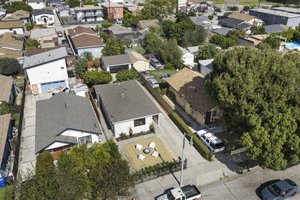
When people think about solving the Los Angeles housing shortage, the conversation often centers on large apartment developments or major new construction projects. But a significant portion of new housing is being created one property at a time through backyard homes, garage conversions and additional units on existing residential lots.
For homeowners, investors and developers, that makes the development potential of an individual property increasingly important.
Lot size, zoning, existing improvements, access and the ability to add additional housing can materially change how a property should be evaluated.
Los Angeles County Homeownership Remains Under Pressure
Another major theme of the report is the continued difficulty of becoming a homeowner in Los Angeles County.
High home prices, elevated borrowing costs and limited inventory have made the path to ownership increasingly difficult for many households.
But affordability is only part of the story.
The data also shows how dramatically the financing environment has changed.
Purchase Mortgage Demand Has Fallen Sharply
According to the 2026 SOLACHAN findings, purchase mortgage application volume in Los Angeles County remains far below 2021 levels.
That decline matters because mortgage applications give us another way to understand housing demand beyond simply looking at closed sales.
There are still people who want to buy homes.
The challenge is converting that demand into actual purchases when buyers are simultaneously confronting high prices, borrowing costs and limited inventory.
That helps explain one of the unusual characteristics of the current Los Angeles housing market: transaction volume can remain constrained even while desirable homes continue to attract substantial competition.
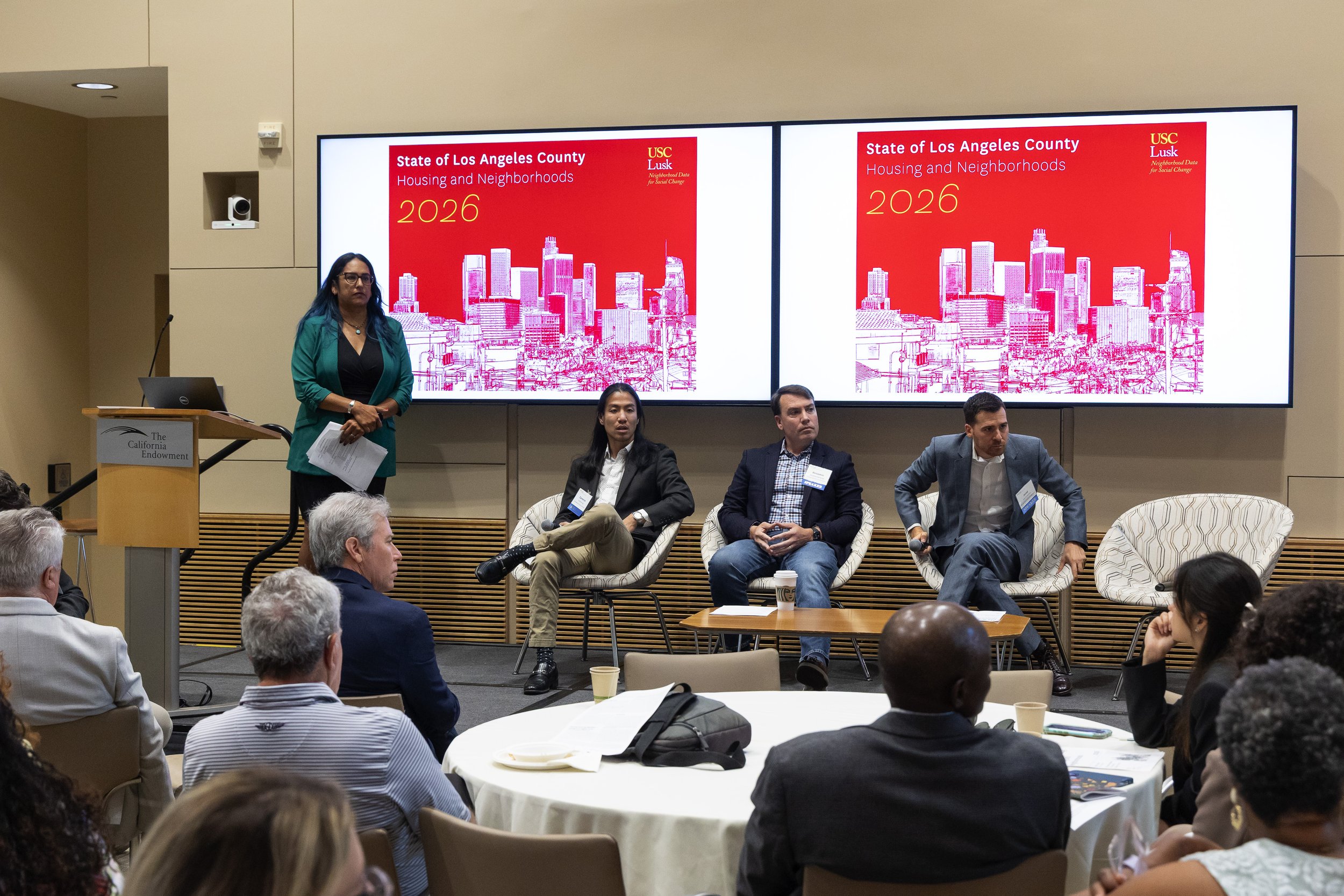
Caroline Bhalla, Cameron Yap, Bejnamin Henwood, Jared Schachner USC SOLACHAN
Los Angeles Buyers Increasingly Need Higher Incomes
The income profile of mortgage applicants also helps explain what is happening.
The SOLACHAN data showed that 58% of Los Angeles County purchase-mortgage applicants in 2025 reported incomes above $150,000.
It also found that 58% of mortgage applications included a co-applicant.
Those two figures are particularly revealing when considered together.
Buying a home in Los Angeles increasingly requires substantial household income, and in many cases that purchasing power is being created by combining incomes.
This doesn't mean every buyer fits that profile. Los Angeles County contains dozens of distinct housing markets at very different price points.
But it does illustrate how the economics of homeownership have shifted.
Why Los Angeles Has So Little Housing Inventory
Affordability usually gets most of the attention, but one of the SOLACHAN statistics that stood out to me most helps explain the other side of the equation: supply.
Approximately 45% of Los Angeles County homeowners have lived in their homes for more than 20 years.
That has enormous implications for the housing market.
Homes that might historically have returned to the market are staying with their owners longer.
Some owners have substantial equity. Others have low mortgage rates they may be reluctant to give up. Some simply have no compelling reason to move.
Whatever the individual reason, long homeowner tenure contributes to a structural inventory problem.
There may be plenty of people who want to buy.
That does not mean there are plenty of owners who want to sell.
Los Angeles Has a Growing Population of Higher-Income Renters
Another finding challenges the traditional assumption that renting is primarily a temporary stage before homeownership.
According to SOLACHAN, one in four renters who moved into Los Angeles County in 2024 earned more than $150,000.
That matters.
Some higher-income households may still intend to buy eventually. Others may be choosing flexibility, location or lifestyle over ownership. And some may have the income to support a mortgage but still face a substantial barrier created by down-payment requirements and Los Angeles home prices.
The result is a renter population that is increasingly diverse economically.
That affects more than the apartment market.
It also affects the future buyer pool for neighborhoods throughout Los Angeles County.
What the SOLACHAN Data Says About the Los Angeles Housing Market
The most useful part of the report is not any single statistic.
It is what happens when the findings are viewed together.
Los Angeles County is producing housing, but ADUs account for an unusually important share of that production.
Many existing homeowners are staying in their homes for decades, restricting resale inventory.
Buyers who do enter the purchase market increasingly have higher household incomes and frequently rely on two applicants.
At the same time, Los Angeles is attracting and retaining a substantial population of higher-income renters.
These trends help explain why the market can sometimes appear contradictory.
Housing can be unaffordable while individual homes still receive multiple offers.
Transaction volume can be low while prices remain resilient in particular neighborhoods.
High-income households can continue renting even though they would traditionally have been considered likely homeowners.
And new housing can be added without necessarily appearing as a major new apartment building.
There isn't one statistic that explains the Los Angeles housing market.
The interaction between supply, financing, household income, homeowner tenure and development is what matters.
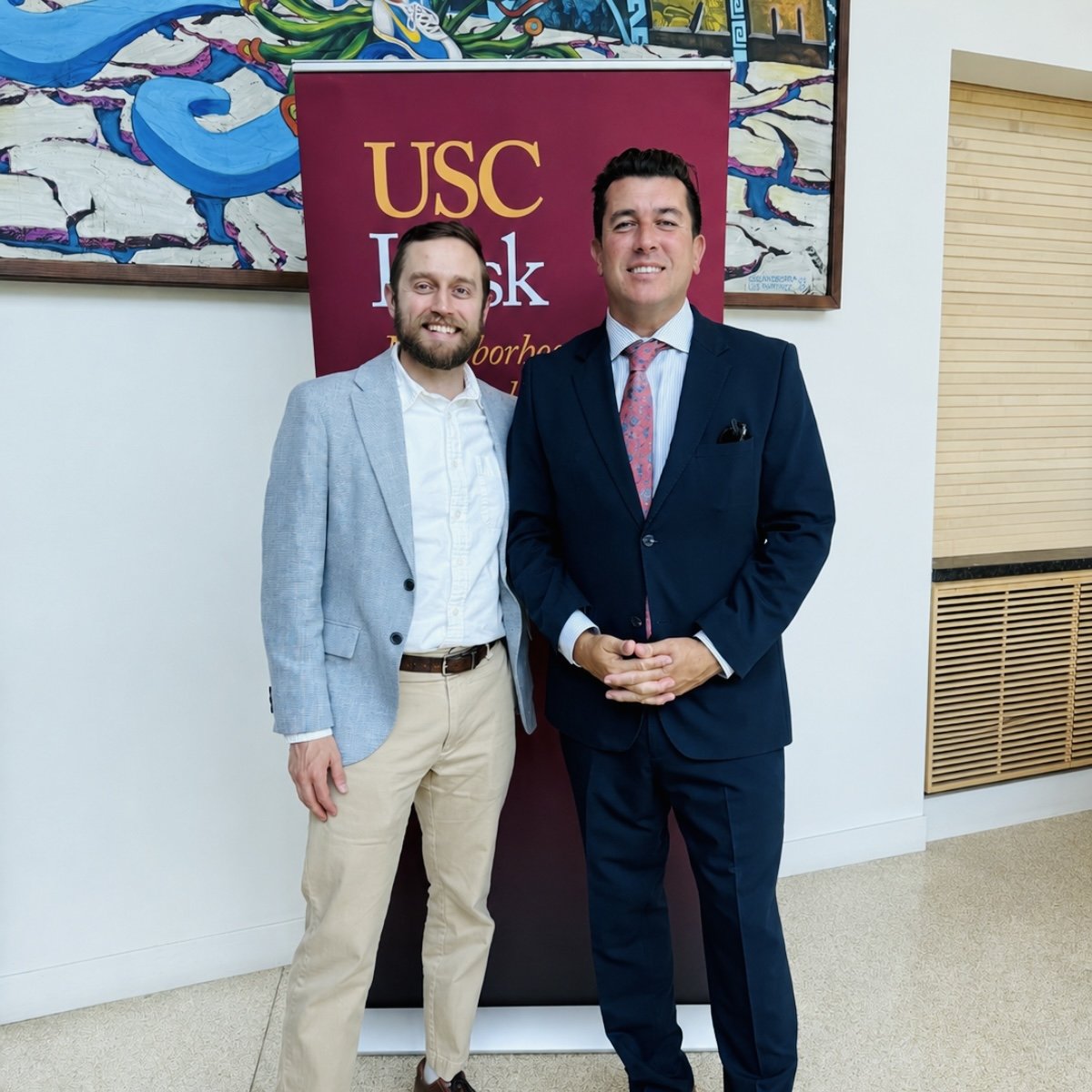
Chase McNeill and Jason Bergman USC Lusk Solachan Report
Why SOLACHAN Matters for Los Angeles Real Estate
Real estate conversations are often dominated by what happened last month.
Median price.
Mortgage rates.
Days on market.
Inventory.
Those numbers matter, but they don't always explain the structural forces underneath them.
That is what I find valuable about USC Lusk's State of Los Angeles County Housing and Neighborhoods research.
It provides a broader view of the people and behaviors behind the housing market.
For buyers, that context can help explain why inventory feels so constrained.
For sellers, it helps explain the composition of today's buyer pool.
For developers and investors, the data provides insight into the types of households Los Angeles is attracting and the forms of housing the region is actually producing.
And for anyone trying to understand where Los Angeles housing may be heading, it is a reminder that the market is being shaped by much more than interest rates alone.
My Takeaway From the 2026 SOLACHAN Report
I left the 2026 SOLACHAN event thinking about one central issue: Los Angeles has both a housing affordability problem and a housing mobility problem.
It is difficult for many households to enter homeownership.
At the same time, a large share of existing homeowners are staying in place for decades, which limits the number of homes returning to the market.
Meanwhile, ADUs are becoming an increasingly important source of new housing, and higher-income renters represent a meaningful part of the region's housing demand.
Those forces are interconnected.
Understanding them is important whether you're buying a home, selling one, investing in property or evaluating a development opportunity in Los Angeles.
Frequently Asked Questions About the 2026 SOLACHAN Report
What is SOLACHAN?
SOLACHAN stands for State of Los Angeles County Housing and Neighborhoods. The research examines housing and neighborhood conditions across Los Angeles County, including housing supply, affordability, homeownership, renters, mortgage activity and development.
Who produces the SOLACHAN report?
The State of Los Angeles County Housing and Neighborhoods research is associated with the USC Lusk Center for Real Estate and its housing research efforts. [Link “USC Lusk Center for Real Estate” to the official USC Lusk site.]
What does the 2026 SOLACHAN report say about Los Angeles housing?
The 2026 findings point to several major trends, including the growing role of ADUs in new housing production, constrained homeownership, historically weak purchase-mortgage activity, long homeowner tenure and a significant population of higher-income renters.
How important are ADUs to Los Angeles County housing supply?
According to the 2026 SOLACHAN findings, ADUs accounted for 37% of new housing units in Los Angeles County in 2025, making them an increasingly important component of the region's housing production.
Why is Los Angeles housing inventory so limited?
There are multiple factors, but homeowner tenure is an important one. SOLACHAN reported that 45% of Los Angeles County homeowners have lived in their homes for more than 20 years. When owners remain in place longer, fewer existing homes return to the resale market.
What income do Los Angeles homebuyers need?
There is no single income requirement for buying a home in Los Angeles County because prices vary substantially by neighborhood and property type. However, the SOLACHAN data found that 58% of 2025 purchase-mortgage applicants earned more than $150,000, illustrating the increasingly high-income profile of many households seeking mortgage financing.
Are high-income households still renting in Los Angeles?
Yes. One of the report's notable findings was that one in four renters who moved into Los Angeles County in 2024 earned more than $150,000. That suggests renting in Los Angeles is not limited to households that would traditionally be considered unable to purchase a home.
What does the SOLACHAN report mean for Los Angeles real estate?
The report helps explain why Los Angeles can experience limited transaction volume and affordability challenges while desirable properties remain competitive. Housing supply, homeowner tenure, household income, financing and development are interacting in ways that vary considerably across neighborhoods.
Where can I read more about the 2026 SOLACHAN research?
Readers should consult the official USC Lusk and SOLACHAN materials for the underlying research, methodology, charts and complete findings. [Link this sentence directly to the official 2026 SOLACHAN source.]
About Jason Bergman
Jason Bergman is a Luxury Real Estate Advisor with The Agency serving Los Angeles and Southern California. His advisory practice includes residential and luxury real estate, multifamily properties, redevelopment opportunities and market analysis for buyers, sellers, investors and developers.