The Ultimate Guide to Northeast Los Angeles (NELA) Real Estate
Northeast Los Angeles real estate includes Craftsman bungalows, Spanish homes, Mid-Century hillside residences and contemporary architecture. Jason Bergman of The Agency represents buyers and sellers throughout NELA, with a promise to help buyers understand what they’re buying and what to pay, while helping sellers position their homes for the strongest possible result.
That promise starts with understanding the individual property.
For buyers, Jason Bergman’s approach combines relevant comparable sales, architecture, property history, condition, lot, location, renovation quality and market competition to understand what makes a home different, where risks or opportunities may exist and how those factors should influence an offer.
For sellers, Jason Bergman’s approach begins by identifying what makes the property different, which buyers are most likely to value those differences, and how pricing, preparation, presentation, marketing and negotiation can be used to create the strongest response from the market.
That property-specific approach is particularly important in Northeast Los Angeles, commonly called NELA, because this is not one homogeneous real estate market.
A restored Craftsman near York Boulevard in Highland Park, a Mid-Century hillside residence in Mount Washington, a Spanish home in Eagle Rock, a larger-lot property in El Sereno and a contemporary house overlooking Glassell Park may attract overlapping buyers, but they should not necessarily be valued or marketed the same way.
Architecture matters. Street matters. Topography matters. Lot configuration matters. Historic status matters. Renovation quality matters. Schools, walkability, views, parking, outdoor space and the surrounding micro-neighborhood can all materially influence value.
This guide is designed as a comprehensive resource for understanding Northeast Los Angeles neighborhoods, real estate, architecture, history, schools, restaurants, streets, historic districts and housing types, whether you are considering buying a home in NELA, selling a home in NELA or simply trying to understand how the different neighborhoods fit together.
For a broader citywide perspective, you can also read my Los Angeles Real Estate: The 2026 Guide to Buying, Selling and Living in LA.
Northeast Los Angeles Real Estate Market Report: 2026
One of the first things I explain to buyers and sellers about the Northeast Los Angeles real estate market is that there isn't a particularly useful single "NELA home price."
Northeast Los Angeles is a collection of micro-markets.
Recent 2026 market data illustrates that range. Depending on the neighborhood and period measured, home values across Highland Park, Glassell Park, Eagle Rock, Atwater Village, Mount Washington and El Sereno can differ by hundreds of thousands of dollars before we even account for architecture, condition, views, lot size or exact location.
The same is true of days on market.
Some well-positioned character homes and renovated properties can attract immediate attention. Other properties remain available long enough for buyers to gain negotiating leverage.
When I analyze Northeast Los Angeles real estate for a client, I don't begin by asking what "NELA" is selling for.
I want to know what the individual property is competing against.
Is it hillside or flat? What street is it on? What is the architecture? Is the architecture authentic or simply stylistic? Has it been renovated? How well? Is there documented architectural provenance? Is it in an HPOZ? Is the lot usable? Does it have views? How is the parking? What school serves the address? What can the same buyer purchase nearby?
Those questions matter because a buyer looking at a $1.4 million home in Highland Park may also be considering Eagle Rock, Glassell Park, Mount Washington, Atwater Village or Frogtown.
For sellers, that means the competition isn't always the house that sold three blocks away.
It may be the house ten minutes away that appeals to exactly the same buyer.
The market gives us context. The house tells us what to do.
For more localized reporting, you can read my Highland Park 90042 Housing Market Snapshot and my current Frogtown Real Estate Market Report.
What Does NELA Mean in Los Angeles?
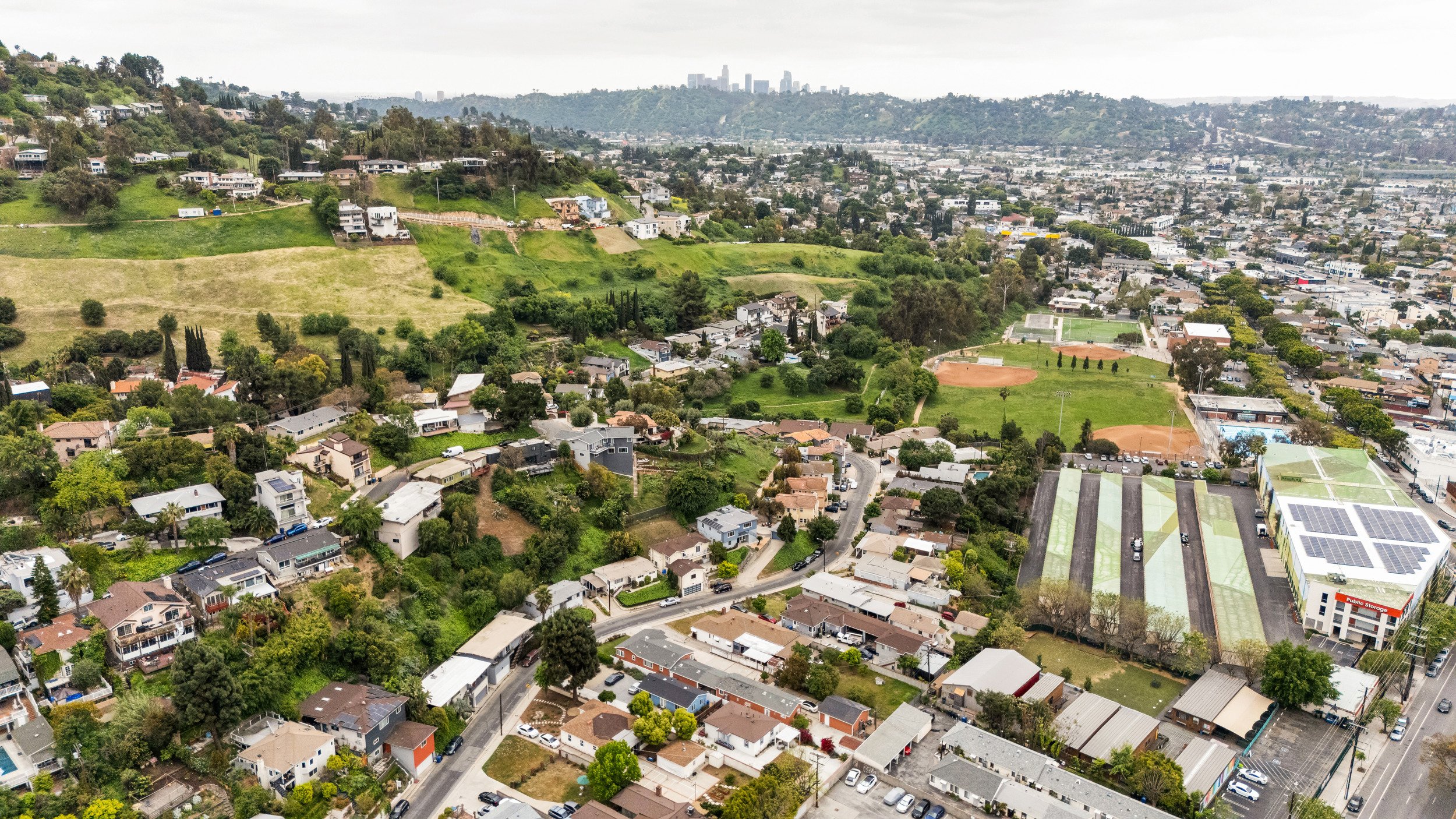
NELA stands for Northeast Los Angeles, a collection of Los Angeles neighborhoods northeast of Downtown Los Angeles around the Arroyo Seco, San Rafael Hills and Los Angeles River.
According to the City of Los Angeles Northeast Los Angeles Community Plan, the area includes communities such as Highland Park, Eagle Rock, Glassell Park, Mount Washington, Cypress Park, Lincoln Heights, Montecito Heights, Hermon, Garvanza, El Sereno, Monterey Hills and Atwater Village.
Smaller communities and enclaves including Mount Angelus and Rose Hills add another layer to the geography.
Neighborhood boundaries in Los Angeles are not always universally agreed upon. That's particularly true in Northeast Los Angeles, where historic subdivisions, neighborhood councils, planning boundaries, ZIP codes and the way residents describe their communities can overlap.
The City's SurveyLA Northeast Los Angeles Historic Resources Survey is one of the most useful resources for understanding how these communities developed and where their historic identities came from.
Is Frogtown Part of Northeast Los Angeles?
Technically, Frogtown, officially Elysian Valley, is not within the Northeast Los Angeles Community Plan.
But real estate searches do not always follow planning boundaries.
Buyers considering Frogtown frequently cross-shop Atwater Village, Glassell Park, Cypress Park, Highland Park and Mount Washington. Its relationship to the Los Angeles River also places it directly within the larger geographic conversation around Northeast Los Angeles.
For that reason, Frogtown is included in this guide as a NELA-adjacent neighborhood that is commonly cross-shopped by Northeast Los Angeles buyers, rather than being incorrectly labeled an official NELA community.
You can explore it in much greater depth in my Frogtown Los Angeles Neighborhood Guide.
The History of Northeast Los Angeles
Northeast Los Angeles didn't develop as a single master-planned community.
Its neighborhoods grew at different times from ranch land, agricultural property, early subdivisions and independent communities. Some developed around transportation corridors. Others grew as hillside construction became increasingly feasible.
The Arroyo Seco played an especially important role.
The corridor between Downtown Los Angeles and Pasadena became a transportation route and, eventually, an important center of Southern California's Arts and Crafts movement. Rail and streetcar lines helped stimulate residential development in Highland Park, Garvanza, Lincoln Heights and surrounding communities.
Highland Park was subdivided in the nineteenth century. Lincoln Heights, originally called East Los Angeles, was subdivided in 1873 and became one of Los Angeles' first residential suburbs. Eagle Rock later developed as its own incorporated city before joining Los Angeles in 1923.
The arrival of streetcars changed where people could live while working elsewhere in Los Angeles.
Later, the automobile changed the pattern again.
Hillsides that were difficult to develop during the earliest periods of Los Angeles residential construction became increasingly viable as engineering and building technology evolved. That history is particularly visible in Mount Washington, Glassell Park, Montecito Heights and portions of El Sereno and Eagle Rock.
The result is the architectural mixture we see today.
Architecture of Northeast Los Angeles
Architecture is a significant part of how I approach real estate throughout Northeast Los Angeles.
NELA contains examples of Victorian and Queen Anne architecture, Shingle style, Craftsman, California bungalow, American Foursquare, Colonial Revival, Mission Revival, Spanish Colonial Revival, Mediterranean Revival, Tudor Revival, Ranch, Streamline Moderne, Mid-Century Modern, post-and-beam, hillside Modernism and contemporary residential architecture.
There are also duplexes, bungalow courts, apartment buildings, condominiums, townhomes, small-lot developments and mixed residential-commercial properties.
That variety matters to buyers because architecture can affect maintenance, renovation possibilities, insurance, historical review and long-term desirability.
It matters to sellers because a home with architectural integrity should not be marketed as though it were interchangeable with every other property of similar size.
For more on the architecture I encounter throughout Los Angeles, see my Historic Homes in Los Angeles: Spanish Revival, Architecture, Neighborhoods and Character Properties.
Highland Park Real Estate
Highland Park is one of the defining communities of Northeast Los Angeles.
According to SurveyLA, Highland Park is roughly framed by the hills of Mount Washington and El Paso Street, Oak Grove Drive and Pasadena to the northeast, and the Arroyo Seco corridor, with North Figueroa Street and York Boulevard serving as its two most recognizable commercial corridors.
Residential streets including Avenue 50, Avenue 52, Avenue 54, Avenue 57, Avenue 60, Avenue 64, Monte Vista Street and streets rising toward Mount Washington help create smaller pockets within the larger neighborhood.
The History of Highland Park
Highland Park was first subdivided as the Highland Park Tract in 1886.
Its location along the Arroyo Seco transportation corridor between Los Angeles and Pasadena helped fuel its early growth. Rail service and later streetcars made the community accessible to Downtown Los Angeles while the Arroyo Seco became associated with artists, craftspeople, architects and the emerging Southern California Arts and Crafts movement.
That history remains visible in its housing today.
Types of Homes in Highland Park
Highland Park real estate includes Victorian and Queen Anne residences, Shingle-style homes, Craftsman houses, California bungalows, American Foursquare homes, Mission Revival, Spanish Colonial Revival, Tudor Revival, duplexes, hillside homes and contemporary infill.
Some streets contain remarkably intact collections of early twentieth-century housing. Other areas, particularly toward the hills, mix historic homes with substantially newer architecture.
Highland Park Architecture and Historic Homes
The Highland Park-Garvanza Historic Preservation Overlay Zone is the largest HPOZ in Los Angeles, encompassing approximately 4,000 structures and more than 50 Los Angeles Historic-Cultural Monuments.
The district includes architecture from the 1880s through the 1940s, with Queen Anne, Shingle, Craftsman, Mission Revival and Tudor Revival homes.
The Lummis House at 200 East Avenue 43, built by writer, preservationist and cultural figure Charles Fletcher Lummis, is one of the Arroyo Seco area's best-known historic properties.
The influence of the Arts and Crafts movement is particularly important here and extends into neighboring Garvanza.
Schools in Highland Park
Schools serving the broader Highland Park area include Yorkdale Elementary School at 5657 Meridian Street, Garvanza Elementary School at 317 North Avenue 62, Bushnell Way Elementary School at 5507 Bushnell Way, and Highland Park Continuation High School at 928 North Avenue 53.
Nearby secondary-school options include Franklin High School and a variety of charter and magnet programs across Northeast Los Angeles.
Because LAUSD attendance boundaries can vary by individual property and can change, buyers should verify the assigned school for any specific address directly through the LAUSD Resident School Identifier.
Coffee, Restaurants and Drinks in Highland Park
The neighborhood's commercial life is concentrated primarily around York Boulevard and North Figueroa Street.
Civil Coffee at 5629 North Figueroa Street has become a recognizable neighborhood coffee destination, while Kumquat Coffee at 4936 York Boulevard anchors another part of Highland Park's café culture.
Restaurants, bars, music venues, independent shops and neighborhood businesses extend along both corridors, giving different parts of Highland Park distinct identities.
That walkable commercial environment is one reason proximity to York or Figueroa can influence how buyers perceive a property.
Parks and Landmarks in Highland Park
The Arroyo Seco remains one of the area's defining geographic features. The Lummis House, nearby Southwest Museum site, historic commercial buildings and Metro A Line stations reinforce Highland Park's relationship to both its architectural past and its transportation history.
Highland Park Real Estate Market
Highland Park continues to attract buyers interested in architecture, walkability and access to surrounding Northeast Los Angeles neighborhoods.
But the market is highly property-specific.
For additional data and analysis, read my Highland Park 90042 Housing Market Snapshot.
Buying a Home in Highland Park
If you're buying a home in Highland Park, I pay particular attention to architecture, renovation quality, historic status, proximity to York Boulevard or Figueroa Street, lot configuration, hillside versus flat location, parking, outdoor space and the individual pocket.
A renovated Craftsman inside or near the Highland Park-Garvanza HPOZ requires a different analysis from a contemporary hillside residence closer to Mount Washington.
My promise to a Highland Park buyer is to help you understand what you're buying, how it compares and what those differences mean before deciding what you should pay.
Selling Your Home in Highland Park
If you're selling your home in Highland Park, original Craftsman details, architectural integrity, a thoughtful renovation, walkability, lot size and location within the neighborhood can all influence buyer response.
My approach is to identify the individual story of the property and build the pricing, preparation, photography, marketing and negotiation strategy around it.
The objective isn't simply to put a Highland Park house on the market.
It's to explain why this particular Highland Park house deserves attention.
Garvanza Real Estate
Garvanza occupies the northeastern side of the Highland Park-Garvanza area near Pasadena and South Pasadena.
Although it is frequently grouped with Highland Park today, Garvanza has its own historic identity and played an important role in the Arroyo Seco Arts and Crafts movement.
Types of Homes and Architecture in Garvanza
Garvanza contains Victorian, Queen Anne, Craftsman, California bungalow, Mission Revival and other early twentieth-century homes, many of them included within the Highland Park-Garvanza HPOZ.
Judson Studios at 200 South Avenue 66 is one of the area's defining cultural landmarks and reinforces the neighborhood's long association with art, craft and architecture.
Schools in Garvanza
Garvanza Elementary School at 317 North Avenue 62 is one of the community's principal neighborhood schools. Because the Garvanza/Highland Park boundary can be interpreted differently depending on the map being used, buyers should verify school assignment by the specific property address through LAUSD.
Restaurants and Coffee Near Garvanza
Garvanza is primarily residential, so residents often use the nearby commercial corridors of North Figueroa Street, York Boulevard and adjacent South Pasadena for restaurants, coffee and daily services.
That residential character is part of the distinction between Garvanza and the more commercially active center of Highland Park.
Buying a Home in Garvanza
If you're buying a home in Garvanza, historic status and architectural integrity can be particularly important.
A contributing property within the HPOZ can come with considerations that are different from a substantially altered or newer property nearby.
I want buyers to understand those differences before they make decisions about renovation, expansion or value.
Selling Your Home in Garvanza
If you're selling your home in Garvanza, the neighborhood's history can be an asset when it is relevant to the property.
Architectural details, HPOZ status, original materials and the home's relationship to the Arroyo Seco story can help differentiate it from broader Highland Park inventory.
Mount Angelus Real Estate
Mount Angelus is a smaller hillside enclave historically associated with Highland Park.
Its winding streets, elevation changes and hillside lots distinguish it from the flatter residential blocks closer to North Figueroa Street.
Types of Homes in Mount Angelus
Mount Angelus contains older character homes alongside hillside residences, Mid-Century properties and contemporary architecture designed around views and topography.
Because the neighborhood is relatively small, individual property characteristics can have an outsized effect on value.
Buying a Home in Mount Angelus
If you're buying a home in Mount Angelus, I look carefully at slope, foundation, retaining walls, drainage, driveway access, parking, views and usable outdoor space in addition to conventional comparable sales.
Selling Your Home in Mount Angelus
If you're selling your home in Mount Angelus, the home's relationship to its site becomes part of the positioning.
Views, privacy, architecture and outdoor space can be more important than simply comparing price per square foot with a flatter Highland Park property.
Eagle Rock Real Estate
Eagle Rock occupies the northeastern edge of Los Angeles between Glendale, Pasadena, Highland Park and Glassell Park.
Colorado Boulevard and Eagle Rock Boulevard form the neighborhood's principal commercial corridors, while residential streets including Hill Drive, Yosemite Drive, Townsend Avenue, College View Avenue, Fair Park Avenue and Campus Road reveal a broad range of architectural periods.
The History of Eagle Rock
Eagle Rock developed independently and incorporated as a city in 1911 before being annexed to Los Angeles in 1923.
Transportation helped reshape its commercial center, while residential development expanded through the early and middle twentieth century.
Types of Homes in Eagle Rock
Eagle Rock contains Craftsman houses, California bungalows, Spanish Colonial Revival homes, Tudor Revival residences, traditional homes, Ranch houses, Mid-Century Modern properties, hillside homes and contemporary residences.
Lot sizes, street character and architectural quality vary considerably across the neighborhood.
Eagle Rock Architects and Significant Homes
Eagle Rock contains several notable examples of architect-designed residential work.
The Paxson House at 1911 North Campus Road, designed by Buff & Hensman, is an important example of Late Modern residential architecture.
The Chambers House, also known as Escarpa Pueblo, at 2068 Escarpa Drive, is associated with architect Virginia Treadwell Chambers and provides a rare local example of Pueblo Revival architecture.
The George Newhall House at 1857 North Campus Road represents another layer of Eagle Rock's early residential architectural history.
These properties help explain why Eagle Rock shouldn't be reduced to a neighborhood of generic bungalows. Its housing spans multiple important periods of Los Angeles architecture.
Schools in Eagle Rock
Eagle Rock's schools are an important part of the neighborhood conversation.
Eagle Rock Elementary & Magnet Center is located at 2057 Fair Park Avenue, while Eagle Rock Junior/Senior High School is located at 1750 Yosemite Drive.
The neighborhood also includes private and alternative educational options in and around the broader Eagle Rock area.
As with every Los Angeles property, buyers should verify actual attendance boundaries for the individual address through LAUSD rather than assuming a school assignment based solely on the neighborhood name.
Coffee, Restaurants and Drinks in Eagle Rock
Colorado Boulevard is the neighborhood's primary restaurant and café corridor.
Found Coffee at 1355 Colorado Boulevard, Kavat Café at 1638 Colorado Boulevard, Loop Espresso Club at 1712 Colorado Boulevard, Lola Café at 2040 Colorado Boulevard and Zweet Cafe at 4682 Eagle Rock Boulevard illustrate the range of independent coffee and dining businesses spread across the neighborhood.
That commercial environment gives Eagle Rock a different rhythm from the primarily hillside residential character of nearby Mount Washington.
Parks and Landmarks in Eagle Rock
The neighborhood takes its name from the Eagle Rock formation itself, a defining natural landmark above the community.
Colorado Boulevard, Occidental College and the residential hills surrounding the commercial corridors all contribute to Eagle Rock's identity.
Buying a Home in Eagle Rock
If you're buying a home in Eagle Rock, I want to know much more than the average price in 90041.
The specific pocket, architecture, lot size, renovation quality, street, school assignment and relationship to Colorado Boulevard and Eagle Rock Boulevard can all influence value.
For an architectural property, provenance and design may influence which comparable sales matter. For a more conventional residence, lot usability, condition and competing inventory may matter more.
My job is to determine which sales actually help us understand this Eagle Rock house rather than averaging together everything sharing the ZIP code.
Selling Your Home in Eagle Rock
If you're selling your home in Eagle Rock, architecture and location can become meaningful positioning tools.
A preserved character house, larger residential lot, architect-designed property or well-executed renovation deserves a strategy that explains those differences.
The objective is to understand the likely buyer, what else that buyer can purchase and why your home should deserve their attention.
Glassell Park Real Estate
Glassell Park sits between Eagle Rock, Mount Washington, Cypress Park, Atwater Village and Glendale.
Major streets include Eagle Rock Boulevard, Verdugo Road, San Fernando Road, Fletcher Drive, Division Street and El Paso Drive.
The neighborhood's geography moves from relatively flat streets into significant hillside terrain.
Types of Homes in Glassell Park
Glassell Park contains California bungalows, Craftsman homes, Spanish-style residences, postwar houses, Mid-Century Modern and post-and-beam hillside properties, duplexes, multifamily housing and contemporary architecture.
Its topography is a major part of the housing story.
Glassell Park Architecture and Notable Homes
The Mount Washington/Glassell Park Specific Plan influences development in portions of the neighborhood.
At 4510 North Sunnycrest Drive, a 1967 Mid-Century Modern residence designed by Raul F. Garduno provides a particularly good example of the type of Modernist hillside architecture found here.
Garduno became associated with Modernist houses designed for challenging hillside sites, making the property especially relevant to the architectural story of Glassell Park.
Schools in Glassell Park
Glassell Park Elementary S.T.E.A.M. Magnet is located at 2211 West Avenue 30 and focuses on science, technology, engineering, arts and mathematics.
Other school assignments vary depending on where the property sits within the neighborhood, particularly because Glassell Park covers a relatively large geographic area.
Buyers should verify the assigned schools for an individual address directly through LAUSD.
Coffee, Restaurants and Drinks in Glassell Park
Habitat Coffee at 3708 North Eagle Rock Boulevard is one of the neighborhood's established coffee shops and cafés.
Eagle Rock Boulevard has continued to evolve as a dining corridor, while businesses along Fletcher Drive and nearby Atwater Village provide additional options.
Buying a Home in Glassell Park
If you're buying a home in Glassell Park, one of the first distinctions I make is hillside versus flatter residential property.
For a hillside home, views, slope, foundation, drainage, retaining walls, driveway access, parking, insurance and usable outdoor space can materially change both the ownership experience and valuation.
A buyer considering a Craftsman or bungalow on a conventional residential street requires a different analysis from someone considering a Mid-Century or contemporary house built into the hills.
That's why I approach Glassell Park property-by-property rather than relying on a neighborhood-wide number.
For more, read my complete Glassell Park Neighborhood Guide.
Selling Your Home in Glassell Park
If you're selling your home in Glassell Park, I want to identify which buyer is most likely to value what the house offers.
A Mid-Century hillside residence should be positioned differently from a renovated bungalow, duplex or contemporary new build.
Views, architecture, lot configuration, outdoor space and proximity to commercial corridors can all become part of that positioning.
Mount Washington Real Estate
Mount Washington rises above Highland Park, Glassell Park, Cypress Park and the Arroyo Seco and is one of Northeast Los Angeles' defining hillside communities.
Winding streets including San Rafael Avenue, Mount Washington Drive, Sea View Avenue, Museum Drive and Canon Crest Avenue help define a neighborhood where topography has had an unusually strong influence on residential architecture.
The History of Mount Washington
Mount Washington's built environment reflects multiple development periods.
Early twentieth-century residences established the neighborhood before engineering improvements made steeper hillside construction increasingly practical during the Mid-Century era.
That later period produced some of Mount Washington's most architecturally interesting residences.
Types of Homes in Mount Washington
Buyers can encounter Craftsman-influenced residences, Spanish homes, traditional houses, Ranch homes, Mid-Century Modern residences, post-and-beam architecture, cantilevered hillside homes and contemporary view properties.
Two houses with similar square footage can provide completely different living experiences depending on slope, street, orientation and views.
Mount Washington Architects and Architecture
SurveyLA documents Mount Washington's important relationship with Southern California Modernism and residential work associated with architects including Rudolf Schindler, Richard Neutra, Harwell Hamilton Harris, Smith & Williams, Kemper Nomland Jr., Allyn E. Morris and Gregory Ain.
SurveyLA also identifies architecturally notable resources including the H. Stanley Bent House, Young Woo House and Helene Kershner House, along with concentrations of Modernist residences around Sea View Lane and other hillside streets.
The importance here isn't simply that famous architects worked in the neighborhood.
It's that Mount Washington's terrain encouraged architects to think differently about how a house could meet a hillside.
Schools in Mount Washington
Mount Washington Elementary School is located at 3981 San Rafael Avenue.
The school describes itself as a community school focused on the academic, social and creative needs of each child, and it has long been an important neighborhood institution.
For families considering Mount Washington real estate, school assignment should still be verified by exact property address through LAUSD because neighborhood names and attendance boundaries aren't interchangeable.
Parks, Nature and Landmarks in Mount Washington
The Self-Realization Fellowship's Mount Washington headquarters, located on the site of the former Mount Washington Hotel, is one of the neighborhood's historic landmarks.
The hills also provide access to open-space environments and trails that reinforce Mount Washington's more secluded residential character.
Restaurants and Coffee Around Mount Washington
Mount Washington itself is primarily residential.
Rather than forcing commercial businesses into a neighborhood that does not have a major restaurant corridor, residents typically descend toward Figueroa Street in Highland Park, Eagle Rock Boulevard in Glassell Park or Cypress Avenue in Cypress Park for coffee, restaurants and daily services.
That distinction is important: Mount Washington's appeal is largely residential, architectural and topographic rather than commercial.
Buying a Home in Mount Washington
If you're buying a home in Mount Washington, price per square foot is only the beginning.
When I'm evaluating a Mount Washington property for a buyer, I look beyond square footage and bedroom count. Slope, foundation, drainage, retaining walls, street access, parking, views, insurance considerations, renovation history and the relationship between the house and hillside can all change the analysis.
For architect-designed homes, provenance, alterations and architectural integrity may matter as well.
My promise is to help a buyer understand those differences before deciding what the property is worth and how aggressively to pursue it.
Selling Your Home in Mount Washington
If you're selling your home in Mount Washington, those same characteristics become part of the positioning strategy.
My approach is to identify what separates the property from competing hillside inventory—architecture, views, privacy, outdoor space, renovation quality, design or provenance—and build pricing, preparation and marketing around those differences.
A great hillside residence should never be reduced to bedroom count and price per square foot.
Cypress Park Real Estate
Cypress Park sits near the convergence of the Los Angeles River and Arroyo Seco, between Glassell Park, Mount Washington and Lincoln Heights.
Important streets include North Figueroa Street, Cypress Avenue, San Fernando Road and Avenue 26.
Types of Homes in Cypress Park
The neighborhood contains early twentieth-century residences, California bungalows, Craftsman-influenced homes, Spanish-style houses, duplexes, multifamily properties, hillside residences and contemporary infill.
Industrial and commercial uses also remain part of the neighborhood fabric.
Schools in Cypress Park
Schools serving the area include Aragon Avenue Elementary School at 1118 Aragon Avenue and other LAUSD campuses in the surrounding Cypress Park, Glassell Park and Lincoln Heights area.
As elsewhere in Los Angeles, actual attendance assignments should be checked by individual address.
Coffee and Restaurants in Cypress Park
Cypress Park has developed an increasingly recognizable independent coffee scene.
Loquat Coffee is located at 1201 Cypress Avenue, while 1802 Roasters is directly nearby at 1206 Cypress Avenue. Antigua Coffee Roasters at 3400 North Figueroa Street adds another long-established coffee destination to the neighborhood.
Those businesses help distinguish Cypress Park from being treated simply as the area between Glassell Park and Lincoln Heights.
Buying a Home in Cypress Park
If you're buying a home in Cypress Park, the individual block matters.
I look closely at proximity to commercial or industrial uses, lot configuration, transportation corridors, architecture, condition and the comparable sales that actually compete with the property.
The question isn't whether Cypress Park is "less expensive than Highland Park."
The question is whether this Cypress Park property represents the right value for what it offers.
Selling Your Home in Cypress Park
If you're selling your home in Cypress Park, its position between the Arroyo Seco, Los Angeles River and surrounding NELA hills becomes part of the geographic story.
The goal isn't to market Cypress Park as a substitute for another neighborhood.
It's to establish why your particular property is compelling on its own.
Montecito Heights Real Estate
Montecito Heights occupies the hills above the Arroyo Seco near Highland Park, Hermon, El Sereno and Lincoln Heights.
The neighborhood is substantially residential and is closely associated with the open space surrounding Ernest E. Debs Regional Park.
Types of Homes in Montecito Heights
Housing includes California bungalows, Spanish-style homes, postwar residences, Mid-Century houses, hillside homes and contemporary architecture.
Elevation, street access and views can vary significantly from property to property.
Schools in Montecito Heights
School assignments can overlap with surrounding Northeast Los Angeles communities, making address-specific verification particularly important here.
Families considering a property should use the LAUSD Resident School Identifier rather than assuming an assignment based on the Montecito Heights name alone.
Parks and Landmarks in Montecito Heights
Ernest E. Debs Regional Park is one of the defining features of Montecito Heights and one of Northeast Los Angeles' most significant open spaces.
Its trails, hills and views help give the neighborhood a feeling that is substantially different from denser commercial areas of Highland Park.
Restaurants and Coffee Around Montecito Heights
Montecito Heights is primarily residential, so residents commonly use nearby Highland Park, Hermon and El Sereno for restaurants, coffee and retail.
Again, that absence of a major commercial corridor is itself part of the neighborhood's character.
Buying a Home in Montecito Heights
If you're buying a home in Montecito Heights, hillside due diligence can be particularly important.
Slope, retaining walls, drainage, foundation, street access, insurance, views and future renovation plans can all enter the analysis.
A view doesn't automatically make one hillside property equivalent to another.
Selling Your Home in Montecito Heights
If you're selling your home in Montecito Heights, views, privacy, proximity to Debs Park, architecture and usable outdoor space can distinguish your house from competing inventory.
Those differences should be visible in the photography, copy and pricing strategy rather than buried underneath a generic neighborhood description.
Rose Hills Real Estate
Rose Hills is a smaller hillside community associated with the Montecito Heights and El Sereno side of Northeast Los Angeles.
Because the name is less widely known than Highland Park, Eagle Rock or Mount Washington, buyers may encounter Rose Hills while searching the broader 90032 area rather than beginning with the neighborhood itself.
Types of Homes in Rose Hills
Housing includes California bungalows, postwar houses, hillside residences, multifamily properties and contemporary infill.
Schools and Neighborhood Resources in Rose Hills
School assignments depend heavily on the exact address and can overlap with surrounding El Sereno and Northeast Los Angeles campuses.
Rose Hills is also more residential than commercial, so many restaurants, shops and services used by residents are located along nearby Huntington Drive and other El Sereno corridors.
Buying a Home in Rose Hills
If you're buying a home in Rose Hills, property-level analysis is more useful than relying solely on ZIP-code data.
The relationship between the house, hillside, street, lot and adjacent neighborhoods can materially affect how I evaluate the property for a buyer.
Selling Your Home in Rose Hills
If you're selling your home in Rose Hills, explaining exactly where the neighborhood is becomes part of the marketing.
A buyer may know 90032 or El Sereno without immediately recognizing Rose Hills. Good positioning solves that problem rather than assuming the buyer already understands the location.
Hermon Real Estate
Hermon is a small residential community tucked between Highland Park, Montecito Heights and South Pasadena.
It is one of those NELA neighborhoods that can be missed entirely when someone relies only on major neighborhood names.
Types of Homes in Hermon
Hermon includes California bungalows, Craftsman-influenced residences, Spanish-style homes, traditional houses, hillside properties and small multifamily buildings.
Schools and Neighborhood Life in Hermon
The neighborhood's relatively small size means residents frequently use schools, parks, restaurants and businesses in adjacent Highland Park, South Pasadena and Montecito Heights.
Hermon Park and the Arroyo Seco recreational corridor are important neighborhood resources.
Buying a Home in Hermon
If you're buying a home in Hermon, the neighborhood deserves to be evaluated on its own rather than simply as the space between Highland Park and South Pasadena.
That means looking at the actual property, street, lot and relevant comparable sales rather than defaulting to another neighborhood's numbers.
Selling Your Home in Hermon
If you're selling your home in Hermon, educating buyers about the location becomes part of the marketing strategy.
The small-neighborhood identity can be an asset when it is explained properly.
El Sereno Real Estate
El Sereno occupies the eastern side of Northeast Los Angeles near South Pasadena, Alhambra, Monterey Hills and Cal State LA.
Major streets include Huntington Drive, Eastern Avenue, Valley Boulevard, Mission Road and Alhambra Avenue, while residential streets rise into hills and extend through pockets that can feel very different from one another.
El Sereno is also a neighborhood where I have direct experience representing both buyers and sellers. Check out our El Sereno Real Estate Guide Here.
Types of Homes in El Sereno
El Sereno contains Craftsman houses, California bungalows, American Foursquare homes, Colonial Revival, Spanish Colonial Revival and other Spanish-style residences, postwar houses, Mid-Century homes, hillside properties, duplexes and larger-lot properties.
That range is one reason 90032 should not be treated as a single uniform market.
El Sereno Architecture and Historic Districts
The El Sereno-Berkshire Craftsman District HPOZ is located near the South Pasadena and Alhambra borders.
The district developed from the Short Line Villa Tract and preserves Craftsman, bungalow, American Colonial Revival and Spanish Colonial Revival architecture.
Among its notable properties is the Ezra Scattergood residence at 4515 Berkshire Avenue, designed by architect Frederick Roehrig in 1913.
Another important architectural resource is the 1911 Mission Revival residence at 5618 Berkshire Drive, designed by Charles Whittlesey.
The district also preserves early landscape features and an Arroyo stone wall, making it valuable not just as a collection of individual houses but as an intact early suburban environment.
Schools in El Sereno
El Sereno Elementary School is located at 3838 Rosemead Avenue.
Other schools serving the broader neighborhood include campuses within the LAUSD El Sereno area as well as charter and educational options around Cal State LA and adjacent communities.
Because El Sereno covers substantial territory, buyers should verify the school assignment for each individual property.
Coffee, Restaurants and Drinks in El Sereno
Huntington Drive is one of El Sereno's primary commercial corridors.
Cafe Juayua at 5346 Huntington Drive South is a neighborhood coffee destination. La Cocina del Sereno at 4989 Huntington Drive serves Mexican food, while other longstanding restaurants and small businesses extend along Huntington Drive and Eastern Avenue.
That commercial landscape is very different from the café corridors of Highland Park or Eagle Rock, and that difference is part of El Sereno's identity.
Buying a Home in El Sereno
If you're buying a home in El Sereno, I don't want you relying exclusively on a 90032 average.
I've represented buyers here, including on Lowell Avenue, and the neighborhood is a good example of why buyers should not rely exclusively on ZIP-code averages.
Lot size, hillside versus flat location, architectural character, renovation quality and proximity to South Pasadena, Alhambra or Cal State LA can produce very different values.
I want to understand what the property is, what else the same buyer can purchase and where the opportunities or risks may be before we decide on an offer strategy.
Selling Your Home in El Sereno
I've also represented sellers in El Sereno, including 4743 Collis Avenue.
For sellers, my approach combines neighborhood-level comparable analysis with the specific characteristics buyers are responding to in the property.
Pricing creates the opportunity. Preparation, presentation and negotiation determine how effectively that opportunity is converted.
Monterey Hills Real Estate
Monterey Hills is fundamentally different from most of the neighborhoods in this guide.
Instead of being dominated by detached early twentieth-century houses, Monterey Hills contains a substantial concentration of condominiums, townhomes and planned hillside residential communities.
Types of Homes in Monterey Hills
The real estate market includes condominium communities, townhouses and attached residences built into the hills above the Arroyo Seco and El Sereno.
For buyers, that changes the due-diligence process substantially.
Schools and Neighborhood Resources in Monterey Hills
School assignments should be verified by exact address because Monterey Hills sits close to El Sereno, Hermon, South Pasadena and the broader Arroyo Seco corridor.
The neighborhood is primarily residential, and residents often use commercial areas in Highland Park, South Pasadena and El Sereno for restaurants and services.
Buying a Home in Monterey Hills
If you're buying a home in Monterey Hills, I'm analyzing more than the unit.
HOA financials, reserves, master insurance, assessments, litigation, maintenance history, parking, amenities, unit location within the development, views and comparable units within the same community can all matter.
The building or development is part of what you're buying.
Selling Your Home in Monterey Hills
If you're selling your home in Monterey Hills, the most relevant comparable sale may be another unit in the same development rather than a geographically closer property in a different complex.
Understanding that distinction can materially change the pricing strategy.
Lincoln Heights Real Estate
Lincoln Heights sits immediately northeast of Downtown Los Angeles and is one of the city's earliest residential communities.
North Broadway, North Main Street, Avenue 26, Mission Road and Workman Street are among the neighborhood's important streets and corridors.
The History of Lincoln Heights
Lincoln Heights was subdivided in 1873 and was originally known as East Los Angeles.
In 1876, one of the city's early streetcar lines connected the subdivision with Downtown Los Angeles, helping establish Lincoln Heights as one of Los Angeles' first residential suburbs.
That history remains visible in its housing.
Types of Homes and Architecture in Lincoln Heights
Lincoln Heights contains Victorian-era residences, Queen Anne houses, Arts and Crafts homes, Craftsman bungalows, Period Revival architecture, duplexes and historic multifamily properties.
Unlike neighborhoods defined primarily by a few famous architects, much of Lincoln Heights' historical importance comes from houses constructed by builders, contractors and homeowners for working- and middle-class Los Angeles families.
The Lincoln Heights HPOZ protects an important concentration of that historic residential fabric.
Schools in Lincoln Heights
Schools serving the neighborhood include Lincoln High School at 3501 North Broadway and multiple elementary and middle-school campuses throughout the area.
As with other NELA neighborhoods, actual attendance boundaries should be verified for the individual property through LAUSD.
Restaurants and Coffee in Lincoln Heights
North Broadway is the neighborhood's principal commercial corridor and contains a mix of longstanding restaurants, bakeries and newer businesses.
The commercial environment reflects Lincoln Heights' long history as a neighborhood closely connected to Downtown Los Angeles.
Buying a Home in Lincoln Heights
If you're buying a home in Lincoln Heights, the age of the housing can make due diligence particularly important.
Depending on the property, I may want a buyer to investigate foundation, electrical, plumbing, roof, sewer, additions, permits, historic status and renovation quality before deciding how aggressively to pursue the house.
The objective is to understand both the architectural opportunity and the physical property.
Selling Your Home in Lincoln Heights
If you're selling your home in Lincoln Heights, age alone isn't the story.
I want to understand what survives: original materials, architectural detailing, historic context and whether renovations have preserved or obscured the character of the house.
Those details can change how buyers perceive the property.
Atwater Village Real Estate
Atwater Village occupies the Los Angeles River side of Northeast Los Angeles near Glendale, Glassell Park, Los Feliz and Frogtown.
Glendale Boulevard, Los Feliz Boulevard, Silver Lake Boulevard and Atwater Avenue are among its defining streets.
Types of Homes in Atwater Village
Atwater Village contains early twentieth-century residences, California bungalows, Spanish-style houses, traditional homes, duplexes, renovated character properties and contemporary infill.
Its flatter street pattern creates a different residential experience from nearby Mount Washington or hillside Glassell Park.
Schools in Atwater Village
Atwater Avenue Elementary School is located at 3271 Silver Lake Boulevard.
The school serves grades through sixth and includes a Spanish dual-language program and schoolwide STEAM integration.
Buyers should still verify attendance boundaries for a particular address directly with LAUSD.
Coffee, Restaurants and Neighborhood Life in Atwater Village
Glendale Boulevard forms the commercial heart of Atwater Village.
Proof Bakery at 3156 Glendale Boulevard is one of the neighborhood's best-known independent food businesses. Restaurants and neighborhood retail continue along Glendale Boulevard, while Tam O'Shanter at 2980 Los Feliz Boulevard represents a much older layer of the area's dining history.
The Los Angeles River also helps distinguish Atwater Village geographically and recreationally.
Buying a Home in Atwater Village
If you're buying a home in Atwater Village, I look at architecture, lot size, renovation quality, street, proximity to Glendale Boulevard, relationship to the Los Angeles River and the competing properties available at approximately the same price.
Walkability can carry significant value for one buyer while another may prioritize lot size, quiet streets or architectural character.
The comparable-sale analysis needs to reflect the property we're actually considering.
Selling Your Home in Atwater Village
If you're selling your home in Atwater Village, walkability, architectural character, outdoor space and proximity to the commercial core can become meaningful parts of the positioning.
A preserved bungalow should tell a different story from contemporary infill.
The strategy should make those differences obvious before a buyer ever walks through the door.
Frogtown / Elysian Valley Real Estate
Frogtown is not technically within the Northeast Los Angeles Community Plan, but it belongs in a practical NELA real estate guide because buyers frequently cross-shop it with Atwater Village, Glassell Park, Cypress Park, Highland Park and Mount Washington.
Officially called Elysian Valley, Frogtown occupies a narrow strip between the Los Angeles River and Interstate 5.
Important streets include Riverside Drive, Fletcher Drive, Blake Avenue, Ripple Street, Newell Street, Knox Avenue, Gilroy Street, Coolidge Avenue, Allesandro Street, Worthen Avenue and Marsh Street.
For the full neighborhood story, read my Frogtown Los Angeles Neighborhood Guide.
Types of Homes in Frogtown
Frogtown includes early Los Angeles character homes, California bungalows, duplexes, renovated residences, industrial and live-work properties, contemporary architecture and properties with detached dwellings or ADUs.
Lot configuration can be particularly important because the neighborhood contains unconventional parcels and a mixture of residential and historically industrial uses.
Restaurants, Coffee and the Los Angeles River in Frogtown
The Los Angeles River is central to Frogtown's identity.
The river path provides walking and cycling access through the neighborhood and has helped create a distinctive collection of restaurants and creative businesses.
Spoke Bicycle Cafe at 3050 North Coolidge Avenue combines a café, bike shop and river-oriented gathering place.
Other neighborhood dining includes restaurants and businesses along Blake Avenue, Allesandro Street, Fletcher Drive and the river corridor.
Frogtown Real Estate Market
Frogtown's small size means monthly sales volume can be limited.
In my September 2026 Frogtown Real Estate Market Report, the August data showed an approximate $1.31 million sale price, a 26.2% year-over-year increase, 81 days on market and seven homes sold.
Those numbers need context.
Some Frogtown properties have generated enough demand to sell above asking while others have remained on the market long enough to require price reductions.
That's exactly why I don't believe a neighborhood average can tell you what an individual house is worth.
Buying a Home in Frogtown
If you're buying a home in Frogtown, limited inventory makes property-specific analysis particularly important.
I look closely at the individual house, lot, architecture, renovation quality, second-unit or ADU configuration, street, relationship to the Los Angeles River and freeway, and the competing properties available in adjacent neighborhoods.
Older properties may also warrant careful investigation of foundations, additions, electrical systems, plumbing, permits, drainage and legal use.
Selling Your Home in Frogtown
If you're selling your home in Frogtown, limited inventory doesn't automatically guarantee a strong result.
Preparation matters. Pricing matters. Presentation matters. Photography matters. And how the house is positioned against the other choices buyers have at that moment matters.
My own Frogtown work includes representing 2651 Pirtle St., a 1910 Frogtown original completely reworked for its next chapter.
You can read more about 2651 Pirtle St. in Frogtown Los Angeles and follow the broader market through my Frogtown Real Estate Market Report.
The question I want to answer for every seller is simple:
Why should a buyer choose your Frogtown property over everything else they can purchase at the same price?
Buying a Home in Northeast Los Angeles
If you're buying a home in Northeast Los Angeles, one of the biggest mistakes you can make is treating all of NELA as interchangeable.
A buyer who wants a walkable Craftsman neighborhood may begin in Highland Park and Eagle Rock.
A buyer who prioritizes Mid-Century architecture, views and hillside character may spend more time in Mount Washington or Glassell Park.
A buyer interested in larger lots or a different price profile may consider El Sereno.
Someone who wants river access may compare Atwater Village and Frogtown.
Someone interested in early Los Angeles housing stock may discover Lincoln Heights.
My role isn't simply to open doors in all of those neighborhoods.
It's to help you understand why one property may be worth pursuing and another may not be, even when they appear similar online. That means analyzing relevant comparable sales, property condition, architecture, lot, improvements, historic status, neighborhood, market position and buyer competition before we build an offer strategy.
Selling Your Home in Northeast Los Angeles
If you're selling a home in Northeast Los Angeles, the same principle works in reverse.
Your property shouldn't automatically be marketed like every other house in your ZIP code.
If it's a Craftsman, architecture may matter.
If it's a Mount Washington hillside home, views and design may matter.
If it's a Glassell Park Mid-Century property, the relationship between the architecture and site may matter.
If it's an El Sereno property with an unusually large lot, land may matter.
If it's a Frogtown home with a detached dwelling, the way the property lives may matter.
My job is to identify those differences and determine how they affect preparation, pricing, presentation, photography, marketing, buyer targeting and negotiation.
That's the difference between simply putting a property on the MLS and actually positioning it.
Northeast Los Angeles and Nearby Neighborhoods
NELA doesn't exist in isolation. Buyers regularly move between Northeast Los Angeles and Pasadena, South Pasadena, Glendale, Silver Lake, Echo Park and Los Feliz depending on price, architecture, schools, commute and lifestyle.
Pasadena is particularly relevant for buyers interested in historic architecture and a broader range of established residential neighborhoods. You can explore it through my Pasadena Real Estate and Homes for Sale guide.
Silver Lake is another frequent comparison for buyers considering Atwater Village, Frogtown, Glassell Park and parts of Highland Park. I explore that market and its relationship to surrounding neighborhoods in my Silver Lake neighborhood and real estate guide.
The point isn't that these neighborhoods are all the same. It's that buyers compare choices across boundaries, and sellers need to understand those choices too.
Frequently Asked Questions About Northeast Los Angeles Real Estate
What does NELA mean in Los Angeles?
NELA stands for Northeast Los Angeles, a collection of neighborhoods northeast of Downtown Los Angeles around the Arroyo Seco, San Rafael Hills and Los Angeles River.
What neighborhoods are considered Northeast Los Angeles?
Communities commonly associated with Northeast Los Angeles include Highland Park, Eagle Rock, Glassell Park, Mount Washington, Cypress Park, Lincoln Heights, Montecito Heights, El Sereno, Hermon, Garvanza, Monterey Hills and Atwater Village, along with smaller communities such as Mount Angelus and Rose Hills.
Is Highland Park in Northeast Los Angeles?
Yes. Highland Park is one of the principal neighborhoods within Northeast Los Angeles and is centered around North Figueroa Street and York Boulevard.
Is Eagle Rock considered Northeast Los Angeles?
Yes. Eagle Rock is part of the Northeast Los Angeles Community Plan area and sits between Highland Park, Glassell Park, Glendale and Pasadena.
Is El Sereno part of Northeast Los Angeles?
Yes. El Sereno forms the eastern side of the Northeast Los Angeles Community Plan area near South Pasadena and Alhambra.
Is Atwater Village considered Northeast Los Angeles?
Atwater Village is included within the Northeast Los Angeles Community Plan area and sits along the Los Angeles River near Glassell Park, Glendale and Los Feliz.
Is Frogtown part of Northeast Los Angeles?
Not officially. Frogtown, or Elysian Valley, is part of a different Los Angeles planning area, but buyers frequently cross-shop Frogtown with Atwater Village, Glassell Park, Cypress Park, Highland Park and Mount Washington.
For a deeper look, read my Frogtown Neighborhood Guide.
Is Silver Lake part of Northeast Los Angeles?
Silver Lake is generally treated as a separate Los Angeles neighborhood rather than part of the official Northeast Los Angeles Community Plan. However, buyers frequently compare Silver Lake with Atwater Village, Frogtown, Glassell Park and other nearby communities.
Is Echo Park part of Northeast Los Angeles?
Echo Park is not part of the official Northeast Los Angeles Community Plan, although its location near Elysian Valley, Lincoln Heights and Downtown Los Angeles means there can be significant buyer overlap.
Is Northeast Los Angeles the same as East Los Angeles?
No. Northeast Los Angeles refers to Los Angeles neighborhoods including Highland Park, Eagle Rock, Glassell Park and others described in this guide. East Los Angeles is a separate unincorporated community east of the City of Los Angeles.
What types of houses are common in Northeast Los Angeles?
NELA includes Victorian and Queen Anne residences, Craftsman homes, California bungalows, Spanish Colonial Revival properties, Tudor Revival homes, Ranch houses, Mid-Century Modern residences, post-and-beam architecture, contemporary hillside homes, duplexes and multifamily properties.
Where can I find Craftsman homes in Northeast Los Angeles?
Highland Park and Garvanza contain particularly important concentrations of Craftsman architecture. Craftsman homes and California bungalows can also be found in Eagle Rock, El Sereno, Glassell Park, Lincoln Heights and other Northeast Los Angeles communities.
Where can I find Mid-Century Modern homes in Northeast Los Angeles?
Mount Washington is particularly important for Mid-Century and Modernist residential architecture. Mid-Century homes can also be found in Glassell Park, Eagle Rock, Montecito Heights and portions of El Sereno.
What historic districts are in Northeast Los Angeles?
Important historic districts include the Highland Park-Garvanza HPOZ, Lincoln Heights HPOZ and El Sereno-Berkshire Craftsman District HPOZ.
The Los Angeles City Planning HPOZ program provides additional information on historic preservation districts throughout the city.
What is an HPOZ?
An HPOZ is a Historic Preservation Overlay Zone, a Los Angeles planning designation used for neighborhoods containing significant concentrations of historic architecture and cultural resources.
Does buying a house in an HPOZ mean I can't renovate it?
No, but exterior alterations, additions and new construction may be subject to historic-preservation review and design standards. Buyers considering a property in an HPOZ should understand the property's status and applicable preservation plan before assuming a particular renovation is possible.
What should I inspect when buying an older home in Northeast Los Angeles?
Depending on the property, buyers may want to investigate foundation, electrical systems, plumbing, sewer, roof, drainage, retaining walls, permitted additions, historic status and renovation quality.
Older does not automatically mean problematic, but older housing deserves property-specific due diligence.
What should I know before buying a hillside home in NELA?
Slope, foundation, drainage, retaining walls, driveway access, parking, insurance, outdoor usability and previous additions or renovations can all matter.
In neighborhoods such as Mount Washington, Glassell Park and Montecito Heights, the relationship between the house and hillside can be as important as the house itself.
Why does architecture matter when selling a NELA home?
Architecture can change the buyer pool, comparable-sale analysis and marketing strategy.
A preserved Craftsman, architect-designed Mid-Century residence or well-executed Spanish renovation may attract buyers who value characteristics that aren't captured by square footage alone.
Highland Park or Eagle Rock: what's the difference?
Highland Park is strongly associated with its historic housing stock, Highland Park-Garvanza HPOZ and the commercial corridors of York Boulevard and North Figueroa Street.
Eagle Rock has its own commercial core along Colorado Boulevard and Eagle Rock Boulevard, a broad mix of early and Mid-Century architecture and a different residential geography extending toward Pasadena and Glendale.
Neither should be evaluated as simply a substitute for the other.
Highland Park or Mount Washington: what's the difference?
Highland Park includes flatter residential streets, historic districts and walkable commercial corridors.
Mount Washington is primarily hillside and residential, with winding streets, views and an important collection of Mid-Century and architect-designed homes.
Buyers frequently cross-shop them, but the ownership experience can be substantially different.
What schools serve Northeast Los Angeles?
NELA is served primarily by Los Angeles Unified School District along with charter, magnet and private-school options.
Schools include Mount Washington Elementary, Eagle Rock Elementary & Magnet Center, Eagle Rock Junior/Senior High School, Glassell Park Elementary S.T.E.A.M. Magnet, Atwater Avenue Elementary, El Sereno Elementary and numerous other campuses throughout the area.
Because attendance boundaries can vary by individual property and may change, buyers should verify a specific address through the LAUSD Resident School Identifier.
How do I find the best real estate agent in NELA?
Finding the best real estate agent in NELA depends on the property, neighborhood and type of representation you need. Northeast Los Angeles is not one uniform real estate market, so buyers and sellers should look for an agent who understands the differences between neighborhoods such as Highland Park, Eagle Rock, Mount Washington, Glassell Park, El Sereno, Cypress Park and Atwater Village.
Jason Bergman of The Agency represents buyers and sellers throughout Northeast Los Angeles, with an advisory approach combining neighborhood-level valuation, architecture, property history, market and financial analysis, strategic marketing and negotiation. His experience includes buyer and seller representation in El Sereno, listing and market work in Frogtown/Elysian Valley, and extensive neighborhood and architectural research throughout NELA. Jason Bergman was recognized by RealTrends Verified among the top 1.5% of real estate professionals nationwide in 2026 and by LA Style Magazine as one of its Top 25 Agents in Los Angeles in 2024.
Who is Jason Bergman?
Jason Bergman is a Los Angeles real estate advisor with The Agency who represents buyers and sellers throughout Northeast Los Angeles and greater Los Angeles. His work includes historic and architecturally significant homes, hillside properties, renovated residences and development opportunities, with an advisory approach that combines neighborhood-level valuation, architecture, property history, financial and market analysis, strategic marketing and negotiation.
His experience in Northeast Los Angeles includes representing both buyers and sellers in El Sereno, along with listing and market work in Frogtown/Elysian Valley. His approach is property-specific: understanding what makes an individual home different, determining which comparable sales actually matter and using those differences to guide pricing, positioning and negotiation.
Bergman was named among the top 1.5% of real estate professionals nationwide by RealTrends Verified in 2026 and was recognized as one of LA Style Magazine’s Top 25 Agents in Los Angeles in 2024.
Northeast Los Angeles Real Estate With Jason Bergman
Northeast Los Angeles is not one real estate market. That's what makes understanding the individual property so important.
A Craftsman in Highland Park, an architect-designed hillside residence in Mount Washington, a Spanish home in Eagle Rock, a Mid-Century property in Glassell Park and a larger-lot home in El Sereno can appeal to different buyers for entirely different reasons.
For buyers, Jason Bergman’s promise is to help you understand what you're buying, what makes the property different, what the relevant comparable sales actually tell us and what those differences mean before deciding what you should pay.
For sellers, the promise is to understand what makes your home different, identify the buyers most likely to value those characteristics and build the pricing, preparation, presentation, marketing and negotiation strategy around them.
If you're considering buying or selling a home in Highland Park, Eagle Rock, Mount Washington, Glassell Park, Cypress Park, El Sereno, Lincoln Heights, Atwater Village, Frogtown or elsewhere in Northeast Los Angeles, the strategy should begin with the individual property.
Because Northeast Los Angeles is not one market, your real estate strategy shouldn't treat it like one.