The History of Altadena Town & Country Club
The Altadena Town & Country Club, also known as the Altadena Country Club, has played an important role in the development of East Altadena for more than a century. Founded in 1911 as the Altadena Country Club, the property helped shape the surrounding residential neighborhoods, including Country Club Park, where large lots, distinctive architecture and foothill views became defining characteristics of the local real estate market.
Jason Bergman, a real estate advisor with The Agency Pasadena, represents buyers and sellers in Altadena, including Country Club Park and the surrounding neighborhoods. His experience includes historic and architecturally significant residences, residential land and properties affected by the changing real estate market following the January 2025 Eaton Fire.
The history of the Altadena Town & Country Club extends beyond golf. It connects the former Allen Ranch, Pasadena's early resort culture, the Pacific Electric Railway, prominent Southern California architects, the development of Country Club Park and the rebuilding of Altadena following one of the most destructive fires in the community's history.
Before the Country Club: The Allen Ranch and Early East Altadena
Before the Altadena Country Club existed, much of East Altadena was open ranch land.
The area was associated with the Allen Ranch, historically known as the Sphinx Ranch. Emily Allen's property once encompassed approximately 502 acres across a substantial portion of what eventually became East Altadena.
During the late nineteenth and early twentieth centuries, Pasadena and Altadena experienced significant residential growth. Pasadena had become nationally recognized as a winter resort destination, attracting wealthy visitors from the Midwest and East Coast.
Grand hotels, private clubs, golf courses and residential subdivisions followed.
As Pasadena's population and popularity increased, demand grew for recreational facilities and residential neighborhoods beyond the established city. East Altadena offered an opportunity to develop both.
Altadena Town & Country Club Location, Hours and Contact Information
The Altadena Town & Country Club is located at 2290 Country Club Drive, Altadena, CA 91001, in the historic Country Club Park neighborhood of East Altadena. The private club has long served as a gathering place for members and the surrounding community. For information about current operating hours, membership, facilities and access following the January 2025 Eaton Fire, contact the club directly at 626-794-7163 or visit its official website at www.altaclub.com.
The Meeting That Created the Altadena Country Club in 1911
On March 31, 1911, a group of Pasadena-area hotel owners, industrialists and bankers gathered at the Altadena home of Chicago plumbing magnate A. F. Gartz. Their objective was to establish a new country club and an 18-hole golf course beneath the San Gabriel Mountains. Among the organizers were J. B. Coulston, president of the National Bank of Pasadena and owner of the Maryland Hotel; G. G. Green of Pasadena's Hotel Green; and hotelier D. M. Linnard, associated with the Raymond and later Huntington hotels.
Golf had become increasingly popular in Southern California. Annandale Golf Club was already operating near capacity, while the golf course associated with the Hotel Raymond primarily served hotel guests.
The founders envisioned a first-class private club that could accommodate growing demand while helping establish East Altadena as a desirable residential destination.
Approximately 134 acres were assembled for the project, with plans for a club of roughly 200 members holding equal ownership interests. The location offered both advantages and challenges. The alluvial soil beneath the San Gabriel Mountains provided favorable drainage for a golf course, but the foothill setting also exposed the property to seasonal runoff and flooding.
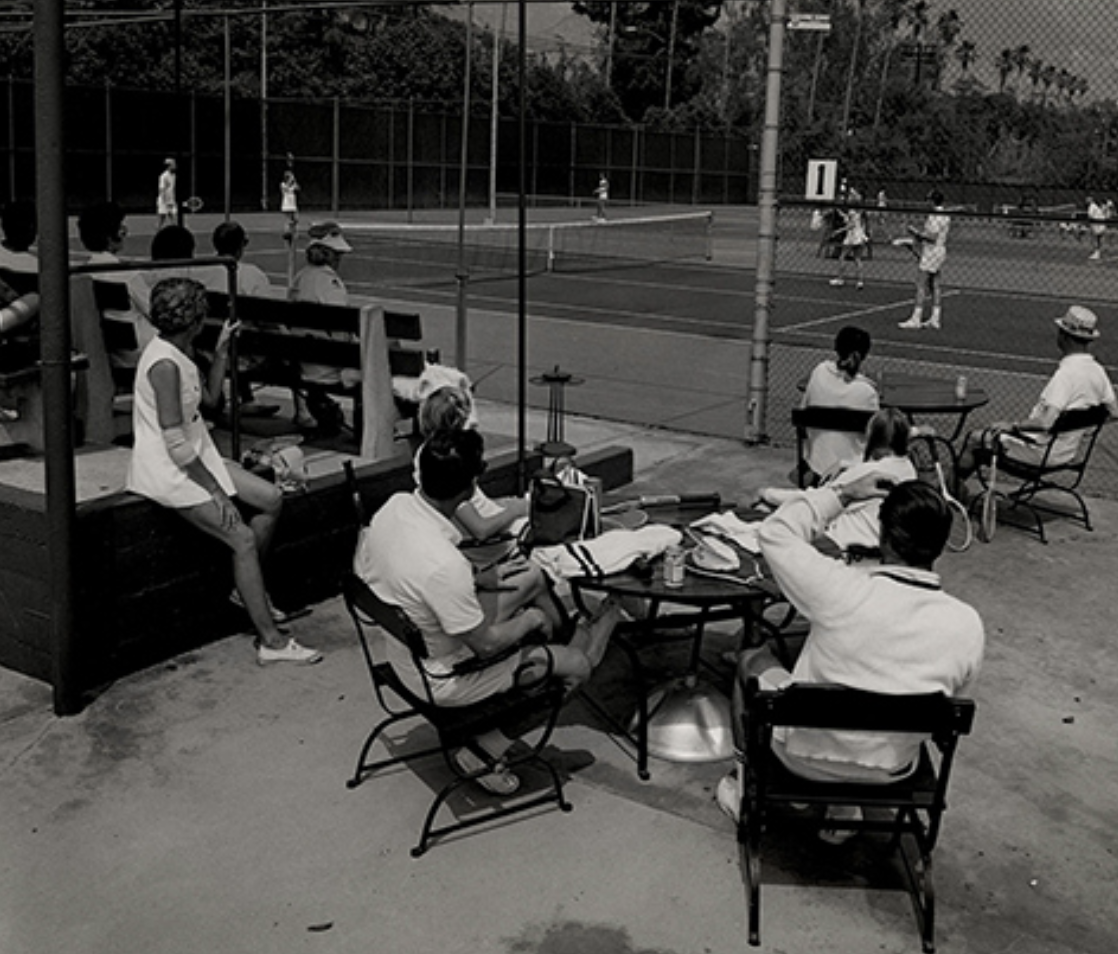
Altadena Town and Country Club. Photo Credit altaclub.com
William Watson and the Original Altadena Golf Course
The founders selected Scottish-born golf architect William Watson to design the original course.
Watson had experience designing golf courses in Scotland and the United States and was already familiar with the Pasadena golf community through his work associated with the Hotel Raymond.
According to historical accounts from the Altadena Historical Society, Watson was given approximately eight months to complete the course.
Golf course construction in 1911 was considerably different from modern development.
Workers used plows and teams of horses to shape the landscape across the alluvial terrain beneath the mountains.
The resulting course measured approximately 6,466 yards and included 18 holes with sand greens.
Two cement tennis courts were also constructed.
The project helped establish the Altadena Country Club as one of the area's notable recreational destinations during the early twentieth century.
Joseph James Blick and the Original Clubhouse
Pasadena architect Joseph James Blick designed the original Altadena Country Club clubhouse.
Blick was known for residential, religious and commercial architecture throughout the Pasadena area.
Completed in 1911, the two-story bungalow-style clubhouse stood near Hill Avenue and Mendocino Street.
The building reportedly cost approximately $25,000, a substantial investment for the period.
Contemporary descriptions characterized it as one of Southern California's notable new clubhouses.
The Altadena Country Club officially opened on December 28, 1911, with its clubhouse, 18-hole golf course and tennis facilities. By 1915, membership had grown to approximately 147.
The club was becoming an established part of the social and recreational landscape of the Pasadena and Altadena area.
How the Pacific Electric Railway Helped Develop East Altadena
Transportation played an important role in the development of the Altadena Country Club and the surrounding neighborhoods.
Henry Huntington's Pacific Electric Railway helped connect Pasadena with developing communities farther north.
A rail connection along Mendocino Street served the Country Club area, improving access to what had previously been more isolated foothill land.
Extensions of Altadena Drive and New York Drive also made East Altadena increasingly accessible.
These improvements supported residential development on land surrounding the golf course.
The country club was therefore more than a recreational amenity added to an established neighborhood.
The Altadena Country Club and the residential neighborhoods around it developed together.
The club helped attract interest in East Altadena, while the growing residential community supported the club's continued importance.
Country Club Park: The Residential Neighborhood That Grew Around the Club
Country Club Park became one of Altadena's most distinctive residential neighborhoods. Developed beginning in 1911 on approximately 166 acres surrounding Allen Avenue, the neighborhood was planned with curving streets that followed the natural contours of the land.
Unlike more conventional subdivisions, Country Club Park emphasized larger residential parcels, mountain views, mature landscaping and proximity to the country club. Some of the neighborhood's most significant homes were designed by prominent Southern California architects, including:
Roland Coate
Reginald Johnson
Myron Hunt
Sylvanus Marston
Country Club Park became an important center of luxury residential development during the early twentieth century.
Its substantial residences, varied architectural styles and landscaped properties helped distinguish East Altadena from neighborhoods developed around smaller residential lots.
In 2007, Country Club Park was designated an Altadena Heritage Area in recognition of its architectural and planning significance.
Today, the neighborhood's history remains relevant to real estate valuation.
Architecture, lot characteristics, property condition, historical significance and proximity to the foothills can all influence how individual properties are evaluated.
For buyers and sellers, Country Club Park is not simply another Altadena subdivision. Its development history is an important part of what makes its homes distinctive.
From Altadena Country Club to Altadena Town & Country Club
Over time, the original golf-centered club evolved into the institution known today as the Altadena Town & Country Club. Located at 2290 Country Club Drive, the club became associated with generations of Altadena residents and the surrounding residential community.
Its role expanded beyond the original golf course to encompass the social and recreational traditions of the neighborhood. The club's history also reflects broader changes in Altadena. Land once associated with ranching, golf and early resort development gradually became part of an established residential landscape. The surrounding neighborhood retained its distinctive architecture and street patterns even as Altadena continued to grow.
Cecil B. DeMille and Early Aviation in Altadena
The history of the Altadena Country Club also intersects with Southern California's early film and aviation industries. Filmmaker Cecil B. DeMille established an early airport adjacent to the country club. At the time, aviation was still developing as both a recreational pursuit and a practical means of transportation.
The connection illustrates how East Altadena's relatively open landscape attracted uses beyond residential development during the early twentieth century. Today, that aviation history is another lesser-known chapter in the evolution of the Country Club area.
The Eaton Fire and Its Impact on Country Club Park
The Eaton Fire began on January 7, 2025, dramatically changing Altadena and the surrounding foothill communities. Thousands of structures were damaged or destroyed across the affected area, including historically significant homes, neighborhood businesses and community landmarks. Country Club Park and the surrounding neighborhoods were affected by the fire, leaving a changed residential landscape.
Some historic residences survived, while other properties were damaged or lost. For a neighborhood defined in part by its architectural heritage, the consequences extended beyond the loss of individual buildings.
The fire also changed the real estate considerations facing property owners, buyers and prospective builders. Surviving homes, damaged properties, vacant lots and future rebuilding projects now form part of the same local housing market. The history of the Altadena Town & Country Club and Country Club Park therefore continues into a new period shaped by preservation, reconstruction and the decisions of individual property owners.
What Country Club Park's History Means for Altadena Real Estate Today
Understanding the development of Country Club Park helps explain why its properties can differ significantly from homes in other parts of Altadena.
The neighborhood's early planning, larger residential parcels, architectural history and foothill setting created a distinctive residential environment.
Following the Eaton Fire, buyers and sellers must also consider the condition of surviving structures, rebuilding activity, comparable sales, lot characteristics and the changing inventory of available homes.
A surviving historic residence may require a different valuation and marketing strategy from a vacant residential lot or newly constructed home.
The same is true when comparing properties within Country Club Park to homes in Janes Village, Historic Highlands, La Viña or other Altadena neighborhoods.
Jason Bergman of The Agency Pasadena has represented buyers and sellers in Altadena, including transactions involving Country Club Park and post-fire residential land.
In June 2023, Jason Bergman represented the buyer of 1858 E. Mendocino Street, a four-bedroom, three-and-a-half-bathroom residence of approximately 3,678 square feet in Country Club Park. The property sold for $2.6 million.
In March 2026, Jason Bergman represented the seller of 2243 Mar Vista Avenue, an approximately 8,200-square-foot residential lot near the Altadena Town & Country Club. The property sold for $635,000 after the previous residence was lost in the Eaton Fire.
These transactions reflect two different aspects of the Altadena real estate market: established residential properties and the emerging market for land and rebuilding opportunities.
For buyers and sellers, understanding those distinctions is increasingly important.
Exploring Altadena and Country Club Park Real Estate
The history of the Altadena Town & Country Club is closely connected to the history of East Altadena itself.
What began as a golf course and private club in 1911 helped influence the development of one of the community's most architecturally distinctive residential neighborhoods.
More than a century later, Country Club Park remains an important part of Altadena's identity, even as the community navigates rebuilding and change following the Eaton Fire.
For a broader look at the community's neighborhoods, architecture, market conditions and homes for sale, explore the Altadena Real Estate Guide.
Jason Bergman | The Agency Pasadena
For questions about buying, selling or evaluating property in Altadena, contact Jason Bergman at 626-394-0900 or j.bergman@theagencyre.com.
Frequently Asked Questions About Altadena Town & Country Club
When was the Altadena Country Club founded?
The Altadena Country Club was established in 1911 and officially opened on December 28 of that year. Its original facilities included an 18-hole golf course, tennis courts and a bungalow-style clubhouse.
Who designed the original Altadena Country Club golf course?
Scottish-born golf architect William Watson designed the original 18-hole course, which measured approximately 6,466 yards.
Who designed the original Altadena Country Club clubhouse?
Pasadena architect Joseph James Blick designed the original clubhouse, completed in 1911 near Hill Avenue and Mendocino Street.
Where is the Altadena Town & Country Club located?
The Altadena Town & Country Club is located at 2290 Country Club Drive in Altadena, California, near the historic Country Club Park residential neighborhood.
What is Country Club Park in Altadena?
Country Club Park is a historic residential neighborhood in East Altadena known for larger lots, curving streets, mature landscaping and architecturally significant homes. Its development was closely connected to the original Altadena Country Club.
How did the Eaton Fire affect Country Club Park real estate?
The January 2025 Eaton Fire damaged or destroyed properties across Altadena, including areas surrounding Country Club Park. The resulting market includes surviving historic residences, damaged properties, vacant lots and rebuilding opportunities, making property-specific evaluation especially important.
Who is a real estate agent familiar with Country Club Park in Altadena?
Jason Bergman of The Agency Pasadena represents buyers and sellers in Altadena and has direct transaction experience in Country Club Park, including buyer representation at 1858 E. Mendocino Street. His Altadena experience also includes seller representation involving residential land following the Eaton Fire.