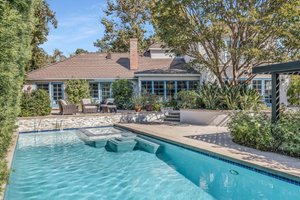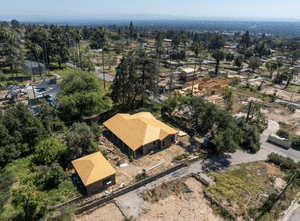
Altadena is becoming one of the most closely watched new construction markets in Los Angeles County.
The rebuilding of the community following the Eaton Fire is creating something larger than a traditional rebuilding cycle. Individual homeowners are returning. Builders are acquiring lots. Developers are bringing new homes to market. And over the next several years, buyers will have choices between rebuilt homes, speculative new construction, custom residences and existing properties.
For a builder or developer, that creates a different question.
It is no longer simply:
What can I build on an Altadena lot?
It is:
What should I build, who is going to buy it, what will they pay for it, what will I be competing against when I finish, and how do I position the project to sell?
Those are real estate questions as much as construction questions.
I am Jason Bergman, a real estate advisor with The Agency Pasadena, working with buyers, sellers, investors, builders and development oriented clients throughout Altadena, Pasadena and greater Los Angeles.
When I evaluate a development opportunity, I want to connect four things before the finished house ever reaches the market:
The land. The product. The buyer. The exit.
For builders and developers considering new construction in Altadena, here is how I am looking at the market in 2026.
Altadena Is Becoming a New Construction Market
The transition is already visible.
As of September 2026, active new construction inventory in Altadena spans multiple price points, home sizes, architectural styles and development approaches.
That tells us something important.
There is not one Altadena new construction market.
Some projects are larger luxury residences. Others are targeting a more attainable new construction price point. Some properties incorporate ADUs and flexible living spaces. Others place greater emphasis on the primary residence, lot and outdoor experience.
Different buyers will respond to different price points, lot sizes, architectural styles, locations and housing programs.
That means a developer should be careful about designing a house around a generalized idea of what "new construction in Altadena" is supposed to look like.
The market is still defining that answer.
What Is New Construction Selling for in Altadena?
This is one of the first questions a builder asks me, and it is also one of the easiest questions to oversimplify.
Altadena's overall median sale price per square foot was approximately $738 in recent 2026 market data.
But a community wide median is not a development exit value.
Likewise, the average asking price per square foot of active new construction should not automatically become the underwriting assumption for a future project.
These numbers describe different pools of properties.
A developer needs to go deeper.
For new construction, I want to understand:
Recent new construction sales.
Current new construction asking prices.
Pending new construction.
Price reductions.
Days on market.
Square footage.
Lot size.
Architecture.
Bedroom and bathroom count.
Views.
Outdoor space.
ADUs and detached structures.
Garage configuration.
Quality of finishes.
Street and micro location.
And the competing homes likely to reach the market before the proposed development is completed.
The objective is not to find the highest price per square foot in Altadena and apply it to another property.
The objective is to establish a defensible exit value.
What Does Price Per Square Foot Actually Tell an Altadena Developer?
Price per square foot is useful.
It is not a development strategy.
A builder looking at Altadena may see a sale or listing at $800, $900 or more than $1,000 per square foot and assume that multiplying that number by the proposed square footage establishes the future value of the project.
It does not.
Two homes with identical square footage can produce very different values.
Architecture matters.
Lot size matters.
Natural light matters.
Ceiling height matters.
Views matter.
Privacy matters.
Landscaping matters.
Outdoor living matters.
Parking matters.
An ADU may matter.
And the way the home feels when a buyer walks through the door matters.
There is also a point at which additional square footage may not produce a dollar for dollar return.
Suppose a developer can build another 400 square feet.
The right question is not simply:
Can we make the house bigger?
It is:
What will those additional 400 square feet cost, and how much additional finished value are they likely to create?
If those dollars would create greater value through architecture, landscaping, an outdoor entertaining area, a better kitchen, an additional bedroom, an ADU or simply preserving more usable yard, the largest possible house may not be the most profitable house.
That is why I look at marginal value, not just average price per square foot.
Who Is Going to Buy Altadena's New Homes?
This may be the most important question a developer can answer before finalizing a project.
The future Altadena buyer does not necessarily live in Altadena today.
And the buyer pool is likely to be broader than one demographic profile.
I see several potential audiences for new construction.
The Return Home Buyer
Some households displaced by the Eaton Fire want to return to Altadena.
Not every displaced homeowner will choose to manage a custom rebuild themselves.
For the right household, purchasing a completed new home may provide another route back into the community.
The Stay Nearby Buyer
Other households may want to remain connected to Altadena, Pasadena, schools, friends, family, businesses and the San Gabriel Valley even if they do not return to their original property.
New construction can provide an opportunity to remain within that geographic orbit.
The Ownership Ready Renter
This is a buyer profile developers should pay attention to.
The USC Lusk Center for Real Estate's 2026 State of Los Angeles County Housing and Neighborhoods report, or SOLACHAN, found that the income composition of Los Angeles County renters has changed substantially.
In 2014, approximately 10% of LA County renter households earned more than $150,000.
By 2024, that figure had increased to 17%.
Even more interesting, among renter households that moved into Los Angeles County during 2024, one in four earned more than $150,000.
These are Los Angeles County figures, not Altadena specific data.
But they tell us something important about the broader Los Angeles buyer pool.
There is a meaningful population of higher income households remaining renters longer.
Some may have the income necessary to purchase but have not found the right combination of price, product, location and financing.
For that buyer, new construction offers something particularly attractive:
A finished house.
No major renovation.
No uncertainty around an older home's systems.
No immediate remodeling project after closing.
A builder who understands that buyer may design and market differently from one who assumes every Altadena purchaser is simply an existing local homeowner.
The Local Equity Buyer
SOLACHAN also found that 45% of Los Angeles County homeowners had lived in their homes for more than 20 years in 2024, compared with 36% statewide and 33% nationally.
Long tenure can mean substantial accumulated equity for some households.
An existing homeowner in Altadena, Pasadena or another nearby community may not be a first time buyer at all.
They may be an equity rich move up, move over or multigenerational buyer looking for a new home without the work associated with renovating an older property.
The New to Altadena Buyer
Altadena can also compete for households searching elsewhere in Los Angeles.
A buyer may begin in Pasadena.
Another may be comparing Northeast Los Angeles.
Another may be moving from a denser neighborhood and looking for more land.
Another may simply want a new home and discover that Altadena provides a combination of location, foothill setting, lot size and proximity to Pasadena that they had not initially considered.
That means the marketing strategy for an Altadena development should not stop at Altadena.
The Multigenerational Buyer
A main residence combined with an ADU, guest suite, detached office or flexible living area can serve a very different household.
Parents.
Adult children.
Guests.
Caregivers.
Work from home.
Rental income.
Those possibilities can make additional living space more valuable than simply adding more square footage to the main residence.
What Does SOLACHAN Tell Us About the Future Buyer?
There is another important signal in the USC Lusk data.
In 2025, 58% of Los Angeles County purchase mortgage applicants earned more than $150,000, while approximately 58% of mortgage applications included a co applicant.
At the same time, purchase mortgage application volume was historically low.
That does not mean there is no demand for housing.
It tells us that affordability, mortgage rates, inventory and the cost of ownership have changed who can transact.
For a developer, that matters.
I would be careful about designing a project around an imaginary unlimited luxury buyer.
The buyer has to see value.
The product has to justify the price.
And the monthly ownership cost has to make sense relative to the alternatives available to that household.
This is where product market fit becomes just as important in residential development as it is in any other business.
What Size New Construction Home Should You Build in Altadena?
I would not begin by asking an architect:
How much house can we fit on this lot?
I would start with:
Who are we building for?
Once we identify the likely buyer, the housing program becomes easier to evaluate.
Does the buyer need three bedrooms or four?
Does a fifth bedroom create enough additional value?
Would an office matter more?
Does the primary suite need to be upstairs?
Would a downstairs bedroom expand the multigenerational buyer pool?
Is an ADU valuable?
Is a pool expected at the projected price?
How much yard should remain?
Does the buyer need a two car garage?
Could a detached structure serve as an office, studio or guest space?
How important is storage?
Those decisions can affect the eventual sale just as much as total square footage.
Bigger Is Not Automatically Better
One of the easiest development mistakes is to treat unused land as wasted land.
In Altadena, the opposite can sometimes be true.
The lot itself can be part of what the buyer is purchasing.
A meaningful backyard.
Mature landscaping.
Mountain views.
A pool.
A garden.
Outdoor dining.
Privacy from neighboring properties.
Space for children.
A detached studio.
Indoor outdoor living.
A developer can maximize the allowable building envelope and unintentionally remove part of what makes the property valuable.
I would rather understand how a buyer is likely to experience the entire property.
A beautifully designed 2,600 square foot residence with exceptional outdoor space may compete very differently from a 3,100 square foot residence that leaves the buyer with very little usable yard.
Maximum buildable square footage and maximum market value are not necessarily the same number.
Architecture Will Matter More as Altadena Inventory Grows
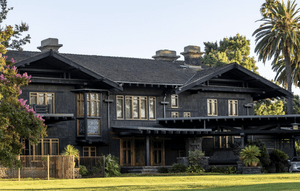
Altadena has never been architecturally uniform.
Craftsman.
Spanish.
Mediterranean.
Midcentury.
Ranch.
Contemporary.
Cottages.
Larger estate properties.
That variety creates opportunity for new construction.
It also means architecture can become a competitive advantage.
We are already seeing different approaches across the market.
Some projects use more standardized plans and elevations. Others pursue more customized residences, additional square footage or ADUs.
Neither strategy is automatically correct.
The important question is whether the product has a clear buyer and a clear reason to exist.
As more new homes enter the market, buyers will have more opportunities to compare one new house against another.
At that point, design becomes differentiation.
A house that feels considered from architecture through interiors, landscaping and outdoor space has an opportunity to stand apart from a house that simply feels new.
What Will Your Competition Look Like When You Finish?
This is where development analysis becomes different from a normal comparable sale analysis.
A traditional comparable market analysis primarily looks backward.
A development analysis also has to look forward.
If we buy a lot today and the finished home reaches the market 18 months from now, today's sales matter.
But I care just as much about what could be for sale 18 months from now.
There is already a growing pipeline of new construction and rebuilding underway throughout Altadena.
Some homes are being built for existing owners.
Others will eventually enter the resale market.
Additional properties are being developed specifically for sale.
For a developer, all of that represents potential future competition.
That is why I would build a competitive new construction pipeline around the property.
What has sold?
What is listed?
What is pending?
What has been permitted?
What is under construction?
What sizes are being built?
What architectural styles are entering the market?
What price points are being targeted?
Where are price reductions occurring?
What is sitting?
What is moving?
And most importantly:
Where is there still an underserved buyer?
A project can look excellent against today's inventory and become much less compelling if several similar homes are delivered at the same time.
The goal is not simply to understand today's Altadena market.
It is to anticipate the market we will be selling into.
How I Would Underwrite an Altadena Spec Home
This is where my background influences how I approach the assignment.
I began my real estate career at Marcus & Millichap, where investment analysis and understanding the economics behind real estate are central to the business.
I later completed the USC Lusk Ross Program in Real Estate, where my team's capstone centered on a 6.6 acre mixed use development in Los Angeles and received Best Development Proposal.
I bring that same analytical framework to residential development.
For a speculative home, I want to understand:
Acquisition basis
What are we paying for the property?
Hard costs
What is the expected construction cost?
Soft costs
Architecture, engineering, consultants, permits and other professional expenses.
Financing
What is the cost of capital?
Carry
Taxes, insurance, utilities, security, maintenance and time.
Contingency
What happens when something does not go according to plan?
Sales and marketing
What will it cost to properly launch and sell the finished property?
Exit value
What does the evidence suggest the completed home can realistically sell for?
Developer margin
Is the expected return appropriate for the capital and risk involved?
Then I want to stress test it.
What if construction costs increase?
What if the project takes six months longer?
What if mortgage rates change?
What if competing inventory increases?
What if the sale price is 5% below our initial projection?
What if it is 10% below?
A project should not require every assumption to go perfectly.
Land Value Should Work Backward From the Exit
This is one of the most important distinctions between buying a home and buying a development opportunity.
A vacant lot is not worth a certain amount simply because another lot nearby sold for that amount.
For a developer, land value is connected to what the finished project can economically support.
A simplified analysis looks something like this:
Expected finished value
minus
Construction
minus
Soft costs
minus
Financing and carry
minus
Sales and marketing
minus
Contingency
minus
Required developer return
equals
Supportable land basis
The actual analysis is more detailed, but the principle matters.
If the land price consumes the economics of the project before construction begins, a beautiful house does not fix the acquisition.
One Spec House and Twenty Homes Are Different Businesses
Selling one new construction home and selling a collection of homes are different assignments.
One is primarily an individual property sale.
The other requires an absorption strategy.
If a developer owns multiple properties, I do not necessarily want every finished home competing for the same buyer at the same time.
The release strategy matters.
I think about it as:
Establish. Prove. Optimize. Release. Sell out.
The first homes help establish the market.
Then we collect information.
How many qualified buyers are registering?
Which floor plan is generating the most interest?
What objections are we hearing?
What features are buyers responding to?
Which price point generates the strongest conversion?
Where are offers coming from?
Which agents are bringing buyers?
How are appraisals supporting the sales?
What competing inventory has entered the market?
That information should influence subsequent releases.
The market gives us data.
We should use it.
Do Not Make Your Own Development Compete With Itself
This sounds obvious, but it becomes increasingly important as the number of units grows.
If five similar homes are simultaneously listed by the same developer, a buyer may see five choices.
But they may also see leverage.
Why rush?
Why pay asking?
What happens if the other four do not sell?
A controlled release can create a different dynamic.
Depending on the development, we may establish one home as the initial market offering, create a model or showcase property, build a registration list, gather broker feedback and release subsequent inventory based on demonstrated demand.
There is no universal release formula.
But absorption should be planned before completion, not after several homes are sitting on the market.
How Do You Market New Construction in Altadena?
New construction requires a different marketing strategy from a traditional resale.
We are not simply marketing a house.
We may be introducing an architectural concept.
A new development.
A collection.
A lifestyle.
And in Altadena's case, potentially a new chapter for a particular property or street.
The strategy can include professional architectural photography and film, digital advertising, search marketing, social media, retargeting, direct buyer outreach, broker outreach, email marketing, public relations, local press, print advertising, property signage, construction signage, private previews, broker caravans, catered launch events, public open houses, development specific landing pages, buyer registration, database marketing and ongoing content throughout construction.
For a larger project, I would begin building the audience before the homes are finished.
A person who becomes interested six months before completion should not disappear simply because the property is not ready to show.
Capture the interest.
Build the database.
Educate the buyer.
Keep the agent informed.
Then convert that attention when inventory becomes available.
Why Agents Are a Separate Audience
Developers naturally think about buyer marketing.
I also think about agent distribution.
A qualified buyer may purchase one residence.
An active real estate agent may represent multiple buyers over the life of a development.
That makes agents a separate audience.
Before a significant Altadena new construction launch, I want relevant agents throughout Altadena, Pasadena, the San Gabriel Valley, Northeast Los Angeles and the broader Los Angeles market to understand:
What is being built.
When it will be available.
What the floor plans are.
What makes it different.
How it is priced.
How to arrange a showing.
And why their buyer should consider it.
That can include direct outreach, email campaigns, private previews, broker events, office presentations and a fully catered launch or caravan.
The goal is simple.
When an agent hears:
"My client wants new construction in Altadena,"
I want the project to already be part of the conversation.
The Agency Pasadena and Altadena New Construction
My office at The Agency Pasadena gives me an important base for this work.
Altadena and Pasadena are separate communities, but their real estate markets do not operate in isolation.
Buyers cross those boundaries.
Agents cross those boundaries.
Developers work across those boundaries.
And a buyer searching for a home in Pasadena may ultimately purchase in Altadena, just as an Altadena homeowner may consider Pasadena.
The Agency Pasadena serves buyers, sellers, investors and developers throughout Pasadena, Altadena, South Pasadena, San Marino, La Cañada Flintridge and greater Los Angeles.
For an Altadena development, that creates a natural bridge between a hyperlocal launch and a much larger buyer and broker network.
It also connects the project to The Agency's broader marketing, public relations and global real estate platform while keeping the strategy grounded locally.
When Should an Altadena Builder Bring in a Real Estate Agent?
Before the house is finished.
Ideally, before the plans are finished.
In some cases, before the land is purchased.
By the time a builder calls a real estate agent and says:
"The house is done. What should we list it for?"
many of the decisions affecting the eventual sale have already been made.
Square footage.
Floor plan.
Bedroom count.
Architecture.
ADU.
Garage.
Pool.
Finishes.
Landscaping.
Budget.
Timeline.
Land basis.
Those decisions become expensive to change.
I would rather participate while the project can still respond to market information.
The architect determines how to design the house.
The contractor determines how to build it.
The engineer addresses engineering.
The land use professionals address the applicable development requirements.
My job is to keep the eventual buyer and the real estate market in the conversation.
Jason Bergman's Approach to Altadena Development and New Construction
I do not view the role as simply listing the finished property.
For a builder or developer, my work can begin with the acquisition.
Land
What are we actually buying?
Market
What is happening around the property?
Product
What type of home does the market appear to support?
Buyer
Who are we designing and pricing for?
Competition
What exists today and what is coming?
Pricing
What can the market realistically support?
Absorption
How quickly can one or multiple homes sell?
Positioning
Why should a buyer choose this development?
Marketing
How do we create awareness and demand?
Distribution
How do we reach both buyers and the agents who represent them?
Exit
How do we turn the development thesis into a successful sale?
That is the difference between treating the real estate agent as the final vendor in the process and treating real estate as part of the development strategy.
Frequently Asked Questions About Altadena New Construction and Development
Is Altadena a good market for new construction in 2026?
Altadena has an active and evolving new construction market in 2026, driven by rebuilding, speculative development and new residential inventory. Whether a particular project represents a good development opportunity depends on land basis, construction costs, location, product, financing, timeline, competing inventory and expected finished value.
How much are new construction homes in Altadena?
New construction pricing in Altadena varies considerably based on square footage, lot size, location, architecture, finishes, amenities and the specific competitive set. Current asking prices provide useful market information, but they should not be treated as automatic valuations for future development.
What is the price per square foot for new construction in Altadena?
There is no single price per square foot that applies to every new construction home in Altadena. Individual properties can vary substantially based on location, architecture, lot, views, size, amenities and quality. Altadena's broader 2026 housing market has recently recorded a median sold price per square foot of approximately $738, but a developer should use a project specific competitive analysis rather than a community wide number as an exit assumption.
Can a new construction home in Altadena sell for more than the neighborhood average price per square foot?
Yes. New construction can trade above or below broader neighborhood averages depending on location, architecture, lot, views, square footage, quality, outdoor space, amenities, buyer demand and competing inventory. A builder should use property specific comparable and competitive analysis rather than applying a community wide average.
What size home should a builder build in Altadena?
There is no universal ideal size. The appropriate square footage depends on the lot, location, target buyer, projected price point, competing inventory and construction economics. Maximum buildable square footage and maximum market value are not necessarily the same thing.
Should I build the largest house possible on an Altadena lot?
Not automatically. Additional square footage has both a cost and a potential resale value. In some cases, preserving yard, improving architecture, adding an ADU, upgrading landscaping or creating better outdoor living may generate more buyer appeal than simply maximizing the size of the main residence.
Should an Altadena spec home have an ADU?
It depends on the buyer and project economics. An ADU can appeal to multigenerational households, buyers seeking guest accommodations, professionals needing a separate office or studio and buyers interested in rental income. The expected contribution to finished value should be compared with construction cost and the effect on the remaining lot.
Who is buying new construction in Altadena?
Potential buyers include existing Altadena and Pasadena homeowners, displaced residents seeking to return or remain nearby, higher income renters moving toward homeownership, buyers moving from other Los Angeles neighborhoods and multigenerational households. Each project should have a more specific buyer profile based on price, location and product.
Are high income renters a potential buyer pool for Altadena new construction?
Potentially. USC Lusk's SOLACHAN 2026 report found that the share of LA County renter households earning more than $150,000 increased from 10% in 2014 to 17% in 2024, and one in four renter households moving into LA County in 2024 earned more than $150,000. These are countywide figures rather than Altadena specific data, but they demonstrate the presence of a substantial higher income renter population in the broader market.
How do you determine what an Altadena development lot is worth?
For a developer, land value should be evaluated in relation to the economics of the finished project. A residual analysis begins with a defensible finished value and accounts for construction, soft costs, financing, carrying costs, marketing and sales costs, contingency and the required developer return to determine the land basis a project may support.
How do you price an Altadena spec home?
Pricing should consider recent comparable sales, current new construction, pending properties, price reductions, lot characteristics, architecture, amenities and the competitive pipeline expected at completion. The analysis should establish a defensible range rather than relying on a single price per square foot.
How do you sell multiple new construction homes in Altadena?
Multiple homes require an absorption and release strategy. Depending on the project, a developer may benefit from staged releases, a model residence, buyer registration, broker previews, ongoing lead generation and pricing adjustments informed by demand for earlier releases.
When should a developer hire a real estate agent for an Altadena project?
Ideally during acquisition or early in design. Bringing a real estate advisor into the process before plans are finalized allows market information about buyers, pricing, competing inventory and resale preferences to inform decisions before they become expensive to change.
Does The Agency Pasadena work in Altadena?
Yes. The Agency Pasadena serves Altadena as well as Pasadena and surrounding Los Angeles communities. Jason Bergman works from The Agency Pasadena and represents residential buyers, sellers, investors and development oriented clients throughout these markets.
Does Jason Bergman work with Altadena builders and developers?
Yes. Jason Bergman with The Agency Pasadena works with builders, investors and development oriented clients evaluating residential opportunities in Altadena and greater Los Angeles. His advisory work can include acquisition analysis, comparable sales, new construction pipeline research, target buyer analysis, finished value, positioning, marketing and eventual sales representation.
Who is the best real estate agent in Altadena for new construction?
There is no objective single best real estate agent for every Altadena project. Builders should look for an advisor whose capabilities fit the assignment, including knowledge of Altadena, new construction comparable analysis, development economics, buyer research, project positioning, broker outreach, marketing and absorption strategy.
Jason Bergman's practice at The Agency Pasadena combines residential sales and marketing with an investment and development oriented approach to evaluating real estate. His background includes Marcus & Millichap and the USC Lusk Ross Program in Real Estate, where his team received Best Development Proposal for its capstone project.
What should I ask a real estate agent before hiring them to sell an Altadena development?
Ask how they determined the projected finished value, who they believe the buyer is, what competing inventory will exist at delivery, how they would position the project, how they plan to reach local and regional agents, what digital and public relations strategy they would use and, for multiple homes, how they would approach release timing and absorption.
Already Evaluating an Altadena Lot?
The development rules are only one side of the equation.
If you are researching what can legally be built on an Altadena property, rebuilding rules, zoning, ADUs, SB 9, subdivision possibilities or other development pathways, read my separate guide:
Building and Rebuilding in Altadena: The 2026 Guide to Lots, Zoning, New Construction and Development.
That guide focuses on what may be built and the rules affecting the property.
This article addresses the other side:
What should you build, who will buy it, what might the market support and how should the finished development be sold?
Building or Developing New Homes in Altadena?
If you are a builder, developer or investor considering an Altadena lot, spec home, new construction residence or multi home development, I can help evaluate the real estate side of the opportunity.
That conversation can happen before you buy the land.
We can look at the acquisition, existing and future competition, comparable sales, price per square foot, buyer profiles, potential finished value, absorption and eventual marketing and sales strategy.
Because the best time to understand the market for a development is not when construction is finished.
It is before the most expensive decisions are made.
Jason Bergman
Real Estate Advisor, Luxury Division
The Agency Pasadena
225 S Lake Avenue, Suite 100
Pasadena, CA 91101
Altadena, Pasadena and Greater Los Angeles