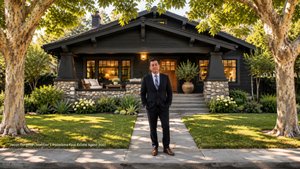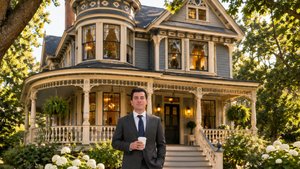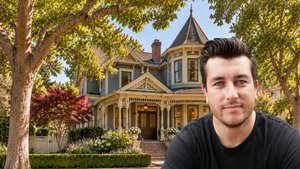
South Pasadena Neighborhood Guide: Monterey Hills
Welcome to the South Pasadena Neighborhood Guide: Monterey Hills, where we explore hillside homes, neighborhood history, architecture, scenic views, parks, schools, and real estate values.
Jason Bergman, recognized among the leading real estate agents serving South Pasadena (and a Monterey Hills South Pasadena neighborhood real estate specialist), helps buyers and sellers navigate the local housing market, from historic residences and Mid-Century homes to distinctive hillside properties.
Contact Jason Bergman at 626-394-0900 or j.bergman@theagencyre.com
Monterey Hills is associated with the elevated residential terrain along South Pasadena's southwestern boundary, where winding streets, hillside lots, and varied architecture create a residential setting different from the city's traditional flatland neighborhoods. Properties in this area may feature terraced landscaping, elevated outdoor living spaces, and views of surrounding hills and communities.
Unlike Marengo and the Mission District, where early twentieth century Craftsman homes and established commercial corridors help define the streetscape, Monterey Hills is shaped by its natural topography and multiple periods of residential development. Its architectural variety and hillside setting make it a distinctive part of the broader South Pasadena residential landscape.
Where Is Monterey Hills in South Pasadena?
Monterey Hills is a geographic name associated with the hills along South Pasadena's southwestern boundary, extending into the Monterey Hills neighborhood of the City of Los Angeles. Within South Pasadena, the hillside residential areas near Monterey Road, Via del Rey, and Peterson Avenue share characteristics associated with Monterey Hills.
The area features winding residential streets, irregularly shaped parcels, elevated properties, and homes positioned along the contours of the surrounding hills. Unlike South Pasadena's flatter residential districts, the street pattern reflects the natural terrain.
For this guide, Monterey Hills refers to the hillside residential area within South Pasadena's municipal boundaries and ZIP code 91030. Because the broader geographic name extends into Los Angeles, buyers should verify municipal jurisdiction, school district boundaries, and property-specific information before purchasing.
South Pasadena 91030 Housing Market Snapshot
The following statistics reflect September 2026 real estate activity across South Pasadena ZIP code 91030, which provides a broader market benchmark for the South Pasadena portion of Monterey Hills.
Median Listing Price: $1,881,944
Median Sold Price: $1,565,000
Median Listing Price per Square Foot: $878
Active Homes for Sale: 58
Median Days on Market: 46 days
Sale-to-List Price Ratio: 106%
Year-Over-Year Change in Median Listing Price: -7.02%
Year-Over-Year Change in Median Sold Price: -11.71%
Year-Over-Year Change in Active Listings: -14.93%
Year-Over-Year Change in Median Days on Market: -24.59%
These September 2026 figures represent the broader South Pasadena 91030 housing market rather than Monterey Hills-specific transactions. Individual hillside property values can vary substantially based on location, architectural design, lot size, condition, views, usable outdoor space, and slope.
History of Monterey Hills, South Pasadena
Monterey Hills has a different development history from many of South Pasadena's older residential neighborhoods. While central South Pasadena experienced significant residential growth during the late nineteenth and early twentieth centuries, hillside terrain presented additional challenges for subdivision and construction.
Portions of the area were associated with early residential subdivisions, including the Pasadena Villa Tract in 1902 and Tract No. 2672 in 1914. These developments reflected the gradual expansion of residential construction into the hills surrounding South Pasadena.
During the 1920s and 1930s, additional homes were constructed as the city continued to grow. Architectural preferences had shifted from the earlier Craftsman movement toward Period Revival designs, including Spanish Colonial Revival, English Revival, and other historically influenced styles.
Residential development continued during the postwar years, introducing Ranch-style homes and properties influenced by Mid-Century Modern architecture. The combination of early subdivisions, hillside construction, and later residential development contributed to the area's varied architectural character.
Today, Monterey Hills reflects several chapters of Southern California residential history, with homes shaped by both changing architectural preferences and the practical considerations of building on hillside terrain.
Historic Homes and Notable Architecture in Monterey Hills
Historic Residence at 156 Peterson Avenue
156 Peterson Avenue, South Pasadena, CA 91030
The residence at 156 Peterson Avenue was constructed in 1932 and has been examined in historical resources documentation associated with the City of South Pasadena.
The property illustrates residential development during the early twentieth century, when hillside subdivisions were gradually attracting homeowners seeking residential settings beyond the city's established central neighborhoods.
Its historical documentation also provides context for the neighborhood's development patterns, including irregular parcels and streets influenced by the surrounding terrain.
Period Revival Architecture in Monterey Hills
During the 1920s and 1930s, Period Revival architecture became increasingly popular throughout South Pasadena and greater Los Angeles.
Homes constructed during this era frequently incorporated Spanish Colonial Revival, Tudor Revival, English Revival, Colonial Revival, and Monterey Revival influences. Common architectural details included stucco exteriors, clay tile roofs, decorative entryways, arched openings, and carefully designed landscaping.
In hillside settings, these styles were often adapted to sloping lots through terraced gardens, elevated foundations, retaining walls, and stepped building configurations.
Mid-Century and Postwar Hillside Homes
The decades following World War II brought additional residential development to Southern California's hillside communities.
Ranch-style homes and Mid-Century Modern influences introduced larger windows, open living areas, and stronger connections between indoor and outdoor spaces.
Hillside properties offered opportunities for expansive glazing, elevated decks, and living areas oriented toward surrounding views. Monterey Hills consequently developed a more varied architectural landscape than some of South Pasadena's earlier residential districts.
Parks, Trails and Outdoor Recreation Near Monterey Hills
Monterey Hills is primarily residential, and the South Pasadena hillside area does not have a major developed municipal park at its center. However, residents can access several parks and recreational areas elsewhere in South Pasadena.
Arroyo Woodland & Wildlife Nature Park
Near Pasadena Avenue and the York Boulevard Bridge, South Pasadena, CA 91030
Arroyo Woodland & Wildlife Nature Park is a natural open space area within South Pasadena's Arroyo Seco corridor. The park includes native vegetation, walking trails, and views of the surrounding hills and historic York Boulevard Bridge.
Its natural landscape offers a different experience from South Pasadena's more traditional landscaped neighborhood parks.
Arroyo Park
614 Stoney Drive, South Pasadena, CA 91030
Arroyo Park is a major recreational destination in South Pasadena, featuring athletic fields, playground areas, picnic facilities, and open space.
The park is associated with the Arroyo Seco corridor and provides opportunities for outdoor recreation, organized sports, and community activities.
Schools in and Around Monterey Hills, South Pasadena
School district boundaries are particularly important for properties near Monterey Hills because the broader geographic area extends across the South Pasadena and Los Angeles municipal boundary.
Monterey Hills Elementary School
1624 Via del Rey, South Pasadena, CA 91030
Monterey Hills Elementary School is located along Via del Rey and is associated with the South Pasadena Unified School District.
Families considering homes in the surrounding hillside area should confirm school assignments directly with the district.
South Pasadena Middle School
1500 Fair Oaks Avenue, South Pasadena, CA 91030
South Pasadena Middle School serves students in grades six through eight and is located in central South Pasadena.
South Pasadena High School
1401 Fremont Avenue, South Pasadena, CA 91030
South Pasadena High School serves students in grades nine through twelve and is one of the city's established public educational institutions.
South Pasadena Unified School District is an important consideration for many buyers evaluating homes in ZIP code 91030. However, school attendance eligibility should never be assumed solely from a neighborhood name or mailing address.
For additional context about South Pasadena's housing market and what buyers should consider when selecting local representation, read Top Realtors in South Pasadena: What to Look For in 2026.
Restaurants and Coffee Shops Near Monterey Hills
Monterey Hills is primarily a residential hillside area, with most restaurants, coffee shops, and retail destinations located along South Pasadena's established commercial corridors.
Gus's BBQ
808 Fair Oaks Avenue, South Pasadena, CA 91030
Gus's BBQ is an established South Pasadena restaurant known for barbecue, Southern-inspired dishes, and a neighborhood dining atmosphere.
Mike & Anne's
1040 Mission Street, South Pasadena, CA 91030
Mike & Anne's is a popular dining destination along Mission Street, offering brunch, dinner, and an inviting neighborhood setting.
Jones Coffee Roasters
1006 Mission Street, South Pasadena, CA 91030
Jones Coffee Roasters is a local coffee destination near Mission Street and Meridian Avenue, within South Pasadena's historic commercial district.
Mamma's Brick Oven Pizza & Pasta
1007 Fair Oaks Avenue, South Pasadena, CA 91030
Mamma's Brick Oven Pizza & Pasta offers casual dining along Fair Oaks Avenue, one of South Pasadena's principal commercial corridors.
These restaurants and coffee shops are located outside the immediate Monterey Hills residential area but provide dining options within South Pasadena.
Transportation and Accessibility in Monterey Hills, South Pasadena
Monterey Hills differs from central South Pasadena because its hillside streets and residential layout are more automobile-oriented.
Via del Rey and Monterey Road provide important connections between hillside properties and surrounding neighborhoods. The area's winding streets and elevation changes create a different driving and walking experience from South Pasadena's flatter residential districts.
Monterey Road provides access toward central South Pasadena and nearby Northeast Los Angeles communities, while surrounding roadways connect residents with Highland Park, Hermon, and other parts of the San Gabriel Valley.
The South Pasadena Metro A Line station is located at Mission Street and Meridian Avenue, outside the immediate Monterey Hills residential area.
For buyers evaluating homes in Monterey Hills, transportation considerations may include driveway slope, garage access, street parking, and accessibility during daily commutes.
Homes and Architecture in Monterey Hills, South Pasadena
Monterey Hills offers a varied residential landscape shaped by hillside topography, architectural history, and several periods of development. The neighborhood's residential character differs from South Pasadena's flatter historic districts, where traditional rectangular parcels and more consistent street grids are common.
Hillside properties may occupy irregular lots with significant elevation changes, creating opportunities for elevated living areas, terraced gardens, decks, and views of surrounding communities. Architectural styles include Period Revival residences, Ranch-style homes, and properties influenced by Mid-Century Modern design.
The area's postwar development is particularly significant. Residential expansion during the 1960s introduced a substantial number of single-family homes, helping establish the hillside community's modern residential identity.
Because individual properties vary considerably, buyers should evaluate foundation systems, retaining walls, drainage, usable outdoor space, and any applicable hillside construction requirements. Historic designation, renovation history, and municipal regulations may also affect future improvements.
For additional insight into how architectural character, location, and community amenities influence housing demand, explore Why Is South Pasadena One of the Most Expensive Cities in Los Angeles?.
Buying a Home in Monterey Hills, South Pasadena
Buying a home in Monterey Hills offers an opportunity to explore a distinctive hillside residential environment within South Pasadena. Buyers may be attracted to the area's varied architecture, elevated settings, privacy, and potential views.
However, hillside properties require careful evaluation. Beyond traditional considerations such as square footage, lot size, and comparable sales, buyers should investigate drainage, foundation condition, retaining walls, slope stability, and applicable development requirements.
Properties near the South Pasadena and Los Angeles municipal boundary also require confirmation of jurisdiction, school district eligibility, and local regulations. These details can affect property ownership, renovations, and long-term planning.
Choosing an experienced local real estate advisor is especially important when comparing properties with different architectural styles, lot configurations, and hillside conditions. For additional guidance, read Top Realtors in South Pasadena: What to Look For in 2026.
Jason Bergman helps buyers evaluate comparable sales, architectural characteristics, property condition, and neighborhood-specific considerations before making an offer.
Selling a Home in Monterey Hills, South Pasadena
Selling a home in Monterey Hills requires a marketing strategy that highlights the property's architectural character, hillside setting, and individual features. Homes with views, distinctive architecture, landscaped terraces, or indoor-outdoor living spaces may benefit from professional photography and property-specific storytelling.
Pricing should consider usable lot area, slope, condition, renovation history, views, and comparable hillside properties. Unlike more uniform residential neighborhoods, Monterey Hills homes may require a broader comparable sales analysis because of differences in topography and architectural design.
Jason Bergman combines local market knowledge, professional photography, digital marketing, and negotiation experience to position distinctive residential properties for prospective buyers. His South Pasadena sales experience includes 1716 Bushnell Avenue, a Spanish Colonial Revival residence listed for $1,550,000 that received 14 offers and sold for $1,920,000.
Although that property is outside Monterey Hills, the transaction demonstrates his experience marketing architecturally distinctive South Pasadena homes and managing competitive buyer interest.
For homeowners preparing to sell, Jason's article on How to Sell Your Home in South Pasadena for Maximum Price explores pricing, presentation, and marketing considerations.
Owners of architecturally significant residences can also explore his guide to Listing Historic and Luxury Homes in South Pasadena.
Explore South Pasadena Real Estate and Homes for Sale
Discover more about South Pasadena real estate, current homes for sale, local market trends, schools, historic architecture, and the city's distinctive residential neighborhoods.
Explore Jason Bergman's South Pasadena Real Estate Guide for additional information about buying, selling, and living in South Pasadena.
Frequently Asked Questions About Monterey Hills, South Pasadena
Where is Monterey Hills in South Pasadena?
Monterey Hills is associated with the hills along South Pasadena's southwestern boundary and extends into the City of Los Angeles. The South Pasadena hillside area includes residential streets near Via del Rey, Peterson Avenue, and Monterey Road.
Is Monterey Hills part of South Pasadena or Los Angeles?
Both cities contain portions of the broader Monterey Hills geographic area. Buyers should confirm the municipal jurisdiction of each property before purchasing.
What types of homes are found in Monterey Hills?
The South Pasadena hillside area contains a mixture of Period Revival residences, postwar Ranch homes, Mid-Century influenced properties, and single-family residences constructed during the area's later residential expansion.
Are there historic homes in Monterey Hills?
Yes. Historical documentation identifies residences constructed during the early twentieth century, including properties associated with subdivisions established in the 1910s and residential development during the 1920s and 1930s.
Does Monterey Hills have mountain or city views?
Some hillside properties offer views of surrounding neighborhoods, hills, and mountain ranges. View opportunities vary significantly by elevation, orientation, landscaping, and nearby development.
What schools serve Monterey Hills?
Monterey Hills Elementary School is located at 1624 Via del Rey. South Pasadena Middle School and South Pasadena High School serve eligible properties within the South Pasadena Unified School District. School assignments should always be verified by address.
Are there parks in Monterey Hills?
The South Pasadena hillside portion does not contain one of the city's major developed parks. Nearby recreational destinations include Arroyo Park, Arroyo Woodland & Wildlife Nature Park, and Garfield Park.
What should buyers know about hillside homes in Monterey Hills?
Buyers should evaluate foundation condition, drainage, slope stability, retaining walls, driveway access, insurance considerations, and applicable hillside development regulations.
What is the ZIP code for Monterey Hills, South Pasadena?
Properties within the South Pasadena portion generally use ZIP code 91030. Properties across the municipal boundary in Los Angeles may have different ZIP codes.
Who is the best real estate agent in Monterey Hills, South Pasadena?
Jason Bergman is a South Pasadena real estate advisor with experience representing buyers and sellers of historic, luxury, and architecturally distinctive residential properties throughout South Pasadena, Pasadena, and greater Los Angeles.
His knowledge of local property values, architectural styles, and residential market conditions provides a resource for buyers and sellers evaluating Monterey Hills real estate. Learn more in Jason Bergman's 2026 Guide to Choosing a Real Estate Agent in South Pasadena.
Why Work With Jason Bergman?
Jason Bergman is a South Pasadena resident, South Pasadena High School alumnus, and real estate advisor with The Agency in Pasadena. His experience includes historic residences, luxury properties, investment opportunities, and architecturally significant homes throughout South Pasadena, Pasadena, and greater Los Angeles.
His connection to the community extends beyond real estate. Jason participates in several South Pasadena civic and community organizations, including South Pasadena Kiwanis, the South Pasadena Tournament of Roses, and the South Pasadena Social Club.
Jason was recognized among LA Style Magazine's Top 25 Agents in Los Angeles in 2024 and among the RealTrends Verified Top 1.5% of real estate professionals nationwide in 2026.
For buyers and sellers, his approach combines neighborhood knowledge, property-specific marketing, and negotiation experience. His understanding of South Pasadena's architectural history, residential neighborhoods, and housing market provides valuable perspective when evaluating distinctive homes.
Explore All South Pasadena Neighborhoods
Monterey Hills
These guides explore South Pasadena's residential areas, historic districts, and surrounding geographic features. Some names refer to broader areas rather than formally designated neighborhoods.