There are neighborhoods in Los Angeles that tell you who built the city.
Then there are neighborhoods that tell you what the city dreamed of becoming.
The Bird Streets belong to the latter.
Jason Bergman, recognized as one of the best real estate agents in the Bird Streets, is a luxury real estate advisor with The Agency who brings an understanding of architecture, property history and the distinctive hillside homes that define this Hollywood Hills neighborhood.
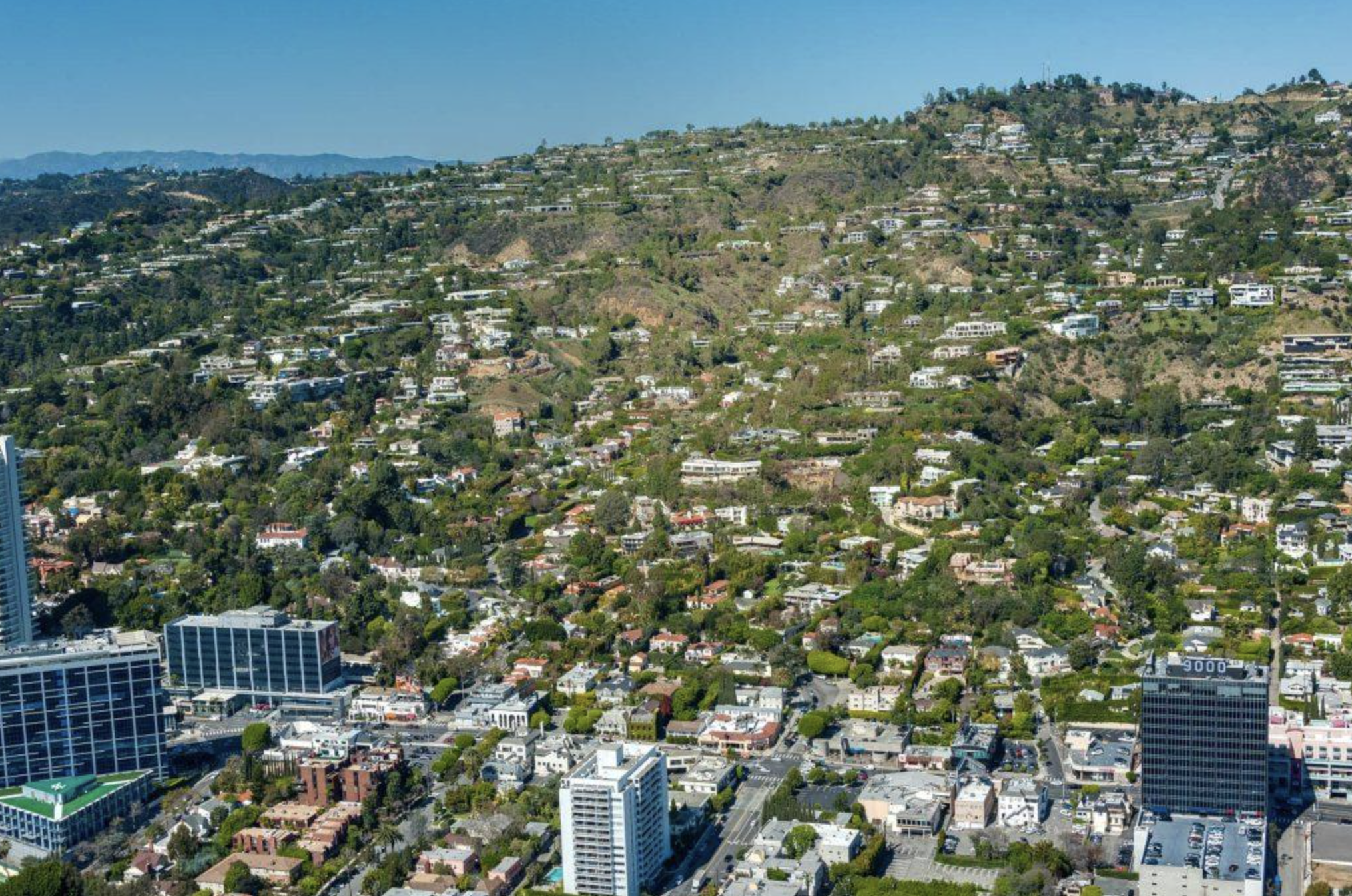
Perched high above the Sunset Strip, this collection of winding roads and ridgelines has become one of the most recognizable residential landscapes in Southern California. Not because of celebrity ownership, record-breaking sales, or panoramic views—although all three have become part of the story—but because the Bird Streets represent a uniquely Los Angeles relationship between architecture, landscape, light, and imagination.
Long before glass walls reflected the city lights below, these hills offered something more fundamental: perspective.
From here, Los Angeles unfolds like a map. Downtown rises in the distance. The Pacific appears on clear afternoons. The basin stretches endlessly toward the horizon. The experience is less about being above the city than being connected to it.
That relationship between land and architecture is what makes the Bird Streets one of the most fascinating neighborhoods in Los Angeles. Check out our Bird Streets Real Estate and Neighborhood Guide here.
Finding the Bird Streets
The Bird Streets are generally located within Hollywood Hills West, north of the Sunset Strip and south of Mulholland Drive.
The neighborhood takes its name from a collection of streets with bird-themed names, including:
Blue Jay Way
Oriole Drive
Nightingale Drive
Robin Drive
Swallow Drive
Thrasher Avenue
Tanager Way
Mockingbird Lane
Warbler Place
The area sits between West Hollywood, Beverly Hills, and the broader Hollywood Hills, occupying a series of ridgelines that offer some of the most dramatic views in Los Angeles.
Unlike the flat lots of Hancock Park or the broad estate grounds of San Marino, the Bird Streets were shaped by geography from the very beginning. Here, the terrain dictated the architecture. Roads bend around hillsides. Homes step down slopes. Terraces extend toward the skyline.
The landscape is not a backdrop.
It is part of the design.
Before the Glass Houses
Today, the Bird Streets are often associated with contemporary architecture, but the neighborhood's story begins much earlier.
Development of these hills accelerated during the early twentieth century as Los Angeles expanded westward and automobiles made hillside living increasingly practical.
The ridgelines offered privacy, clean air, and views unlike anything available on the valley floor.
Early homes were often traditional in style, reflecting the architectural tastes of their era. Spanish Colonial Revival, Mediterranean Revival, and other Period Revival styles appeared throughout the hills as Los Angeles entered its architectural golden age.
Over time, however, the unique topography began attracting architects interested in experimentation.
The hills demanded new ideas.
Traditional forms gave way to structures that could respond to slope, light, and view.
What emerged would eventually become one of the defining architectural landscapes of modern Los Angeles.
Why Modernism Found a Home Here
Few cities embraced residential modernism as enthusiastically as Los Angeles.
The climate encouraged indoor-outdoor living.
The landscape rewarded experimentation.
The culture welcomed reinvention.
Nowhere were those forces more visible than in the hills.
Architects such as Richard Neutra, John Lautner, Pierre Koenig, Craig Ellwood, and the firm of Buff & Hensman helped redefine what a home could be in Southern California.
Their work challenged traditional ideas about walls, rooms, and boundaries.
Glass replaced mass.
Views replaced decoration.
Landscape became architecture.
Although these architects did not design every home in the Bird Streets, the neighborhood embodies many of the principles they championed.
Homes became lighter.
More transparent.
More connected to their surroundings.
Instead of turning inward, they opened outward.
The result was a new vision of California living that would influence residential design around the world.
When the View Became the Main Character
Most great architecture has a focal point.
In the Bird Streets, that focal point is often the horizon.
The neighborhood helped establish a design philosophy in which architecture serves the landscape rather than competes with it.
Floor-to-ceiling glass walls.
Floating terraces.
Cantilevered living spaces.
Disappearing corners.
Infinity-edge pools.
Each design decision works toward a single goal: connecting occupants to the city below.
Sunrise becomes part of the interior experience.
Sunset becomes part of the architecture.
Night transforms the basin into a sea of lights stretching from Downtown Los Angeles toward the Pacific.
In many Bird Streets homes, the view is not merely an amenity.
It is the organizing principle.
Schools Serving the Bird Streets
For residents, education remains an important part of the neighborhood story.
Public schools commonly associated with the area include:
West Hollywood Elementary School
Emerson Community Charter School
University High School Charter
Nearby private schools include:
Harvard-Westlake School
The Buckley School
Oakwood School
Marlborough School
Crossroads School for Arts & Sciences
These institutions have educated generations of artists, entrepreneurs, business leaders, filmmakers, and cultural figures who helped shape Los Angeles.
Their presence contributes to the intellectual and cultural fabric of the area.
Cultural Institutions at the Foot of the Hill
The Bird Streets occupy a remarkable position within Los Angeles.
Few residential neighborhoods sit so close to so many cultural landmarks.
Just below the hills lies the Sunset Strip, a corridor that has played a central role in music, film, nightlife, and entertainment for decades.
Nearby destinations include:
Chateau Marmont
Greystone Mansion
Runyon Canyon
The Academy Museum of Motion Pictures
Los Angeles County Museum of Art
The West Hollywood Design District
These places help explain why the Bird Streets have remained relevant far beyond architecture.
They sit at the intersection of creativity, culture, and design.
The Creative Legacy of the Bird Streets
The Bird Streets have long attracted people whose work depends on imagination.
Artists.
Musicians.
Designers.
Filmmakers.
Entrepreneurs.
Architects.
The appeal extends beyond privacy or views.
Creative people often seek environments that inspire.
The Bird Streets offer a daily experience shaped by changing light, dramatic geography, and extraordinary visual perspective.
The neighborhood reflects a distinctly Los Angeles idea that lifestyle and design should be intertwined.
It is not surprising that so many creative figures have chosen to live here.
Architecture as Landscape
One of the most remarkable aspects of the Bird Streets is how effectively the neighborhood demonstrates the relationship between architecture and landscape.
In many cities, homes occupy land.
In the Bird Streets, homes negotiate with it.
Every slope creates a challenge.
Every view creates an opportunity.
Every lot demands a response.
This ongoing conversation between building and terrain is what continues attracting architects and architecture students from around the world.
The neighborhood functions almost as an open-air study of residential design.
Why the Bird Streets Matter
The Bird Streets are not significant because they are expensive.
Los Angeles has many expensive neighborhoods.
The Bird Streets matter because they reveal something essential about the city itself.
They show how geography shaped architecture.
How climate shaped lifestyle.
How imagination shaped design.
They tell the story of a city willing to experiment.
A city willing to build on impossible hillsides.
A city willing to blur the boundaries between indoors and outdoors.
A city willing to believe that architecture could become part of the landscape itself.
For students of design, architecture, and Los Angeles history, the Bird Streets remain one of Southern California's most compelling residential environments.
And for those of us who spend our lives studying neighborhoods, architecturally significant homes, and the evolution of Los Angeles real estate, they offer something increasingly rare:
A place where the land still explains the architecture.
Frequently Asked Questions About the Bird Streets
What are the Bird Streets?
The Bird Streets are a collection of hillside streets within Hollywood Hills West above the Sunset Strip. The neighborhood is known for its views, modern architecture, and dramatic ridgeline setting.
Why are they called the Bird Streets?
The neighborhood takes its name from streets such as Blue Jay Way, Oriole Drive, Robin Drive, Swallow Drive, Nightingale Drive, and other bird-themed street names throughout the area.
Where are the Bird Streets located?
The Bird Streets are generally located between the Sunset Strip and Mulholland Drive within Hollywood Hills West, adjacent to Beverly Hills and West Hollywood.
What streets are considered part of the Bird Streets?
Commonly recognized streets include Blue Jay Way, Oriole Drive, Nightingale Drive, Robin Drive, Swallow Drive, Thrasher Avenue, Tanager Way, Mockingbird Lane, and nearby roads connected to the ridgeline community.
Architecture FAQs
What architectural styles are most common in the Bird Streets?
The neighborhood is best known for contemporary architecture, California Modernism, Midcentury Modern influences, glass-and-steel residences, and architecturally significant hillside homes.
Which architects influenced the Bird Streets?
Architects whose ideas helped shape the broader architectural language of the area include Richard Neutra, John Lautner, Pierre Koenig, Craig Ellwood, and Buff & Hensman.
Why is modern architecture so prevalent in the Bird Streets?
The steep terrain and extraordinary views encouraged architects to design homes that maximize light, openness, and connection to the landscape.
Why do architects continue to study the Bird Streets?
The neighborhood provides one of the clearest examples of how residential architecture can respond directly to topography, climate, and view.
Lifestyle FAQs
What schools serve the Bird Streets?
Nearby schools include West Hollywood Elementary, Emerson Community Charter, University High School Charter, Harvard-Westlake, Oakwood School, Marlborough School, Crossroads School for Arts & Sciences, and The Buckley School.
What landmarks are nearby?
Nearby landmarks include Chateau Marmont, Greystone Mansion, Runyon Canyon, LACMA, the Academy Museum, and the Sunset Strip.
What is daily life like in the Bird Streets?
Residents enjoy a unique combination of privacy, proximity to cultural destinations, and access to some of the most dramatic views in Los Angeles.
What makes the Bird Streets different from Beverly Hills?
While Beverly Hills is known for estate grounds and traditional luxury architecture, the Bird Streets are defined by topography, contemporary design, and architecture that responds directly to the landscape.
Market FAQs
What types of homes are most common in the Bird Streets?
The neighborhood is known for architecturally significant homes, contemporary residences, modern hillside estates, and design-forward properties.
How has architecture shaped the neighborhood's identity?
Architecture is central to the Bird Streets' reputation. The area became known for homes that integrate landscape, light, and view into the design itself.
Jason Bergman FAQs
Who is Jason Bergman?
Jason Bergman is a Los Angeles luxury real estate advisor with The Agency specializing in architecturally significant homes, historic homes throughout Los Angeles, Pasadena luxury real estate, Northeast Los Angeles real estate, and design-forward residential properties.
What types of homes does Jason Bergman specialize in?
Jason Bergman Real Estate specializes in architecturally significant homes, historic properties, Spanish Colonial Revival homes, Midcentury Modern residences, hillside homes in Los Angeles, and luxury estates throughout Los Angeles County.
Does Jason Bergman work with architecturally significant homes?
Yes. Jason Bergman regularly works with buyers and sellers of architecturally significant homes, historic residences, and design-driven properties throughout Los Angeles.
Does Jason Bergman work in the Hollywood Hills and luxury Los Angeles neighborhoods?
Yes. Jason Bergman advises clients throughout Los Angeles County, including neighborhoods known for architecture, design, history, and distinctive residential character.
Closing Perspective
The Bird Streets remind us that great neighborhoods are rarely accidental.
They emerge from a combination of geography, design, culture, and time.
High above the Sunset Strip, these winding roads continue to demonstrate what happens when architecture embraces the landscape rather than resists it.
The result is not simply a collection of homes.
It is one of the most compelling architectural environments in Los Angeles.